
长非编码 RNA:在人类非三阴性和三阴性乳腺癌的靶向诊断、预后和改进治疗策略中的意义。
Long non-coding RNAs: implications in targeted diagnoses, prognosis, and improved therapeutic strategies in human non- and triple-negative breast cancer.
机构信息
Thoracic Oncology Unit and Laboratory of Personalized Medicine, Instituto Nacional de Cancerología (INCan), San Fernando #22, Section XVI, Tlalpan, 14080, Mexico City, Mexico.
Biomedical Science Doctorate Program, National Autonomous University of Mexico, Mexico City, Mexico.
出版信息
Clin Epigenetics. 2018 Jun 27;10:88. doi: 10.1186/s13148-018-0514-z. eCollection 2018.
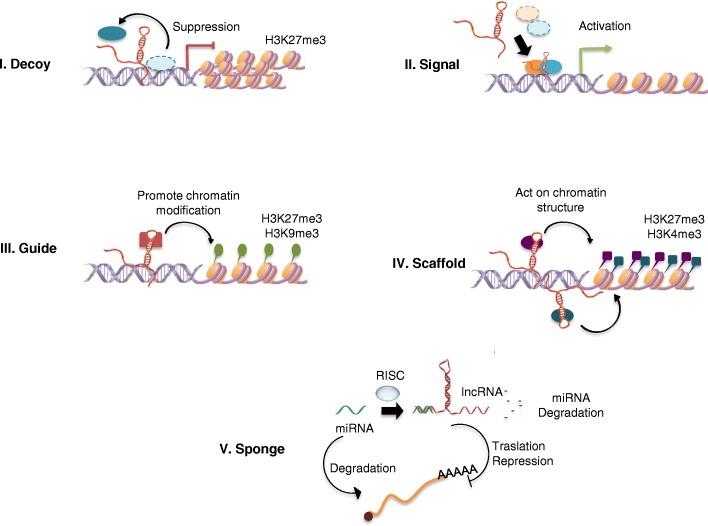
Triple-negative breast cancer (TNBC) has been clinically difficult to manage because of tumor aggressiveness, cellular and histological heterogeneity, and molecular mechanisms' complexity. All this in turn leads us to evaluate that tumor biological behavior is not yet fully understood. Additionally, the heterogeneity of tumor cells represents a great biomedicine challenge in terms of the complex molecular-genetical-transcriptional and epigenetical-mechanisms, which have not been fully elucidated on human solid tumors. Recently, human breast cancer, but specifically TNBC is under basic and clinical-oncology research in the discovery of new molecular biomarkers and/or therapeutic targets to improve treatment responses, as well as for seeking algorithms for patient stratification, seeking a positive impact in clinical-oncology outcomes and life quality on breast cancer patients. In this sense, important knowledge is emerging regarding several cancer molecular aberrations, including higher genetic mutational rates, LOH, CNV, chromosomal, and epigenetic alterations, as well as transcriptome aberrations in terms of the total gene-coding ribonucleic acids (RNAs), known as mRNAs, as well as non-coding RNA (ncRNA) sequences. In this regard, novel investigation fields have included microRNAs (miRNAs), as well as long ncRNAs (lncRNAs), which have been importantly related and are likely involved in the induction, promotion, progression, and/or clinical therapeutic response trackers of TNBC. Based on this, in general terms according with the five functional archetype classification, the lncRNAs may be involved in the regulation of several molecular mechanisms which include genetic expression, epigenetic, transcriptional, and/or post-transcriptional mechanisms, which are nowadays not totally understood. Here, we have reviewed the main dis-regulated and functionally non- and well-characterized lncRNAs and their likely involvement, from a molecular enrichment and mechanistic point of view, as tumor biomarkers for breast cancer and its specific histological subtype, TNBC. In reference to the abovementioned, it has been described that some lncRNA expression profiles correspond or are associated with the TNBC histological subtype, potentially granting their use for TNBC malignant progression, diagnosis, tumor clinical stage, and likely therapy. Based on this, lncRNAs have been proposed as potential biomarkers which might represent potential predictive tools in the differentiated breast carcinomas versus TNBC malignant disease. Finally, elucidation of the specific or multi-functional archetypal of lncRNAs in breast cancer and TNBC could be fundamental, as these molecular intermediary-regulator "lncRNAs" are widely involved in the genome expression, epigenome regulation, and transcriptional and post-transcriptional tumor biology, which in turn will probably represent a new prospect in clinical and/or therapeutic molecular targets for the oncological management of breast carcinomas in general and also for TNBC patients.
三阴性乳腺癌(TNBC)由于肿瘤侵袭性、细胞和组织学异质性以及分子机制的复杂性,在临床上难以治疗。所有这些都导致我们评估肿瘤的生物学行为尚未完全了解。此外,肿瘤细胞的异质性代表了一个巨大的生物医学挑战,涉及复杂的分子遗传转录和表观遗传机制,这些机制尚未在人类实体肿瘤中得到充分阐明。最近,人类乳腺癌,特别是 TNBC,在基础和临床肿瘤学研究中,正在寻找新的分子生物标志物和/或治疗靶点,以改善治疗反应,并寻求患者分层的算法,以期对临床肿瘤学结果和乳腺癌患者的生活质量产生积极影响。在这方面,关于几个癌症分子异常的重要知识正在出现,包括更高的遗传突变率、LOH、CNV、染色体和表观遗传改变,以及总基因编码核糖核酸(RNAs),即 mRNAs,以及非编码 RNA(ncRNA)序列的转录组异常。在这方面,新的研究领域包括 microRNAs(miRNAs)以及长 ncRNAs(lncRNAs),它们与 TNBC 的诱导、促进、进展和/或临床治疗反应轨迹密切相关,并且可能参与其中。基于此,根据五个功能原型分类,一般来说,lncRNAs 可能参与调节几个分子机制,包括遗传表达、表观遗传、转录和/或转录后机制,这些机制目前尚未完全理解。在这里,我们从分子富集和机制的角度回顾了主要失调和功能非特征化和特征化的 lncRNAs 及其可能的参与,作为乳腺癌及其特定组织学亚型 TNBC 的肿瘤标志物。关于上述内容,已经描述了一些 lncRNA 表达谱与 TNBC 组织学亚型相对应或相关,这可能为其用于 TNBC 恶性进展、诊断、肿瘤临床分期和可能的治疗提供了依据。基于此,lncRNAs 被提议作为潜在的生物标志物,可能代表鉴别性乳腺癌与 TNBC 恶性疾病的潜在预测工具。最后,阐明 lncRNAs 在乳腺癌和 TNBC 中的特定或多功能原型可能是至关重要的,因为这些分子中介调节剂“lncRNAs”广泛参与基因组表达、表观基因组调控以及肿瘤生物学的转录和转录后,这反过来又可能代表一般乳腺癌和 TNBC 患者肿瘤治疗的临床和/或治疗分子靶点的新前景。
 Zotero 插件