
镍(I)钳形配合物的电子结构与反应活性:它们向过氧物种的需氧转化及位点选择性C-H氧化
Electronic structure and reactivity of nickel(i) pincer complexes: their aerobic transformation to peroxo species and site selective C-H oxygenation.
作者信息
Rettenmeier Christoph A, Wadepohl Hubert, Gade Lutz H
机构信息
Anorganisch-Chemisches Institut , University of Heidelberg , Im Neuenheimer Feld 270 , 69120 Heidelberg , Germany . Email:
出版信息
Chem Sci. 2016 Jun 1;7(6):3533-3542. doi: 10.1039/c5sc04644k. Epub 2016 Feb 11.
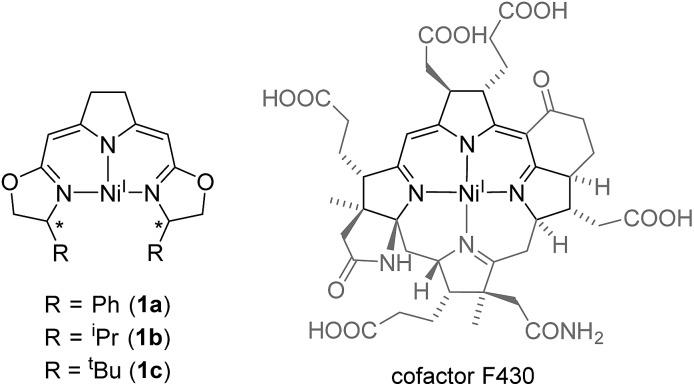
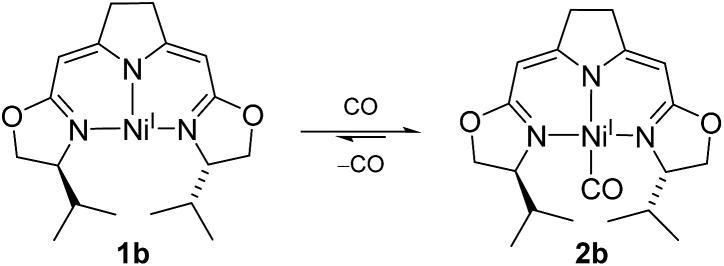
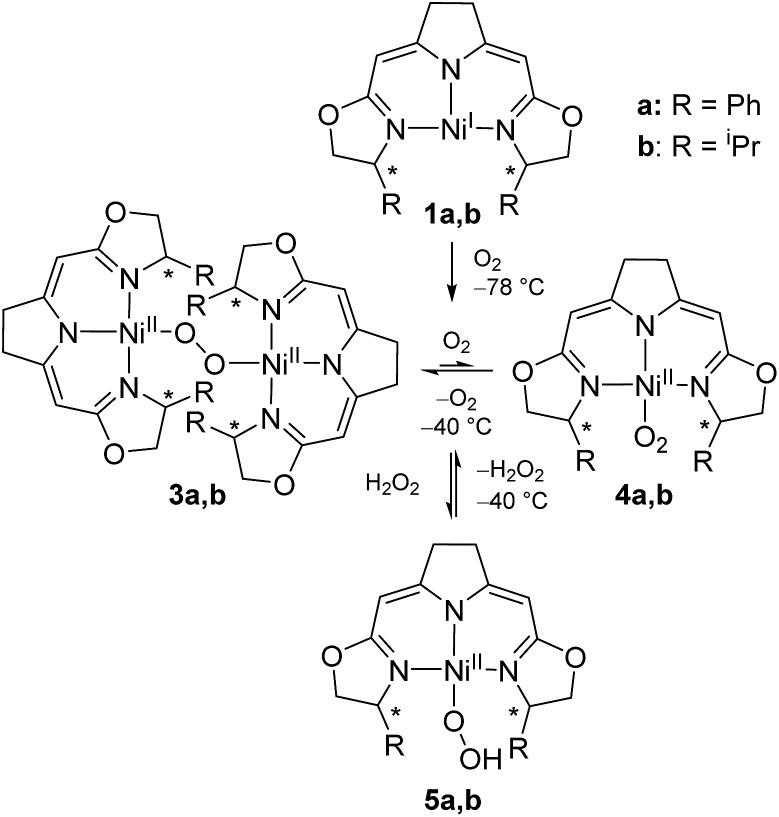
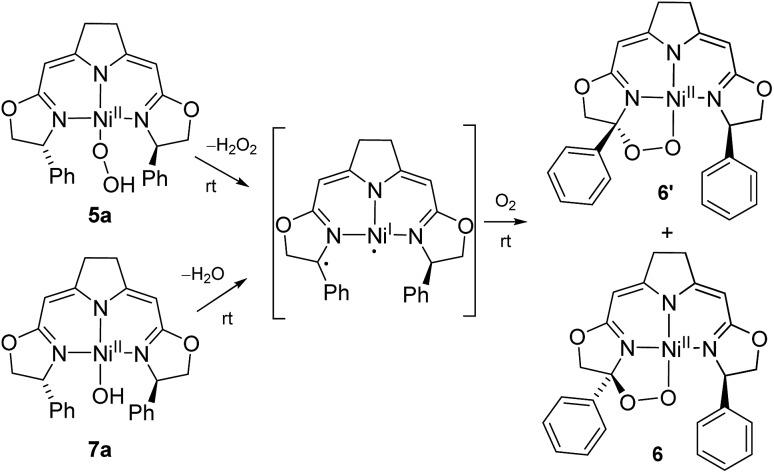
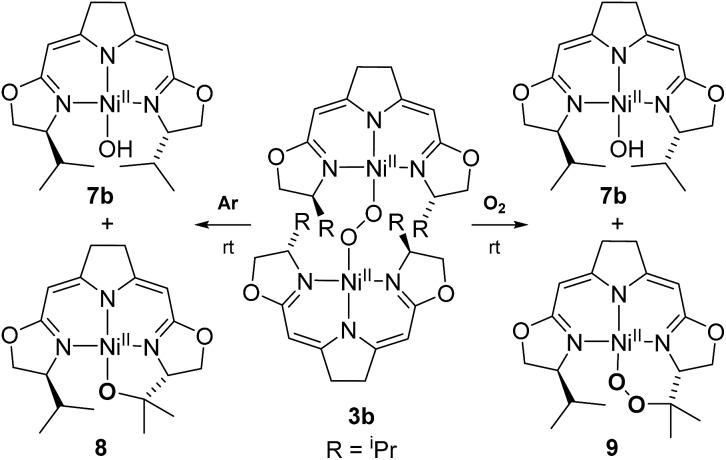
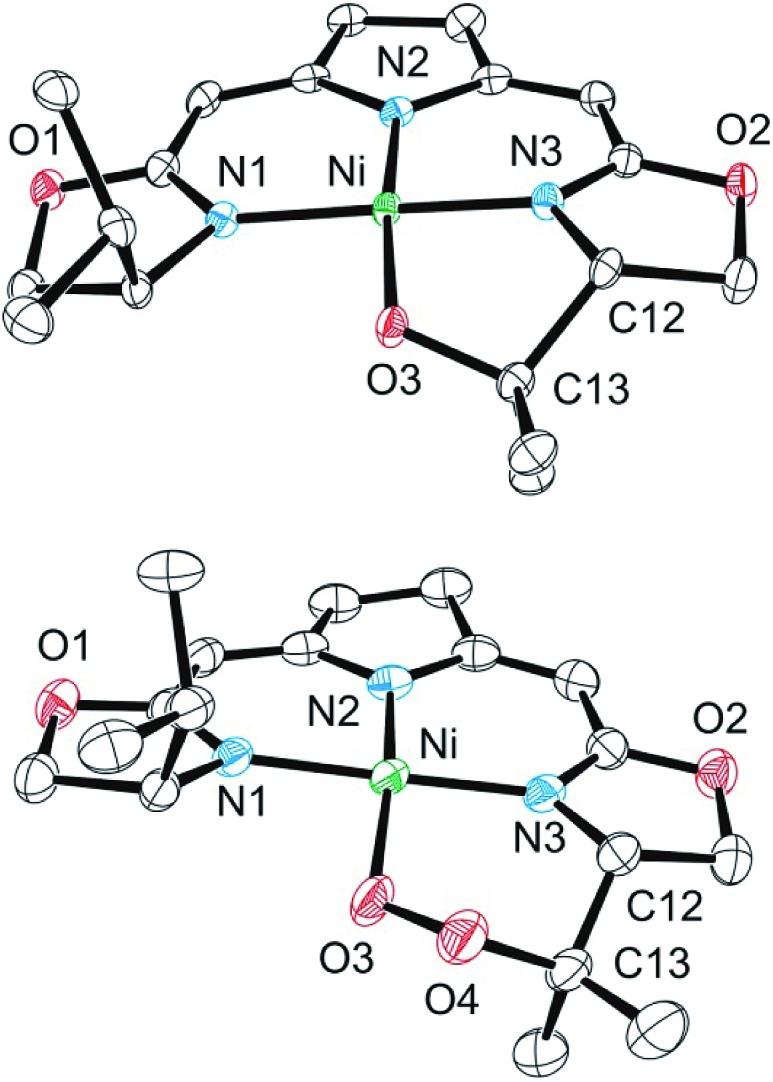
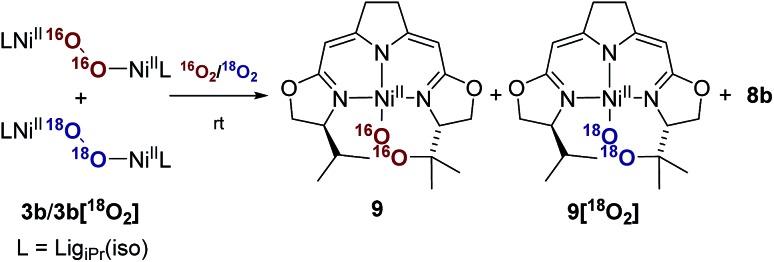
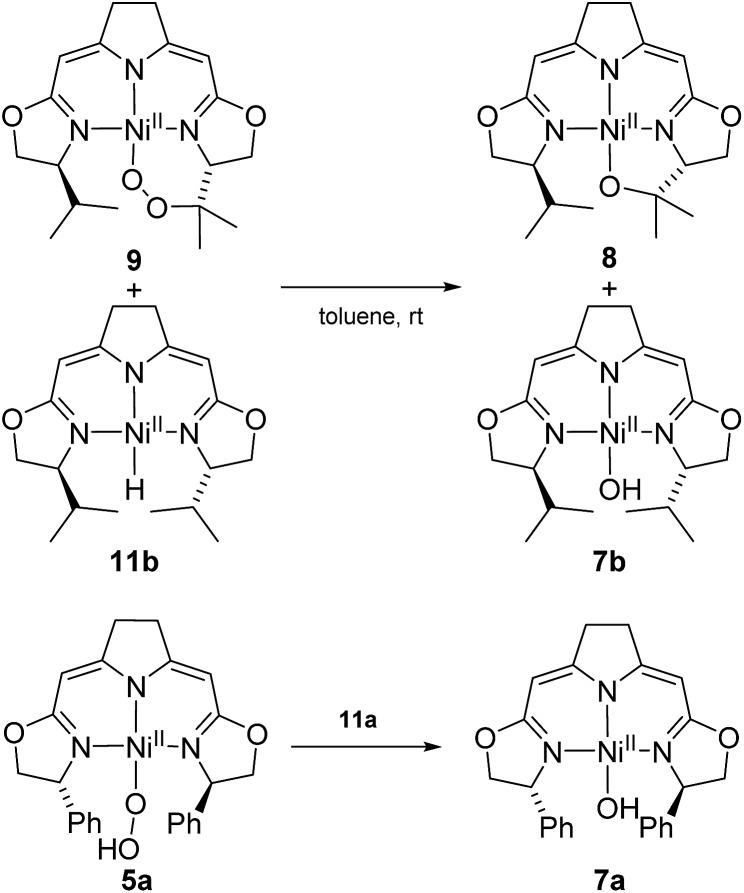
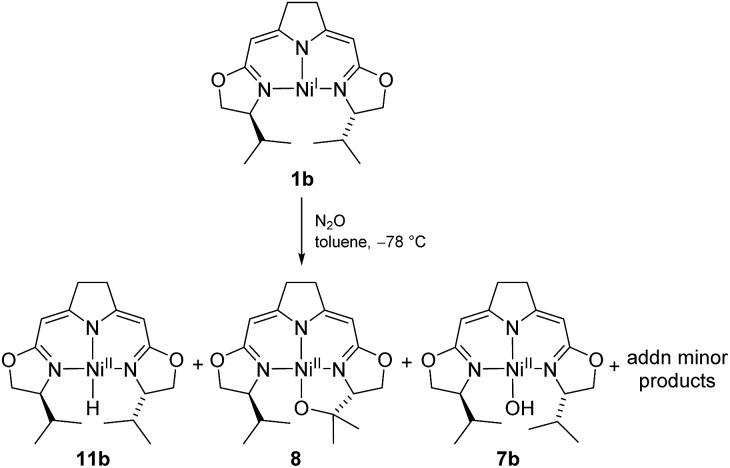
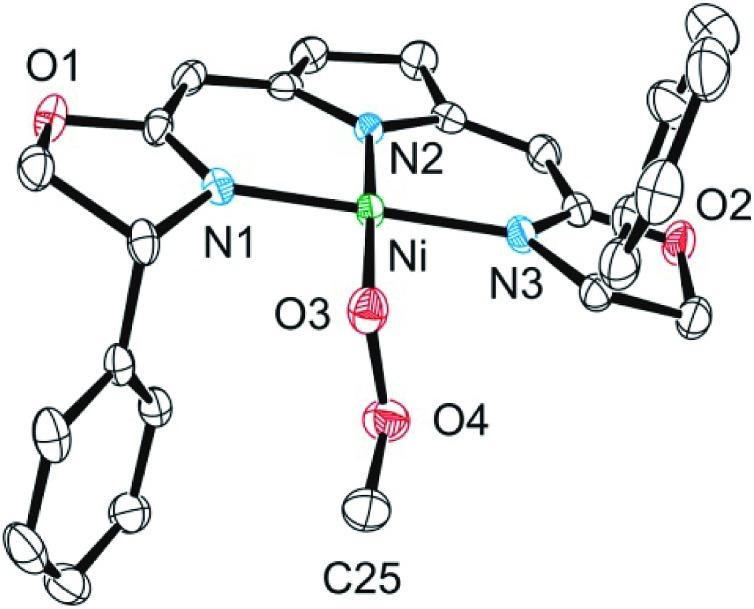
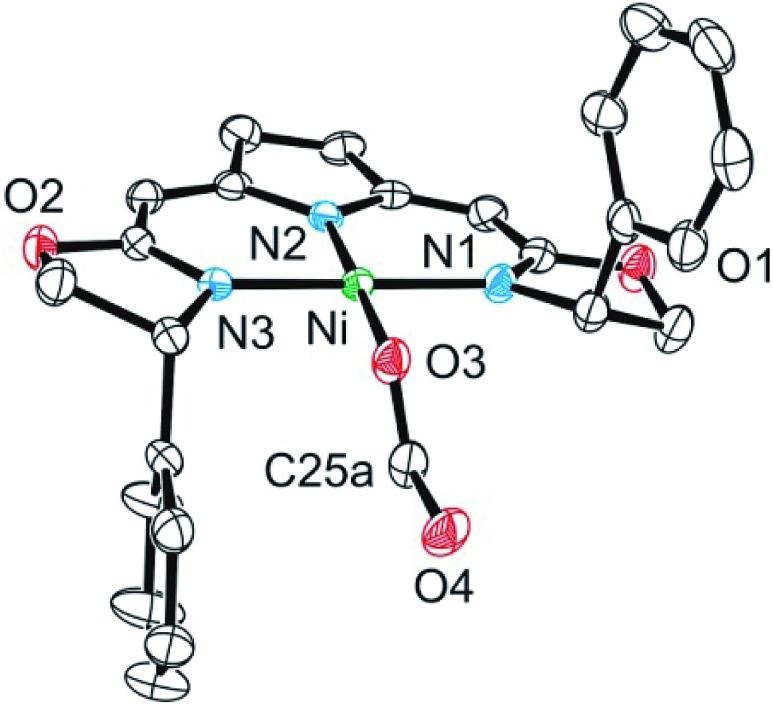
The study is aimed at a deeper understanding of the electronic structure of the T-shaped nickel(i) complex [Lig(iso)Ni] (), bearing the iso-PyrrMeBox (bis(oxazolinylmethylidene)pyrrolidinido) pincer ligand, and its CO adduct [Lig(iso)Ni(CO)] () as well as to provide insight into the mechanism of autoxidation of the different nickel peroxo species of this ligand type. CO was found to react reversibly with complex resulting in the corresponding CO adduct . The EPR data as well as the results of DFT modeling revealed significant differences in the electronic structure of and . Reaction of [Lig(iso)Ni] and [Lig(iso)Ni] ( and ) with dioxygen yielded the 1,2-μ-peroxo complexes [Lig(iso)NiO] and which reacted with hydrogen peroxide to give the hydroperoxo complexes [Lig(iso)NiOOH] and . Thermal aerobic decomposition of the peroxo species and in the presence of O led to a C-H activation of the ligand at the benzylic position of the oxazoline ring forming diastereomeric cyclic peroxo complexes and . For the 1,2-μ-peroxo complex the autoxidation of the pincer in the absence of O occurred at the tertiary C-H bond of the Pr-group and led to a selective formation of the terminal hydroxo complex [Lig(iso)NiOH] and the cyclic alkoxy complex in equimolar quantities, while the corresponding cyclic peroxo species was formed along with in the presence of oxygen. Whether or not O-O bond cleavage occurred in the generation of was established upon performing labeling experiments which indicate that the transformation does not involve an initial O-O bond cleaving step. Based on these observations and a series of stoichiometric transformations a tentative proposal for the processes involved in the anaerobic and aerobic decomposition of has been put forward. Finally, the nickel(ii) methyl complex [Lig(iso)NiMe] reacted with O to give the methylperoxo complex [Lig(iso)NiOOMe] which slowly converted to a mixture of near equal amounts of the formato and the hydroxo complexes, [Lig(iso)NiOOCH] and [Lig(iso)NiOH] , along with half an equivalent of methanol. The formato complex itself decomposed at elevated temperatures to CO, dihydrogen as well as the nickel(i) species .
该研究旨在更深入地了解带有异-PyrrMeBox(双(恶唑啉基亚甲基)吡咯烷基)钳形配体的T形镍(I)配合物[Lig(iso)Ni]()及其CO加合物[Lig(iso)Ni(CO)]()的电子结构,并深入了解这种配体类型的不同镍过氧物种的自氧化机制。发现CO与配合物可逆反应,生成相应的CO加合物。电子顺磁共振(EPR)数据以及密度泛函理论(DFT)建模结果揭示了和的电子结构存在显著差异。[Lig(iso)Ni]和[Lig(iso)Ni](和)与双氧反应生成1,2-μ-过氧配合物[Lig(iso)NiO]和,它们与过氧化氢反应生成氢过氧配合物[Lig(iso)NiOOH]和。过氧物种和在有氧条件下的热分解导致配体在恶唑啉环苄基位置发生C-H活化,形成非对映体环状过氧配合物和。对于1,2-μ-过氧配合物,在没有O的情况下,钳形配体的自氧化发生在Pr基团的叔C-H键上,导致选择性地形成等摩尔量的末端羟基配合物[Lig(iso)NiOH]和环状烷氧基配合物,而在有氧气存在的情况下,会形成相应的环状过氧物种以及。通过进行标记实验确定了在生成过程中是否发生O-O键断裂,实验表明该转化不涉及初始的O-O键断裂步骤。基于这些观察结果和一系列化学计量转化,提出了关于厌氧和好氧分解过程的初步建议。最后,镍(II)甲基配合物[Lig(iso)NiMe]与O反应生成甲基过氧配合物[Lig(iso)NiOOMe],该配合物缓慢转化为几乎等量的甲的甲酰基和羟基配合物[Lig(iso)NiOOCH]和[Lig(iso)NiOH]的混合物,以及半当量的甲醇。甲酰基配合物本身在高温下分解为CO、氢气以及镍(I)物种。








 Zotero 插件