
外周血单核细胞固定和处理用于单细胞 RNA 测序。
PBMC fixation and processing for Chromium single-cell RNA sequencing.
机构信息
Center for Human Immunology, Autoimmunity and Inflammation (CHI), National Institutes of Health, Bethesda, USA.
Department of Transfusion Medicine, Clinical Center, National Institutes of Health, Bethesda, USA.
出版信息
J Transl Med. 2018 Jul 17;16(1):198. doi: 10.1186/s12967-018-1578-4.
BACKGROUND
Interest in single-cell transcriptomic analysis is growing rapidly, especially for profiling rare or heterogeneous populations of cells. In almost all reported works investigators have used live cells, which introduces cell stress during preparation and hinders complex study designs. Recent studies have indicated that cells fixed by denaturing fixative can be used in single-cell sequencing, however they did not usually work with most types of primary cells including immune cells.
METHODS
The methanol-fixation and new processing method was introduced to preserve human peripheral blood mononuclear cells (PBMCs) for single-cell RNA sequencing (scRNA-Seq) analysis on 10× Chromium platform.
RESULTS
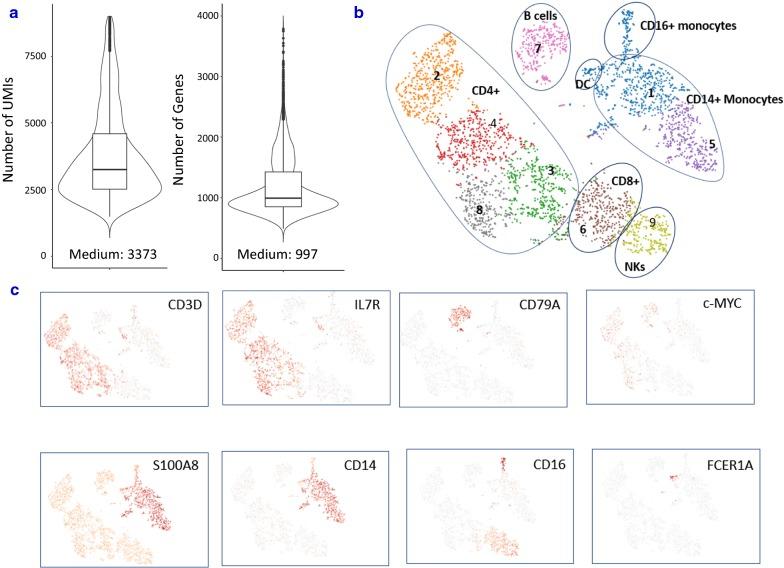
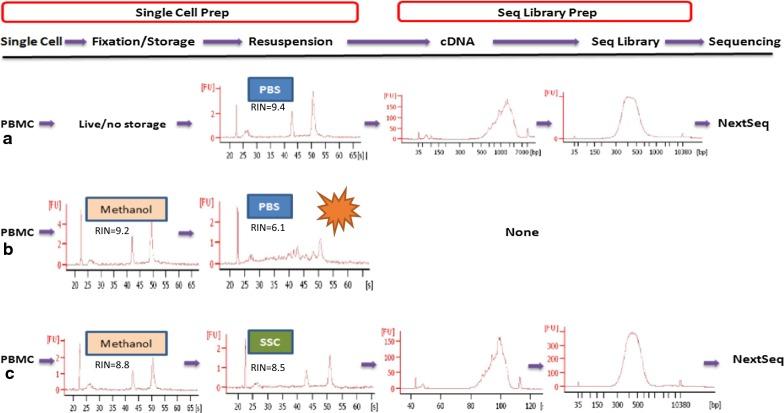
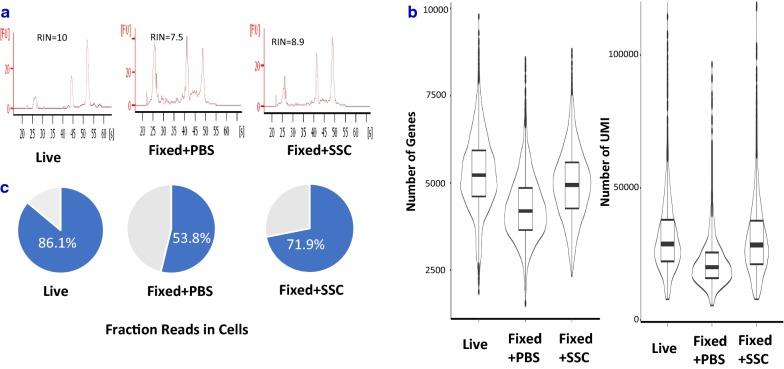
When methanol fixation protocol was broken up into three steps: fixation, storage and rehydration, we found that PBMC RNA was degraded during rehydration with PBS, not at cell fixation and up to 3-month storage steps. Resuspension but not rehydration in 3× saline sodium citrate (SSC) buffer instead of PBS preserved PBMC RNA integrity and prevented RNA leakage. Diluted SSC buffer did not interfere with full-length cDNA synthesis. The methanol-fixed PBMCs resuspended in 3× SSC were successfully implemented into 10× Chromium standard scRNA-seq workflows with no elevated low quality cells and cell doublets. The fixation process did not alter the single-cell transcriptional profiles and gene expression levels. Major subpopulations classified by marker genes could be identified in fixed PBMCs at a similar proportion as in live PBMCs. This new fixation processing protocol also worked in several other fixed primary cell types and cell lines as in live ones.
CONCLUSIONS
We expect that the methanol-based cell fixation procedure presented here will allow better and more effective batching schemes for a complex single cell experimental design with primary cells or tissues.
背景
单细胞转录组分析的兴趣正在迅速增长,尤其是在对稀有或异质细胞群体进行分析时。在几乎所有已报道的工作中,研究人员都使用活细胞,这在制备过程中会给细胞带来应激,并阻碍复杂的研究设计。最近的研究表明,用变性固定剂固定的细胞可用于单细胞测序,但它们通常不适用于包括免疫细胞在内的大多数类型的原代细胞。
方法
本研究引入甲醇固定和新的处理方法,用于保存人外周血单核细胞(PBMC),以便在 10×Chromium 平台上进行单细胞 RNA 测序(scRNA-Seq)分析。
结果
当甲醇固定方案分为三个步骤:固定、储存和复水时,我们发现 PBMC RNA 在 PBS 复水过程中降解,而不是在细胞固定和长达 3 个月的储存步骤中降解。用 3×盐水柠檬酸钠(SSC)缓冲液代替 PBS 重悬而不是复水可以保持 PBMC RNA 完整性并防止 RNA 渗漏。稀释的 SSC 缓冲液不干扰全长 cDNA 合成。甲醇固定的 PBMC 重悬于 3×SSC 中,可成功应用于 10×Chromium 标准 scRNA-seq 工作流程,而不会增加低质量细胞和细胞二聚体。固定过程不会改变单细胞转录谱和基因表达水平。用标记基因分类的主要亚群可以在固定的 PBMC 中以与活 PBMC 相似的比例鉴定出来。这种新的固定处理方案在其他几种固定的原代细胞类型和细胞系中也能像活细胞一样工作。
结论
我们希望,这里提出的基于甲醇的细胞固定程序将允许对原代细胞或组织的复杂单细胞实验设计进行更好和更有效的分批处理。


 Zotero 插件