
人类核小体外切酶复合物的独特且进化保守的结构特征。
Distinct and evolutionary conserved structural features of the human nuclear exosome complex.
机构信息
Department of Structural Cell Biology, Max Planck Institute of Biochemistry, Munich, Germany.
出版信息
Elife. 2018 Jul 26;7:e38686. doi: 10.7554/eLife.38686.
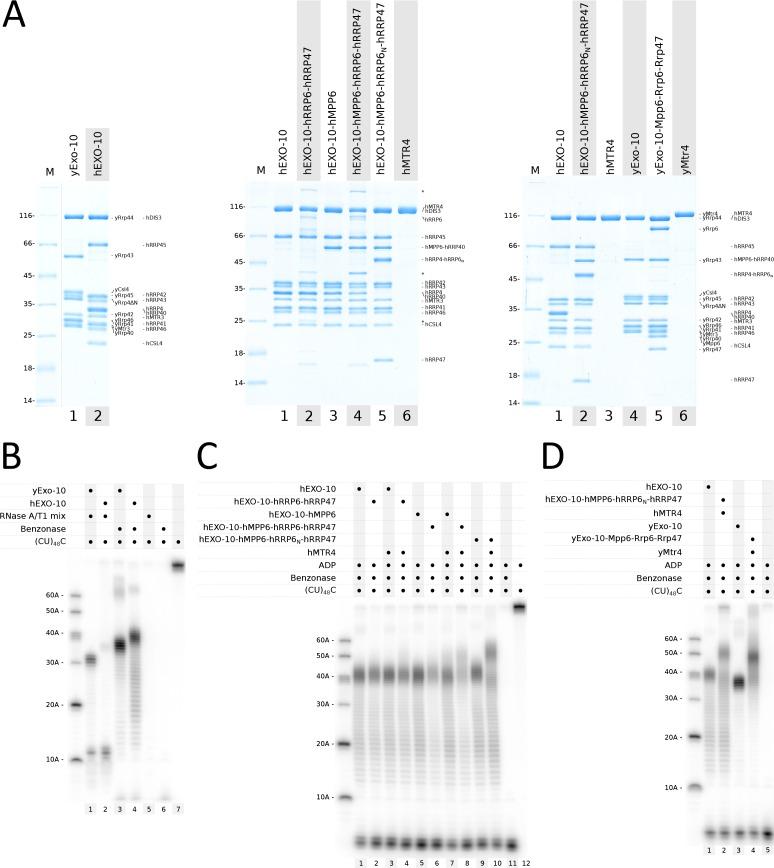
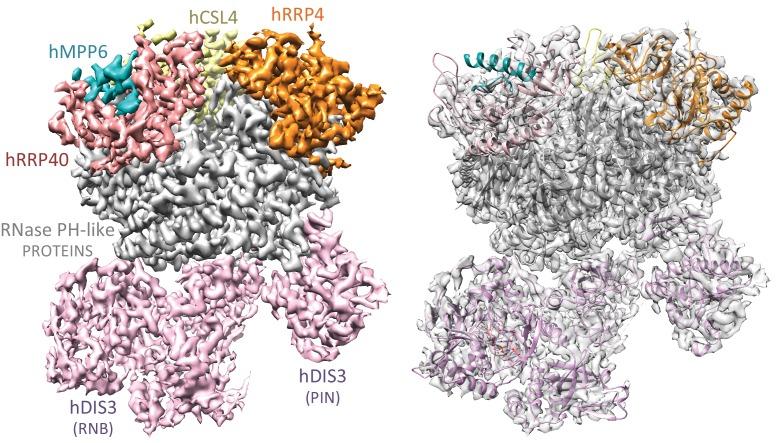
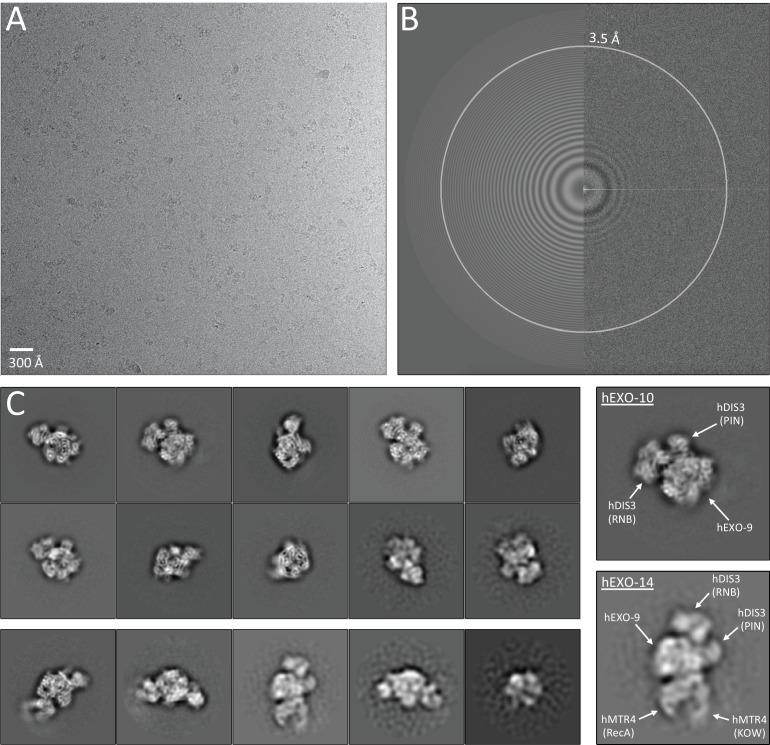
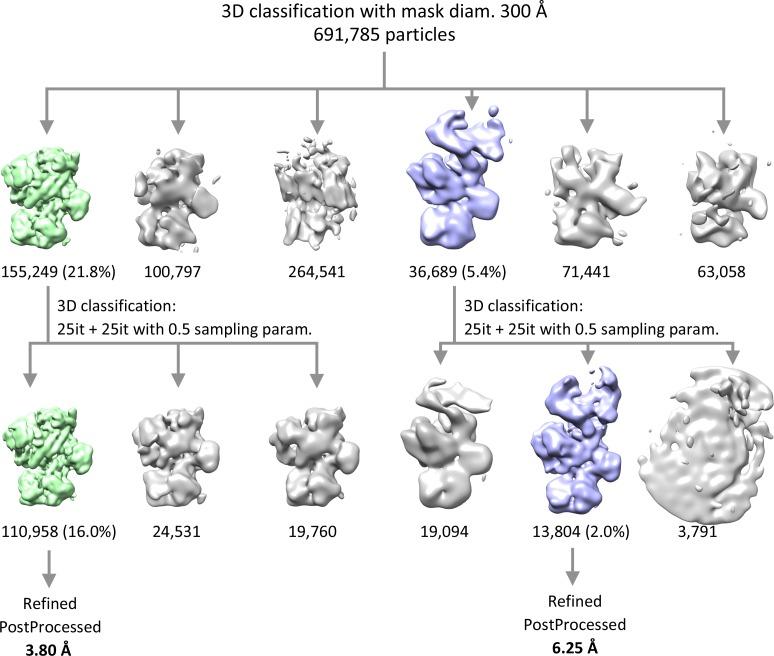
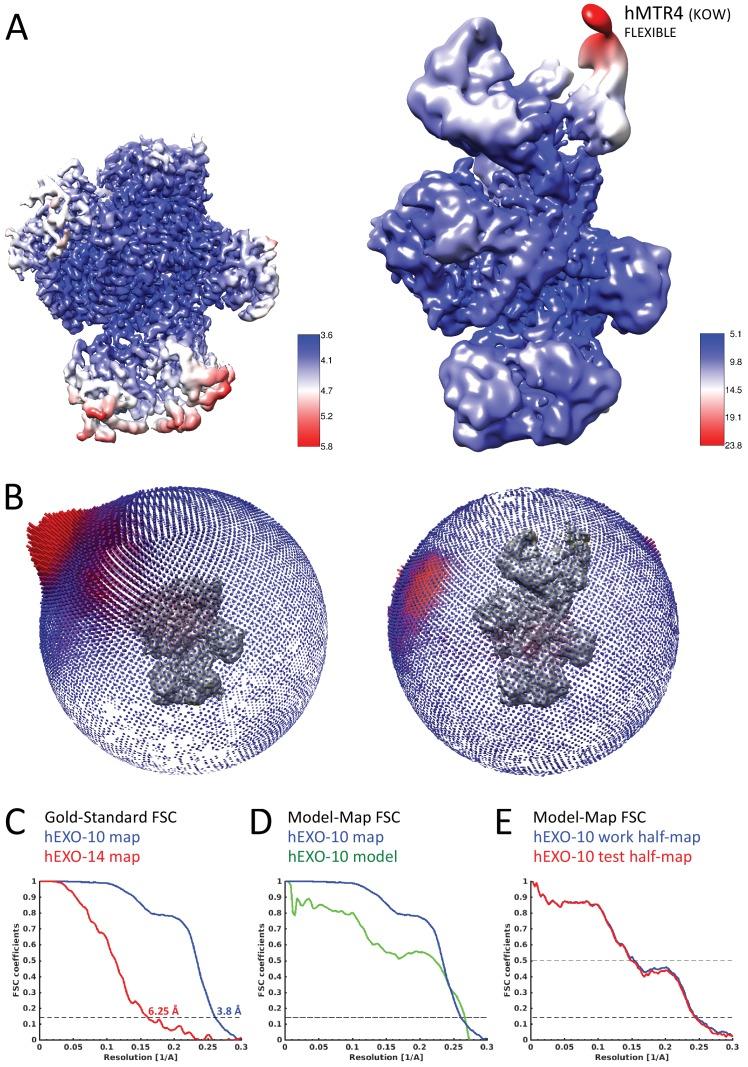
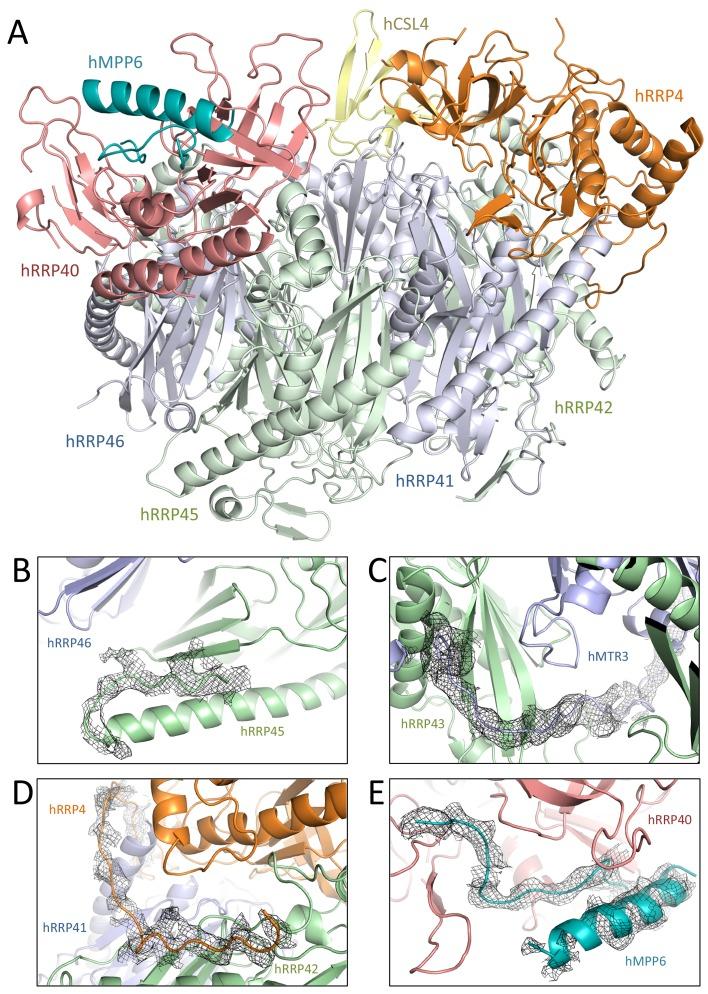
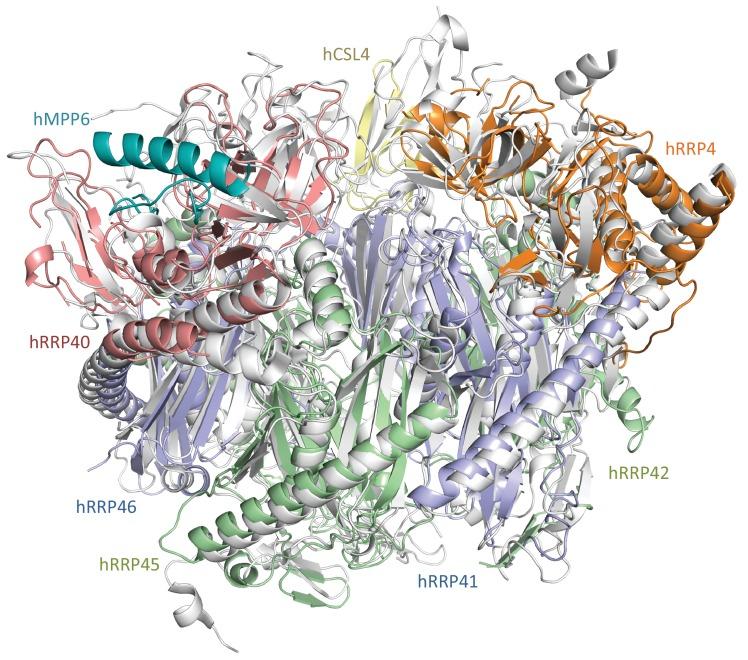
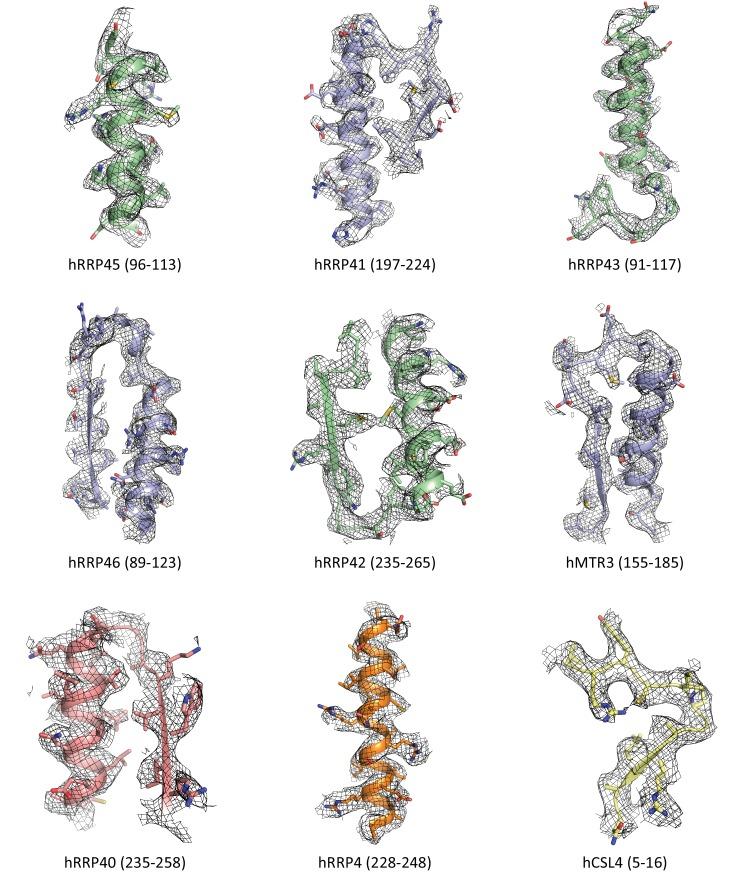
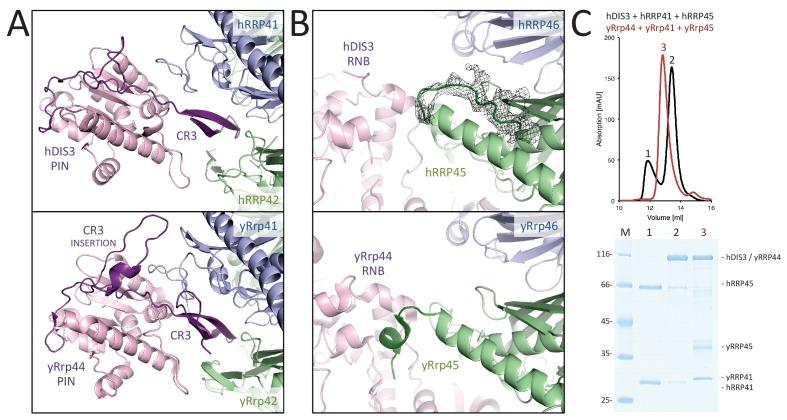
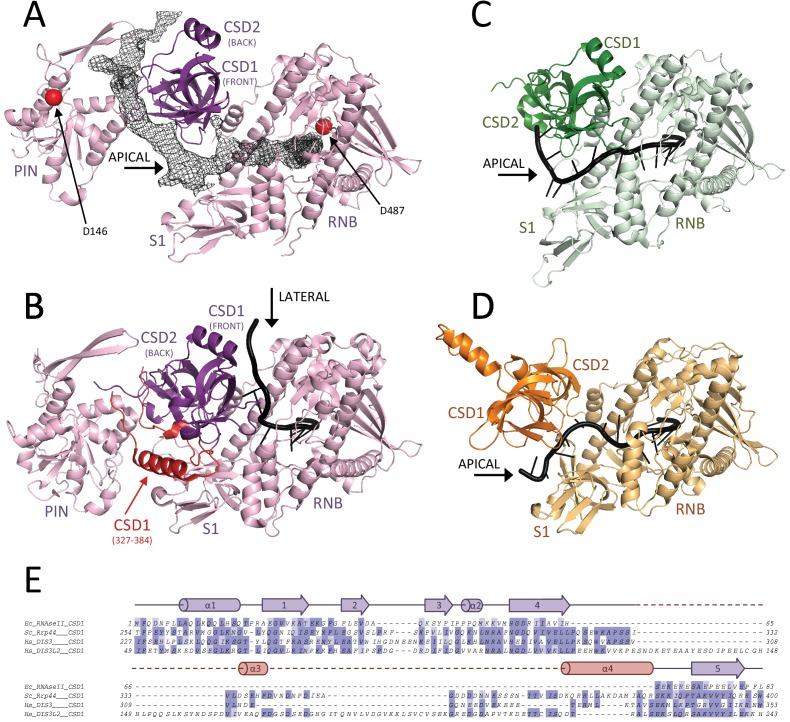
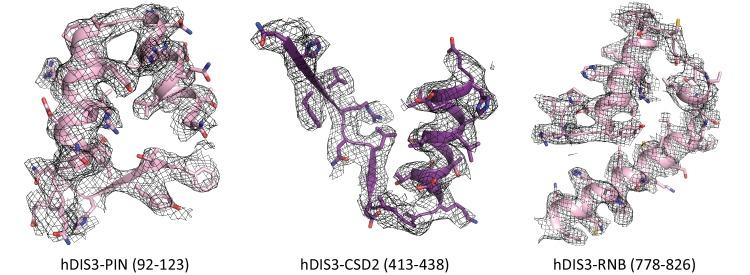
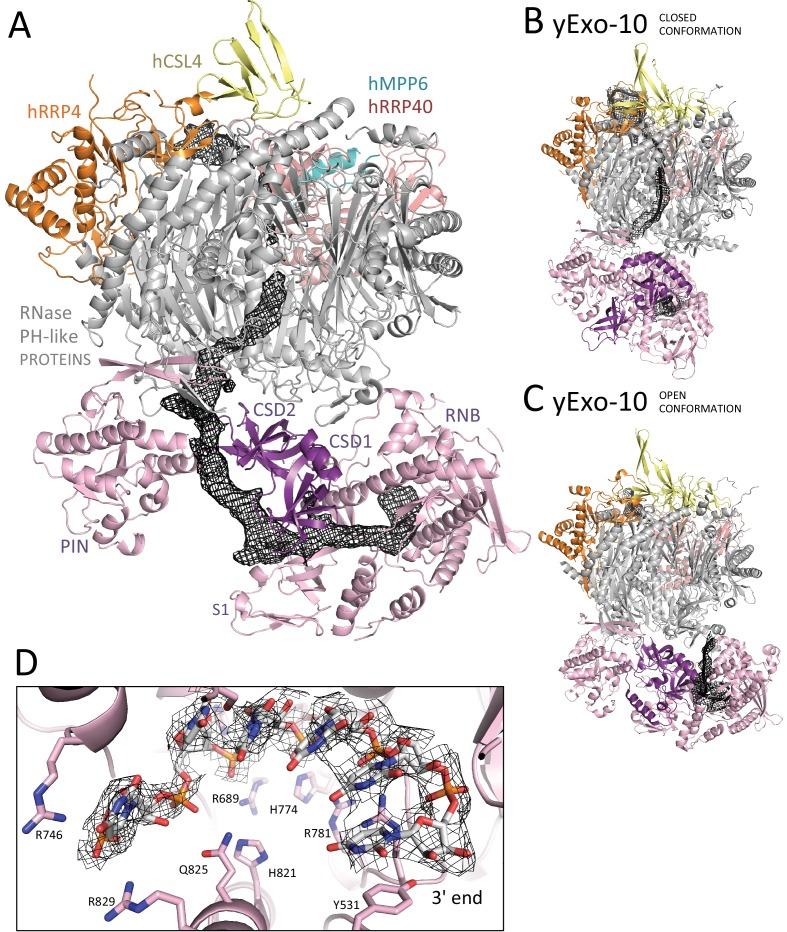
The nuclear RNA exosome complex mediates the processing of structured RNAs and the decay of aberrant non-coding RNAs, an important function particularly in human cells. Most mechanistic studies to date have focused on the yeast system. Here, we reconstituted and studied the properties of a recombinant 14-subunit human nuclear exosome complex. In biochemical assays, the human exosome embeds a longer RNA channel than its yeast counterpart. The 3.8 Å resolution cryo-EM structure of the core complex bound to a single-stranded RNA reveals that the RNA channel path is formed by two distinct features of the hDIS3 exoribonuclease: an open conformation and a domain organization more similar to bacterial RNase II than to yeast Rrp44. The cryo-EM structure of the holo-complex shows how obligate nuclear cofactors position the hMTR4 helicase at the entrance of the core complex, suggesting a striking structural conservation from lower to higher eukaryotes.
核 RNA 外切体复合物介导结构 RNA 的加工和异常非编码 RNA 的降解,这是一种在人类细胞中尤为重要的功能。迄今为止,大多数机制研究都集中在酵母系统上。在这里,我们重新构建并研究了重组的 14 亚基人核外切体复合物的性质。在生化测定中,人外切体比其酵母对应物嵌入更长的 RNA 通道。结合单链 RNA 的核心复合物的 3.8 Å 分辨率冷冻电镜结构表明,RNA 通道路径由 hDIS3 外切核酸酶的两个不同特征形成:开放构象和更类似于细菌 RNase II 而不是酵母 Rrp44 的结构组织。全复合物的冷冻电镜结构显示了必需的核辅助因子如何将 hMTR4 解旋酶定位在核心复合物的入口处,这表明从低等真核生物到高等真核生物的结构具有惊人的保守性。

 Zotero 插件