
蔓越莓提取物Oximacro通过干扰血凝素对流感病毒发挥杀病毒活性。
The Cranberry Extract Oximacro Exerts Virucidal Activity Against Influenza Virus by Interfering With Hemagglutinin.
作者信息
Luganini Anna, Terlizzi Maria E, Catucci Gianluca, Gilardi Gianfranco, Maffei Massimo E, Gribaudo Giorgio
机构信息
Laboratory of Microbiology and Virology, Department of Life Sciences and Systems Biology, University of Turin, Turin, Italy.
Biochemistry Laboratory, Department of Life Sciences and Systems Biology, University of Turin, Turin, Italy.
出版信息
Front Microbiol. 2018 Aug 7;9:1826. doi: 10.3389/fmicb.2018.01826. eCollection 2018.
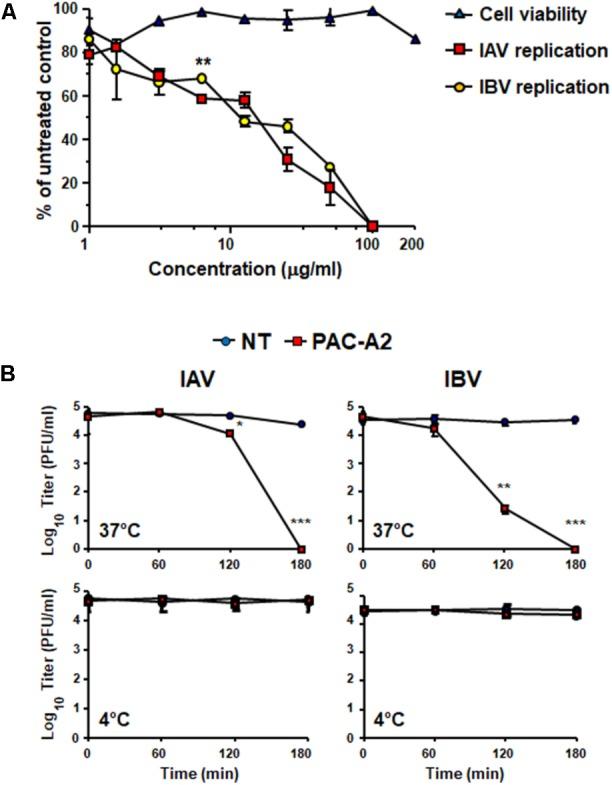
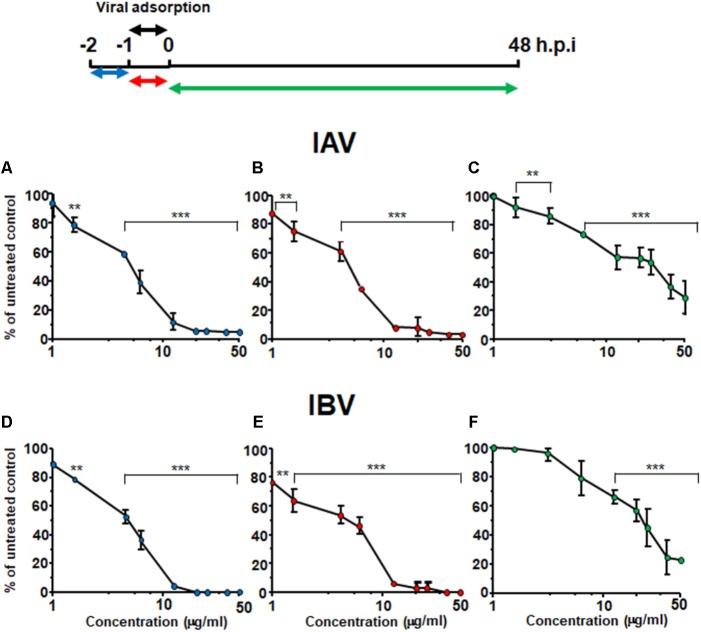
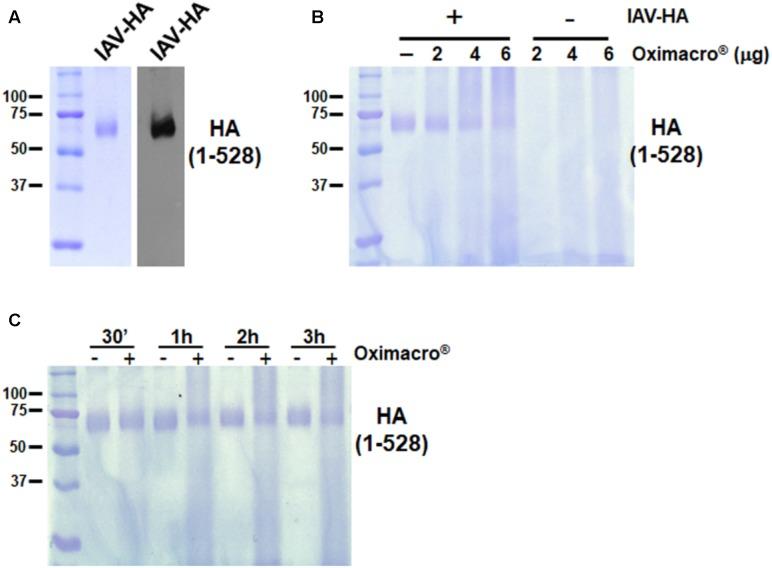
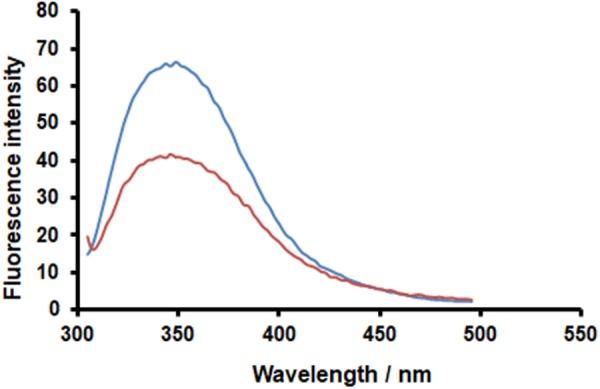
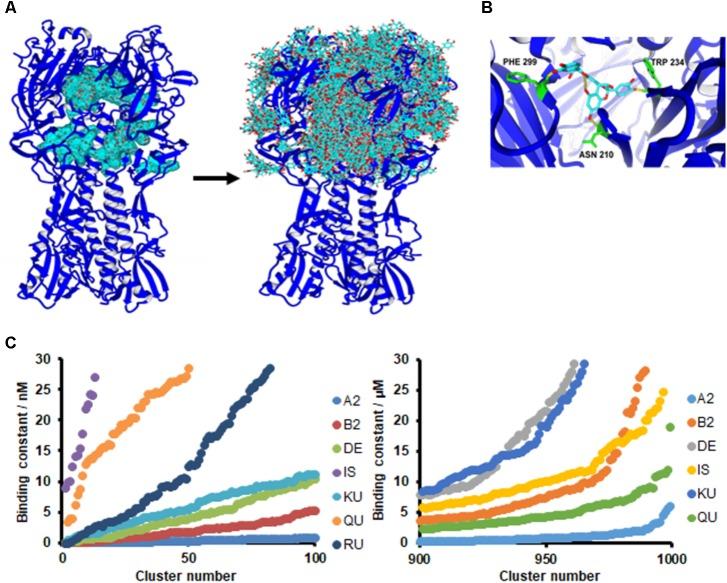
The defense against influenza virus (IV) infections still poses a series of challenges. The current antiviral arsenal against influenza viruses is in fact limited; therefore, the development of new anti-influenza strategies effective against antigenically different viruses is an urgent priority. Bioactive compounds derived from medicinal plants and fruits may provide a natural source of candidates for such broad-spectrum antivirals. In this regard, cranberry ( Aiton) extracts on the basis of their recognized anti-adhesive activities against bacteria, may provide potential compounds able to prevent viral attachment to target cells. Nevertheless, only few studies have so far investigated the possible use of cranberry extracts as an antiviral tool. This study focuses on the suitability of a cranberry extract as a direct-acting anti-influenza compound. We show that the novel cranberry extract Oximacro inhibits influenza A and B viruses (IAV, IBV) replication because of its high content of A-type proanthocyanidins (PAC-A) dimers and trimers. Mechanistic studies revealed that Oximacro prevents attachment and entry of IAV and IBV into target cells and exerts a virucidal activity. Oximacro was observed to interact with the ectodomain of viral hemagglutinin (HA) glycoprotein, thus suggesting the interference with HA functions and a consequent loss of infectivity of IV particles. Fluorescence spectroscopy revealed a reduction in the intrinsic fluorescence of HA protein after incubation with purified dimeric PAC-A (PAC-A2), thus confirming a direct interaction between HA and Oximacro PAC-A2. docking simulations further supported the results and indicated that among the different components of the Oximacro chemical profile, PAC-A2 exhibited the best binding propensity with an affinity below 10 nM. The role of PAC-A2 in the anti-IV activity of Oximacro was eventually confirmed by the observation that it prevented IAV and IVB replication and caused the loss of infectivity of IV particles, thus indicating PAC-A2 as the major active component of Oximacro. As a whole, these results suggest Oximacro as a potential candidate to create novel antiviral agents of natural origin for the prevention of IV infections.
对流感病毒(IV)感染的防御仍然面临一系列挑战。目前针对流感病毒的抗病毒药物实际上是有限的;因此,开发对抗原性不同的病毒有效的新抗流感策略是当务之急。源自药用植物和水果的生物活性化合物可能为这类广谱抗病毒药物提供天然的候选来源。在这方面,蔓越莓(Aiton)提取物基于其对细菌公认的抗粘附活性,可能提供能够防止病毒附着于靶细胞的潜在化合物。然而,迄今为止,只有少数研究调查了蔓越莓提取物作为抗病毒工具的可能用途。本研究聚焦于蔓越莓提取物作为直接作用的抗流感化合物的适用性。我们表明,新型蔓越莓提取物Oximacro抑制甲型和乙型流感病毒(IAV、IBV)复制,因为其富含A型原花青素(PAC-A)二聚体和三聚体。机制研究表明,Oximacro可防止IAV和IBV附着并进入靶细胞,并发挥杀病毒活性。观察到Oximacro与病毒血凝素(HA)糖蛋白的胞外域相互作用,从而提示其干扰HA功能并导致IV颗粒失去感染性。荧光光谱显示,与纯化的二聚体PAC-A(PAC-A2)孵育后,HA蛋白的固有荧光降低,从而证实HA与Oximacro PAC-A2之间存在直接相互作用。对接模拟进一步支持了该结果,并表明在Oximacro化学图谱的不同成分中,PAC-A2表现出最佳的结合倾向,亲和力低于10 nM。最终观察到PAC-A2可防止IAV和IVB复制并导致IV颗粒失去感染性,从而证实了PAC-A2是Oximacro抗IV活性的主要活性成分。总体而言,这些结果表明Oximacro是一种潜在的候选物,可用于开发新型天然来源的抗病毒药物以预防IV感染。



 Zotero 插件