
ALX148 阻断 CD47 并增强固有和适应性抗肿瘤免疫,具有良好的安全性。
ALX148 blocks CD47 and enhances innate and adaptive antitumor immunity with a favorable safety profile.
机构信息
ALX Oncology, Burlingame, CA, United States of America.
出版信息
PLoS One. 2018 Aug 22;13(8):e0201832. doi: 10.1371/journal.pone.0201832. eCollection 2018.
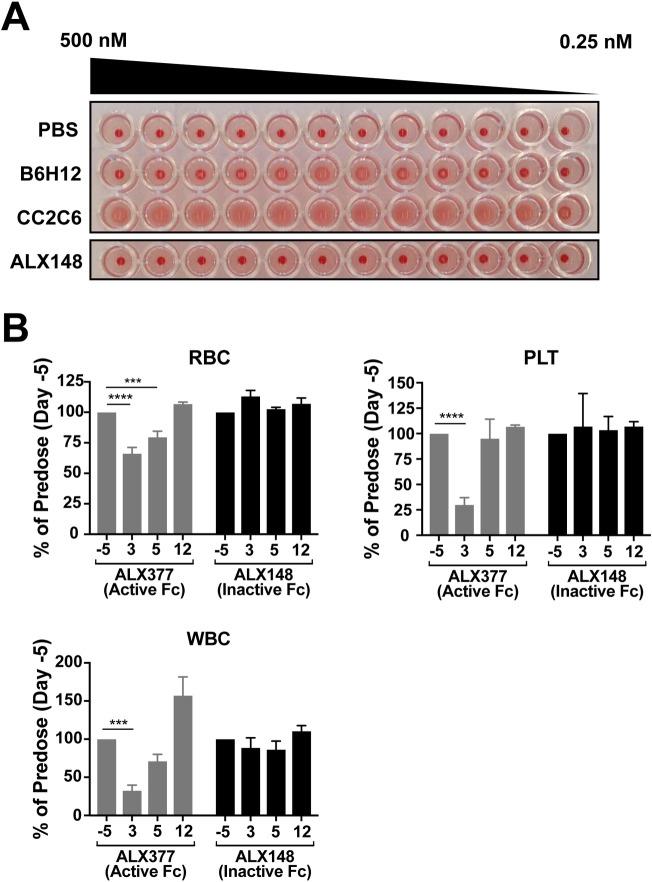
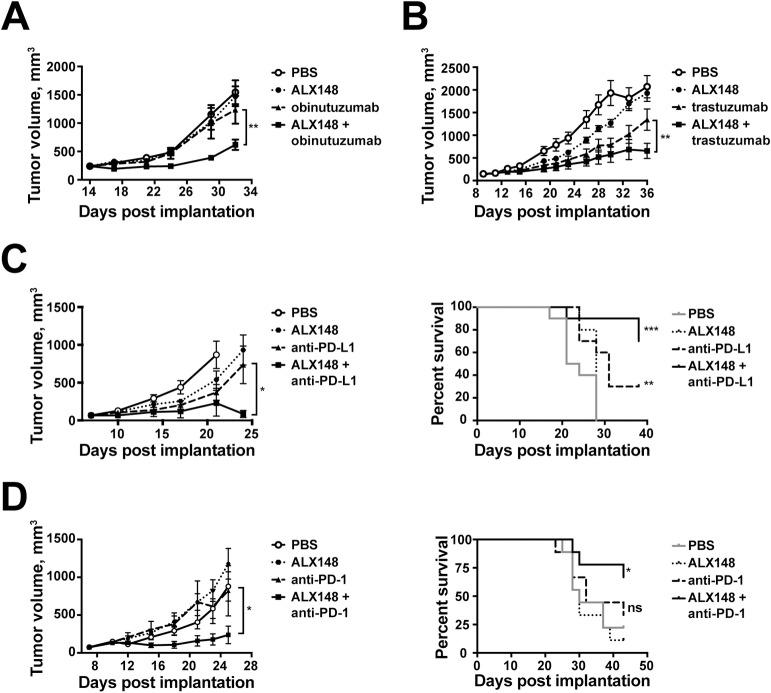
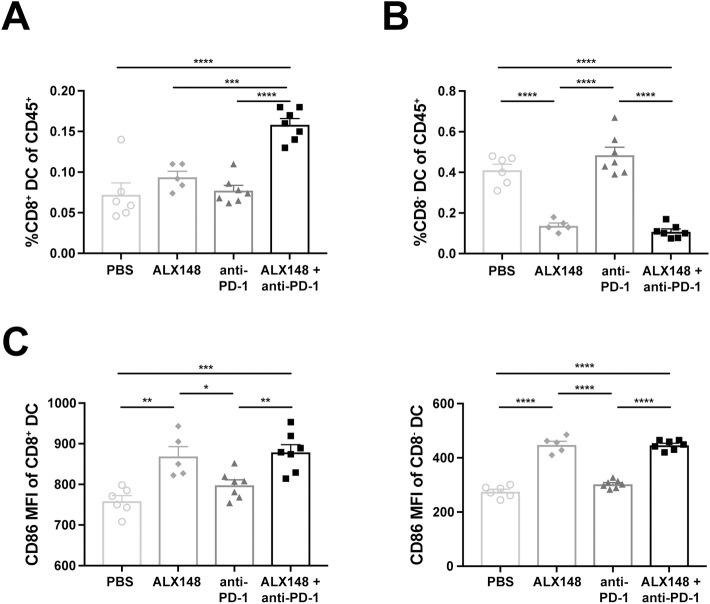
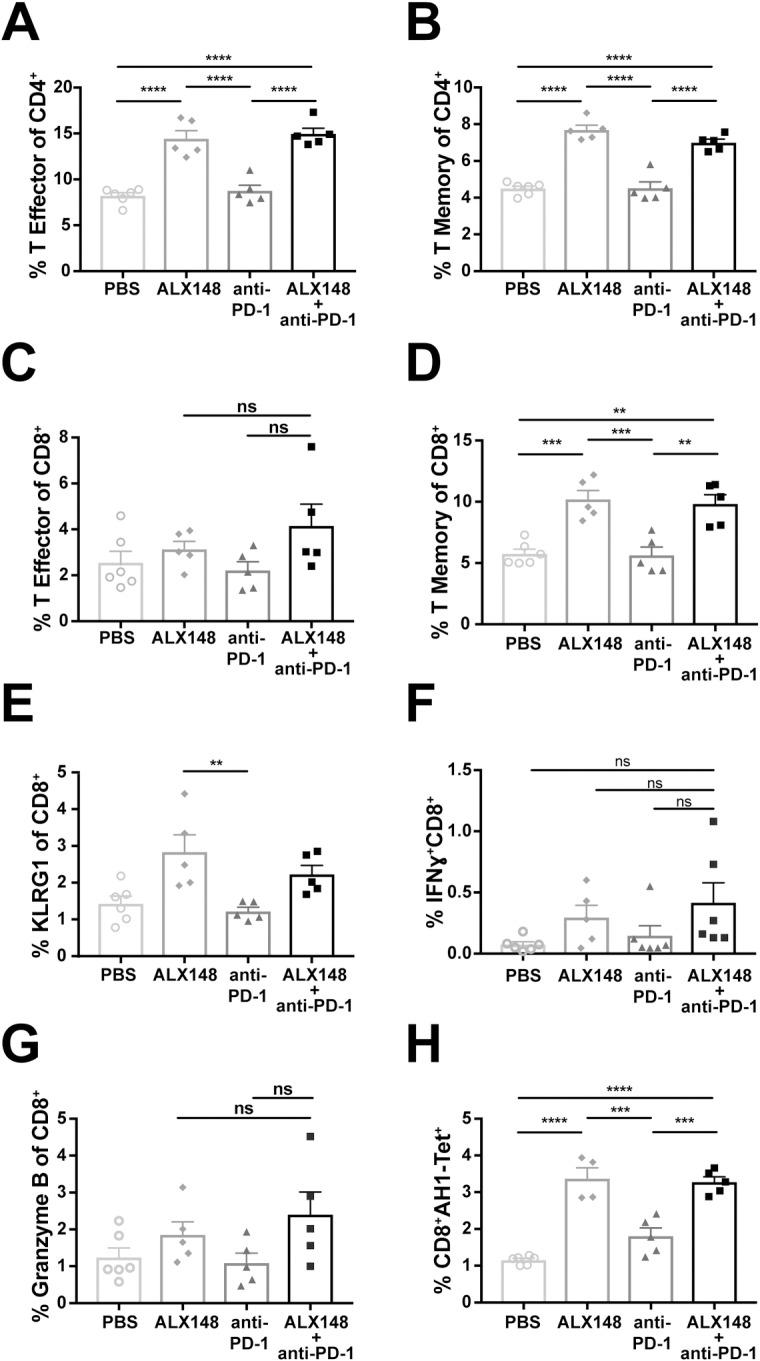
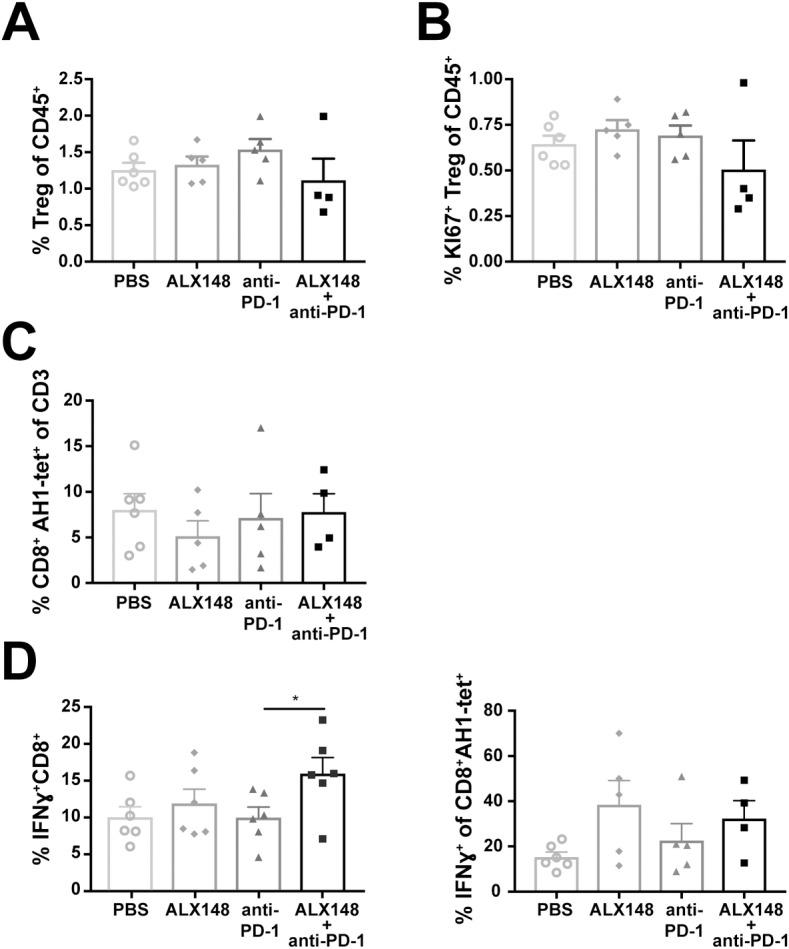
CD47 is a widely expressed cell surface protein that functions as an immune checkpoint in cancer. When expressed by tumor cells, CD47 can bind SIRPα on myeloid cells, leading to suppression of tumor cell phagocytosis and other innate immune functions. CD47-SIRPα signaling has also been implicated in the suppression of adaptive antitumor responses, but the relevant cellular functions have yet to be elucidated. Therapeutic blockade of the CD47 pathway may stimulate antitumor immunity and improve cancer therapy. To this end, a novel CD47-blocking molecule, ALX148, was generated by fusing a modified SIRPα D1 domain to an inactive human IgG1 Fc. ALX148 binds CD47 from multiple species with high affinity, inhibits wild type SIRPα binding, and enhances phagocytosis of tumor cells by macrophages. ALX148 has no effect on normal human blood cells in vitro or on blood cell parameters in rodent and non-human primate studies. Across several murine tumor xenograft models, ALX148 enhanced the antitumor activity of different targeted antitumor antibodies. Additionally, ALX148 enhanced the antitumor activity of multiple immunotherapeutic antibodies in syngeneic tumor models. These studies revealed that CD47 blockade with ALX148 induces multiple responses that bridge innate and adaptive immunity. ALX148 stimulates antitumor properties of innate immune cells by promoting dendritic cell activation, macrophage phagocytosis, and a shift of tumor-associated macrophages toward an inflammatory phenotype. ALX148 also stimulated the antitumor properties of adaptive immune cells, causing increased T cell effector function, pro-inflammatory cytokine production, and a reduction in the number of suppressive cells within the tumor microenvironment. Taken together, these results show that ALX148 binds and blocks CD47 with high affinity, induces a broad antitumor immune response, and has a favorable safety profile.
CD47 是一种广泛表达的细胞表面蛋白,在癌症中作为免疫检查点发挥作用。当肿瘤细胞表达 CD47 时,它可以与髓样细胞上的 SIRPα 结合,导致肿瘤细胞吞噬作用和其他固有免疫功能受到抑制。CD47-SIRPα 信号也与适应性抗肿瘤反应的抑制有关,但相关的细胞功能尚未阐明。阻断 CD47 途径的治疗可能会刺激抗肿瘤免疫并改善癌症治疗。为此,通过将修饰的 SIRPα D1 结构域融合到无活性的人 IgG1 Fc 上,生成了一种新型的 CD47 阻断分子 ALX148。ALX148 以高亲和力结合来自多种物种的 CD47,抑制野生型 SIRPα 结合,并增强巨噬细胞对肿瘤细胞的吞噬作用。ALX148 对体外的正常人血细胞或啮齿动物和非人类灵长类动物研究中的血细胞参数没有影响。在几种小鼠肿瘤异种移植模型中,ALX148 增强了不同靶向抗肿瘤抗体的抗肿瘤活性。此外,ALX148 在同种异体肿瘤模型中增强了多种免疫治疗抗体的抗肿瘤活性。这些研究表明,ALX148 通过促进树突状细胞激活、巨噬细胞吞噬作用以及肿瘤相关巨噬细胞向炎症表型的转变,阻断 CD47 可诱导固有免疫和适应性免疫的多种反应。ALX148 通过促进树突状细胞激活、巨噬细胞吞噬作用以及肿瘤相关巨噬细胞向炎症表型的转变,刺激固有免疫细胞的抗肿瘤特性。ALX148 还刺激适应性免疫细胞的抗肿瘤特性,导致 T 细胞效应功能增强、促炎细胞因子产生增加以及肿瘤微环境中抑制性细胞数量减少。总之,这些结果表明,ALX148 以高亲和力结合并阻断 CD47,诱导广泛的抗肿瘤免疫反应,并且具有良好的安全性特征。





 Zotero 插件