
西洛多辛与坦索罗辛用于输尿管结石的药物排石治疗:系统评价和荟萃分析。
Silodosin versus tamsulosin for medical expulsive treatment of ureteral stones: A systematic review and meta-analysis.
机构信息
Emergency Department, Wan Fang Hospital, Taipei Medical University, Taipei, Taiwan.
Graduate Institute of Clinical Medicine, College of Medicine, Taipei Medical University, Taipei, Taiwan.
出版信息
PLoS One. 2018 Aug 28;13(8):e0203035. doi: 10.1371/journal.pone.0203035. eCollection 2018.
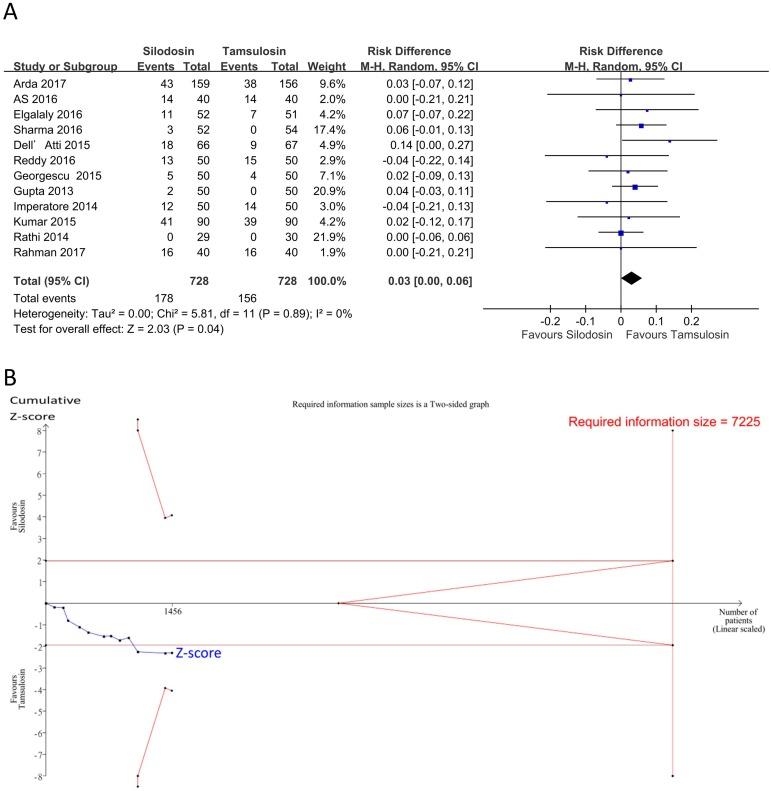
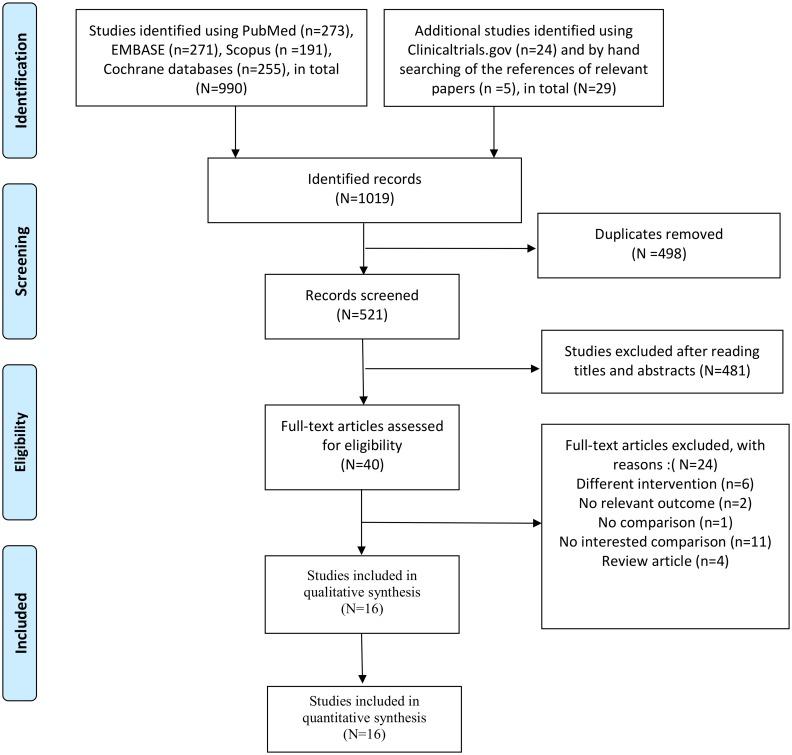
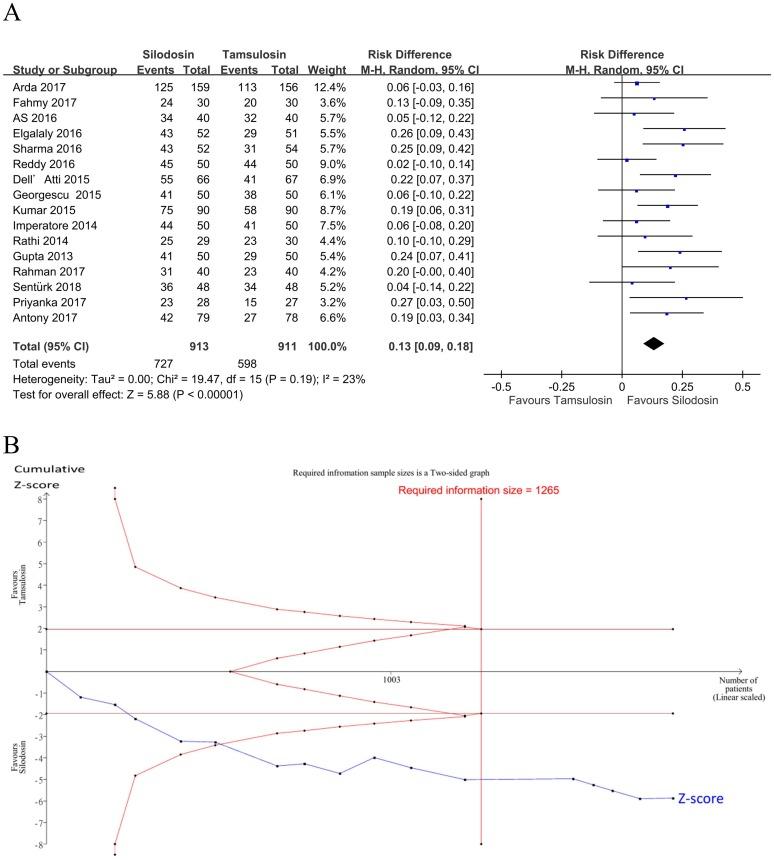
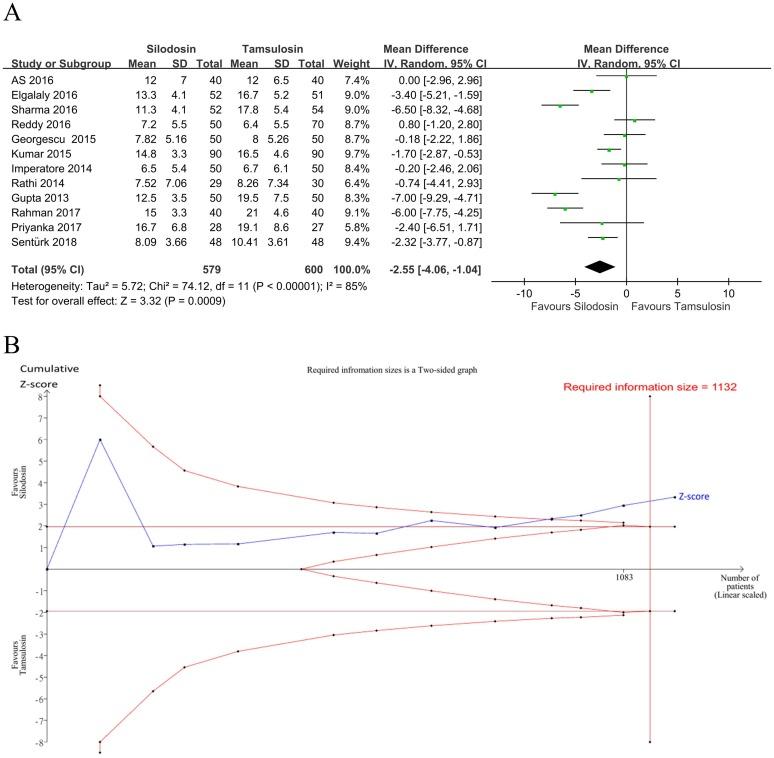
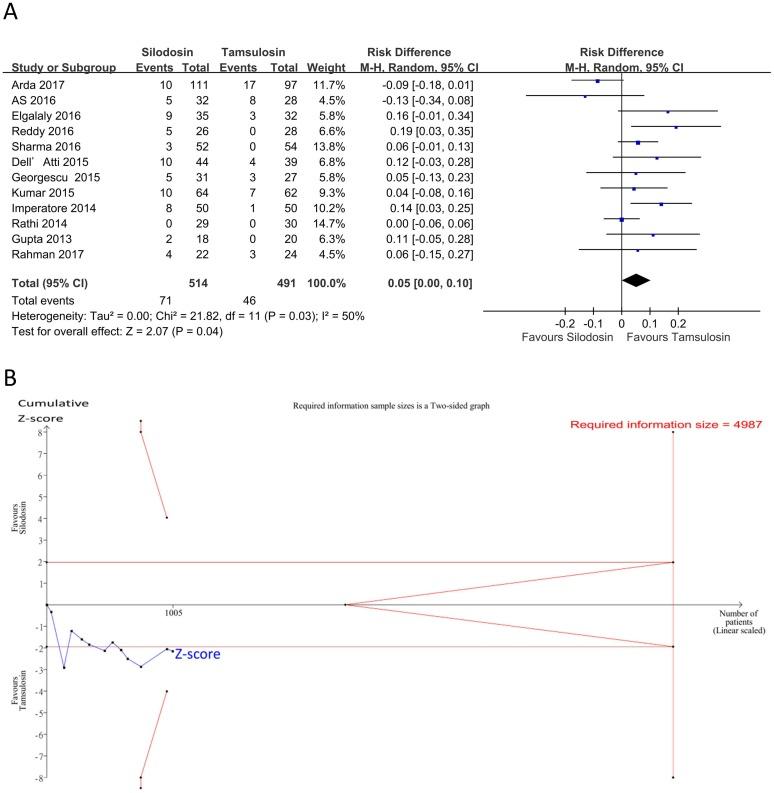
Silodosin, a recently introduced selective α-blocker, has a much higher selectivity for the α-1A receptor. The efficacy and safety of silodosin compared to tamsulosin in medical expulsive therapy (MET) are controversial. The objective of this study was to assess the efficacy and safety of silodosin compared to tamsulosin for treating ureteral stones <10 mm in diameter. We systematically searched the PubMed, EMBASE, Cochrane library, and Scopus databases from their inception to May 2018. We included randomized controlled studies (RCTs) and observational studies, which investigated stone expulsion rates using silodosin compared to tamsulosin. Data were synthesized using a random-effects model. Sixteen studies with 1824 patients were eligible for inclusion. Silodosin achieved significantly higher expulsion rates than tamsulosin (pooled risk difference (RD): 0.13, 95% confidence interval (CI): 0.09 to 0.18, GRADE: high). A subgroup analyses showed that silodosin has a significantly higher expulsion rate on stone sizes of 5-10 mm than tamsulosin (pooled RD: 0.14, 95% CI: 0.06 to 0.22, I2 = 0%). The superior effect was not observed on stone sizes <5 mm. A multivariate regression showed that the RD was negatively associated with the control expulsion rate after adjusting for age and gender (coefficient -0.658, p = 0.01). A sensitivity analysis showed that our findings were robust. Patients receiving silodosin also probably had a significantly shorter expulsion time (pooled mean difference (MD): -2.55 days, 95% CI: -4.06 to -1.04, I2 = 85%, GRADE: moderate) and may have fewer pain episodes (pooled MD: -0.3, 95% CI: -0.51 to -0.09, GRADE: low) but a higher incidence of retrograde ejaculation by 5% compared to those receiving tamsulosin. In conclusion, compared to tamsulosin, silodosin provided significantly better stone passage for patients with ureteral stones (particularly for sizes of 5~10 mm), shorter expulsion times, and fewer pain episodes but caused a higher incidence of retrograde ejaculation.
西洛多辛是一种新型的高选择性α1A 受体阻滞剂,与坦索罗辛相比,对α1A 受体的选择性更高。西洛多辛与坦索罗辛在医学排石疗法(MET)中的疗效和安全性仍存在争议。本研究旨在评估西洛多辛与坦索罗辛治疗直径<10mm 输尿管结石的疗效和安全性。我们系统地检索了 PubMed、EMBASE、Cochrane 图书馆和 Scopus 数据库,检索时间从建库至 2018 年 5 月。我们纳入了比较西洛多辛与坦索罗辛排石率的随机对照试验(RCT)和观察性研究。采用随机效应模型进行数据综合。纳入的 16 项研究共 1824 例患者符合纳入标准。西洛多辛的排石率显著高于坦索罗辛(合并风险差(RD):0.13,95%置信区间(CI):0.09 至 0.18,GRADE:高)。亚组分析显示,对于 5-10mm 的结石,西洛多辛的排石率显著高于坦索罗辛(合并 RD:0.14,95%CI:0.06 至 0.22,I2 = 0%),而对于<5mm 的结石则没有观察到这种优势。多变量回归分析显示,在调整年龄和性别后,RD 与对照组的排石率呈负相关(系数-0.658,p = 0.01)。敏感性分析表明,我们的研究结果是稳健的。接受西洛多辛治疗的患者排石时间也可能更短(合并平均差(MD):-2.55 天,95%CI:-4.06 至-1.04,I2 = 85%,GRADE:中),疼痛发作次数更少(合并 MD:-0.3,95%CI:-0.51 至-0.09,GRADE:低),但与坦索罗辛相比,逆行射精的发生率增加 5%。总之,与坦索罗辛相比,西洛多辛为输尿管结石患者(特别是 5-10mm 大小的结石)提供了更好的结石排出效果,排石时间更短,疼痛发作次数更少,但逆行射精的发生率更高。



 Zotero 插件