
妊娠糖尿病以性别特异性方式改变了 2 季度羊水中的代谢组学特征。
Gestational Diabetes Alters the Metabolomic Profile in 2nd Trimester Amniotic Fluid in a Sex-Specific Manner.
机构信息
Department of Obstetrics and Gynecology, Perelman School of Medicine, University of Pennsylvania, Philadelphia, PA 19104, USA. Katheen.O'
Center for Research in Reproduction and Women's Health, Perelman School of Medicine, University of Pennsylvania, Philadelphia, PA 19104, USA. Katheen.O'
出版信息
Int J Mol Sci. 2018 Sep 10;19(9):2696. doi: 10.3390/ijms19092696.
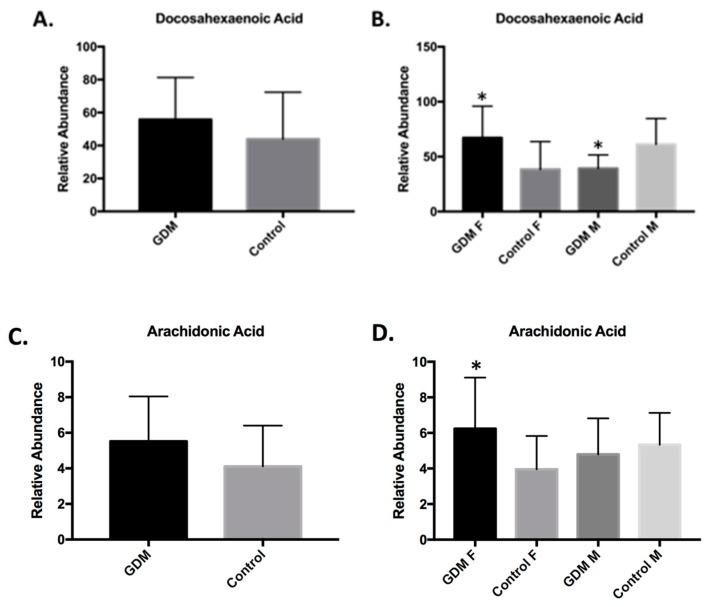
Maternal diabetes and obesity induce marked abnormalities in glucose homeostasis and insulin secretion in the fetus, and are linked to obesity, diabetes, and metabolic disease in the offspring, with specific metabolic characterization based on offspring sex. Gestational diabetes (GDM) has profound effects on the intrauterine milieu, which may reflect and/or modulate the function of the maternal⁻fetal unit. In order to characterize metabolic factors that affect offspring development, we profiled the metabolome of second trimester amniotic fluid (AF) from women who were subsequently diagnosed with gestational diabetes (GDM) using a targeted metabolomics approach, profiling 459 known biochemicals through gas chromatography/mass spectrometry (GC/MS) and liquid chromatography/mass spectrometry (LC/MS) assays. Using a nested case-control study design, we identified 69 total biochemicals altered by GDM exposure, while sex-specific analysis identified 44 and 58 metabolites in male and female offspring, respectively. The most significant changes were in glucose, amino acid, glutathione, fatty acid, sphingolipid, and bile acid metabolism with specific changes identified based on the offspring sex. Targeted isotope dilution LC/MS confirmatory assays measured significant changes in docosahexaenoic acid and arachidonic acid. We conclude that the sex-specific alterations in GDM maternal⁻fetal metabolism may begin to explain the sex-specific metabolic outcomes seen in offspring exposed to GDM in utero.
母体糖尿病和肥胖会导致胎儿葡萄糖稳态和胰岛素分泌出现明显异常,并与后代的肥胖、糖尿病和代谢疾病相关,具体的代谢特征取决于后代的性别。妊娠期糖尿病(GDM)对宫内环境有深远影响,这可能反映和/或调节母体⁻胎儿单位的功能。为了描述影响后代发育的代谢因素,我们采用靶向代谢组学方法对随后被诊断为妊娠期糖尿病(GDM)的女性的中期羊水(AF)代谢组进行了分析,通过气相色谱/质谱(GC/MS)和液相色谱/质谱(LC/MS)分析对 459 种已知生化物质进行了分析。通过嵌套病例对照研究设计,我们确定了 69 种总生化物质受到 GDM 暴露的影响,而性别特异性分析分别在男性和女性后代中确定了 44 种和 58 种代谢物。最显著的变化发生在葡萄糖、氨基酸、谷胱甘肽、脂肪酸、鞘脂和胆汁酸代谢中,并且根据后代的性别确定了特定的变化。靶向同位素稀释 LC/MS 确证测定表明,二十二碳六烯酸和花生四烯酸发生了显著变化。我们得出结论,GDM 母体⁻胎儿代谢的性别特异性改变可能开始解释在宫内暴露于 GDM 的后代中出现的性别特异性代谢结果。

 Zotero 插件