
杏仁核亚核在周围神经病变中的痛觉和抑郁样行为中的关键作用。
The critical role of amygdala subnuclei in nociceptive and depressive-like behaviors in peripheral neuropathy.
机构信息
Laboratory of Neuroscience, Hospital Sirio-Libanes, Sao Paulo, SP, Brazil.
出版信息
Sci Rep. 2018 Sep 11;8(1):13608. doi: 10.1038/s41598-018-31962-w.
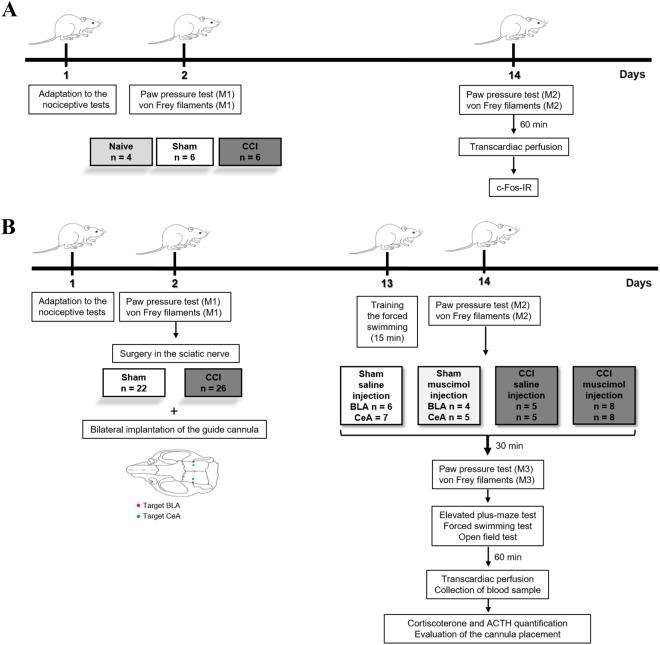
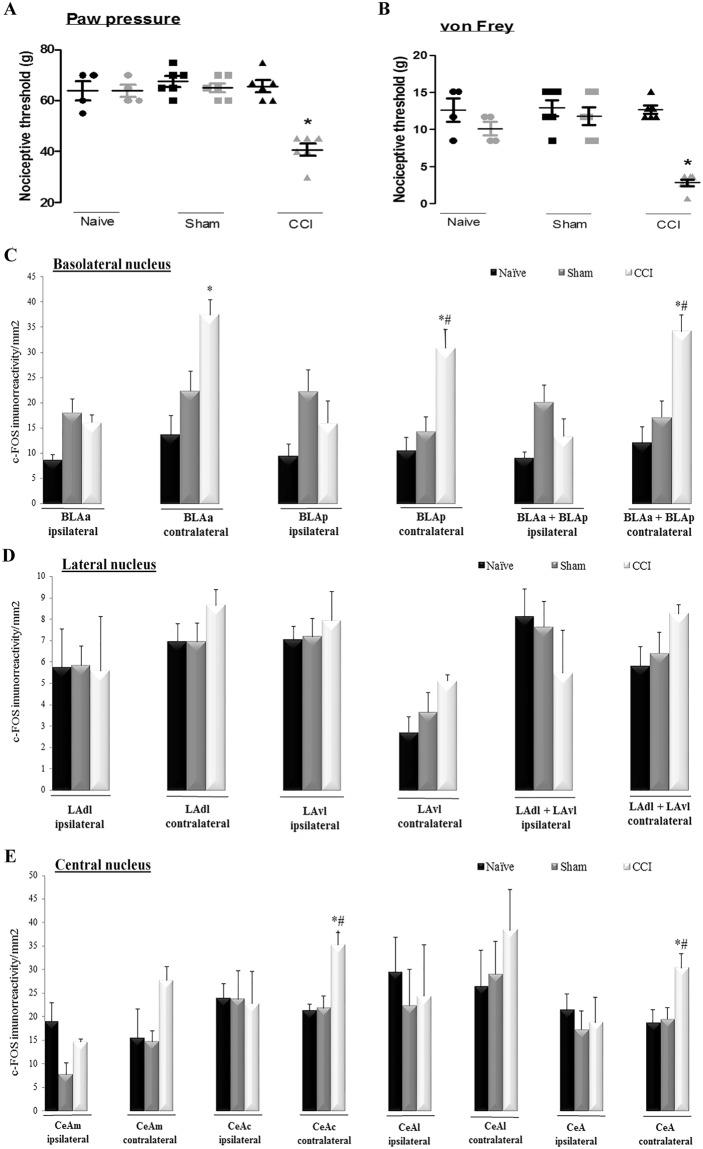
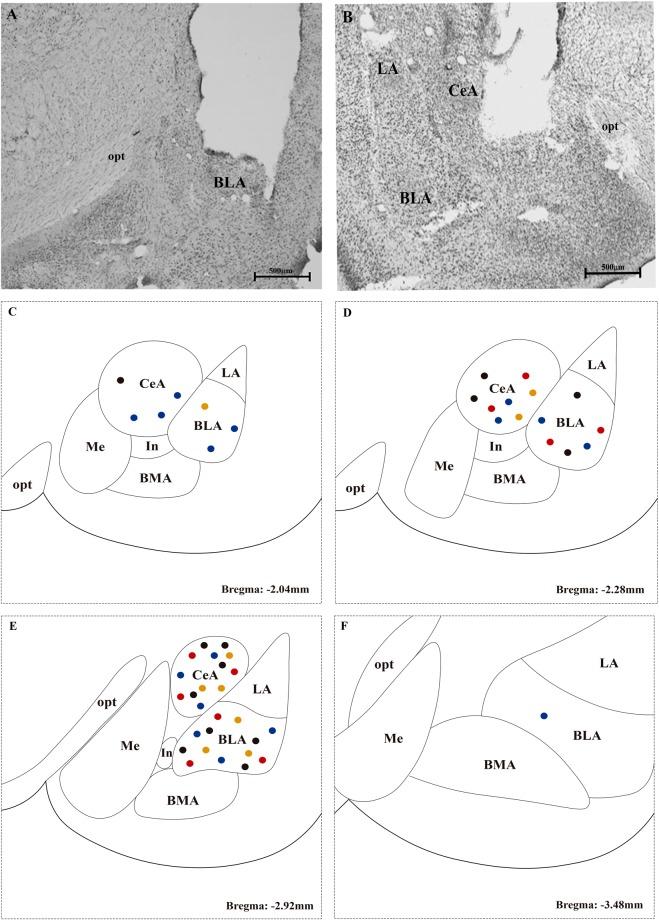
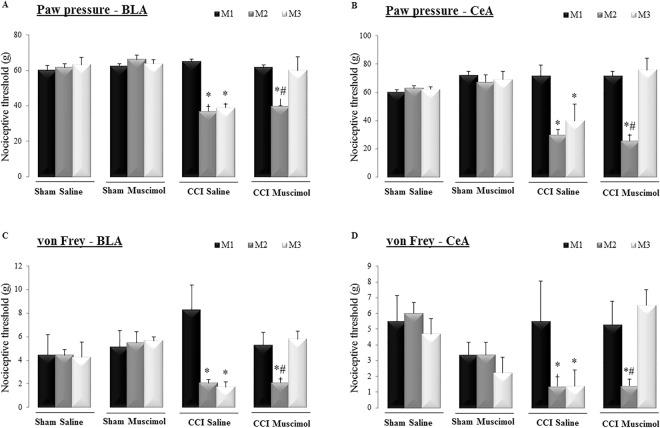
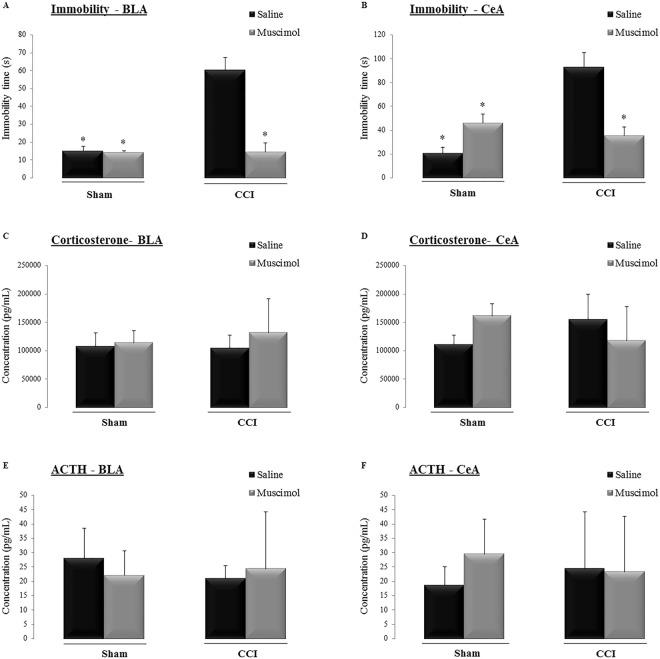
The amygdala is an important component of the limbic system that participates in the control of the pain response and modulates the affective-motivational aspect of pain. Neuropathic pain is a serious public health problem and has a strong affective-motivational component that makes it difficult to treat. The central (CeA), basolateral (BLA) and lateral (LA) nuclei of the amygdala are involved in the processing and regulation of chronic pain. However, the roles of these nuclei in the maintenance of neuropathic pain, anxiety and depression remain unclear. Thus, the main objective of this study was to investigate the role of amygdala subnuclei in the modulation of neuropathic pain, including the affective-motivational axis, in an experimental model of peripheral neuropathy. The specific goals were as follows: (1) To evaluate the nociceptive responses and the patterns of activation of the CeA, BLA and LA in neuropathic rats; and (2) To evaluate the effect of inactivating the amygdala nuclei on the nociceptive response, anxiety and depressive behaviors, motor activity, and plasma stress hormones in animals with neuropathic pain. Thus, mechanical hyperalgesia and allodynia, and the pattern of c-Fos staining in the amygdala subnuclei were evaluated in rats with chronic constriction of the sciatic nerve, as well as sham-operated and naïve rats. Once the amygdala subnuclei involved in neuropathic pain response were defined, those subnuclei were pharmacological inactivated. The effect of muscimol inactivation on the nociceptive response (hyperalgesia and allodynia), anxiety (elevated plus-maze), depressive-like behavior (forced swim test), motor activity (open field), and plasma stress hormone levels (corticosterone and adrenocorticotropic hormone) were evaluated in sham-operated and neuropathic animals. The results showed that the anterior and posterior portions of the BLA and the central portion of the CeA are involved in controlling neuropathic pain. The inactivation of these nuclei reversed hyperalgesia, allodynia and depressive-like behavior in animals with peripheral neuropathy. Taken together, our findings improve our understanding of the neurocircuitry involved in persistent pain and the roles of specific amygdala subnuclei in the modulation of neuropathic pain, including the neurocircuitry that processes the affective-motivational component of pain.
杏仁核是边缘系统的重要组成部分,参与疼痛反应的控制,并调节疼痛的情感动机方面。神经病理性疼痛是一个严重的公共卫生问题,具有强烈的情感动机成分,使其难以治疗。杏仁核的中央核(CeA)、基底外侧核(BLA)和外侧核(LA)参与慢性疼痛的处理和调节。然而,这些核在维持神经病理性疼痛、焦虑和抑郁中的作用尚不清楚。因此,本研究的主要目的是研究杏仁核亚核在周围神经病变的实验模型中对神经病理性疼痛的调节作用,包括情感动机轴。具体目标如下:(1)评估神经病理性大鼠 CeA、BLA 和 LA 的痛觉反应和激活模式;(2)评估杏仁核核团失活对神经病理性疼痛动物的痛觉反应、焦虑和抑郁行为、运动活动和血浆应激激素的影响。因此,在慢性坐骨神经缩窄大鼠以及假手术和未处理大鼠中评估了机械性痛觉过敏和痛觉过敏,以及杏仁核亚核 c-Fos 染色的模式。一旦确定了参与神经病理性疼痛反应的杏仁核亚核,就对这些亚核进行药理学失活。在假手术和神经病理性动物中评估了 muscimol 失活对痛觉反应(痛觉过敏和痛觉过敏)、焦虑(高架十字迷宫)、抑郁样行为(强迫游泳试验)、运动活动(旷场试验)和血浆应激激素水平(皮质酮和促肾上腺皮质激素)的影响。结果表明,BLA 的前、后部分和 CeA 的中央部分参与控制神经病理性疼痛。这些核的失活逆转了周围神经病变动物的痛觉过敏、痛觉过敏和抑郁样行为。总之,我们的研究结果提高了我们对参与持续性疼痛的神经回路以及特定杏仁核亚核在调节神经病理性疼痛(包括处理疼痛的情感动机成分的神经回路)中的作用的认识。
 Zotero 插件