
PD1-CD28 融合蛋白使 CD4+ T 细胞在胰腺癌和非霍奇金淋巴瘤模型中的过继性 T 细胞治疗中获得辅助作用。
PD1-CD28 Fusion Protein Enables CD4+ T Cell Help for Adoptive T Cell Therapy in Models of Pancreatic Cancer and Non-hodgkin Lymphoma.
机构信息
Center of Integrated Protein Science Munich (CIPS-M) and Division of Clinical Pharmacology, Department of Medicine IV, Klinikum der Universität München, Member of the German Center for Lung Research (DZL), Munich, Germany.
German Cancer Research Center (DKTK), Partner Site Munich, Heidelberg, Germany.
出版信息
Front Immunol. 2018 Aug 30;9:1955. doi: 10.3389/fimmu.2018.01955. eCollection 2018.
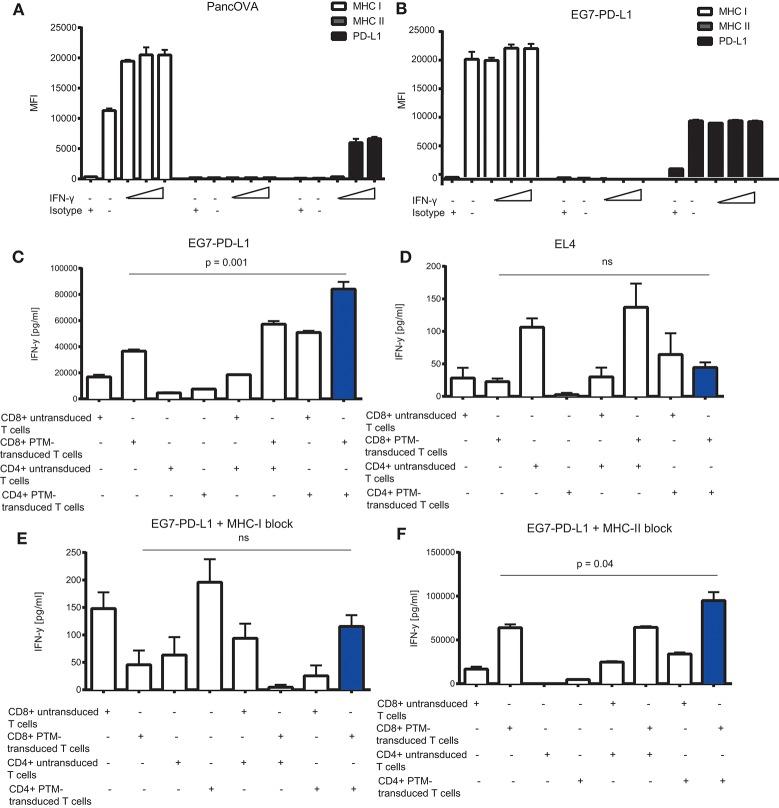
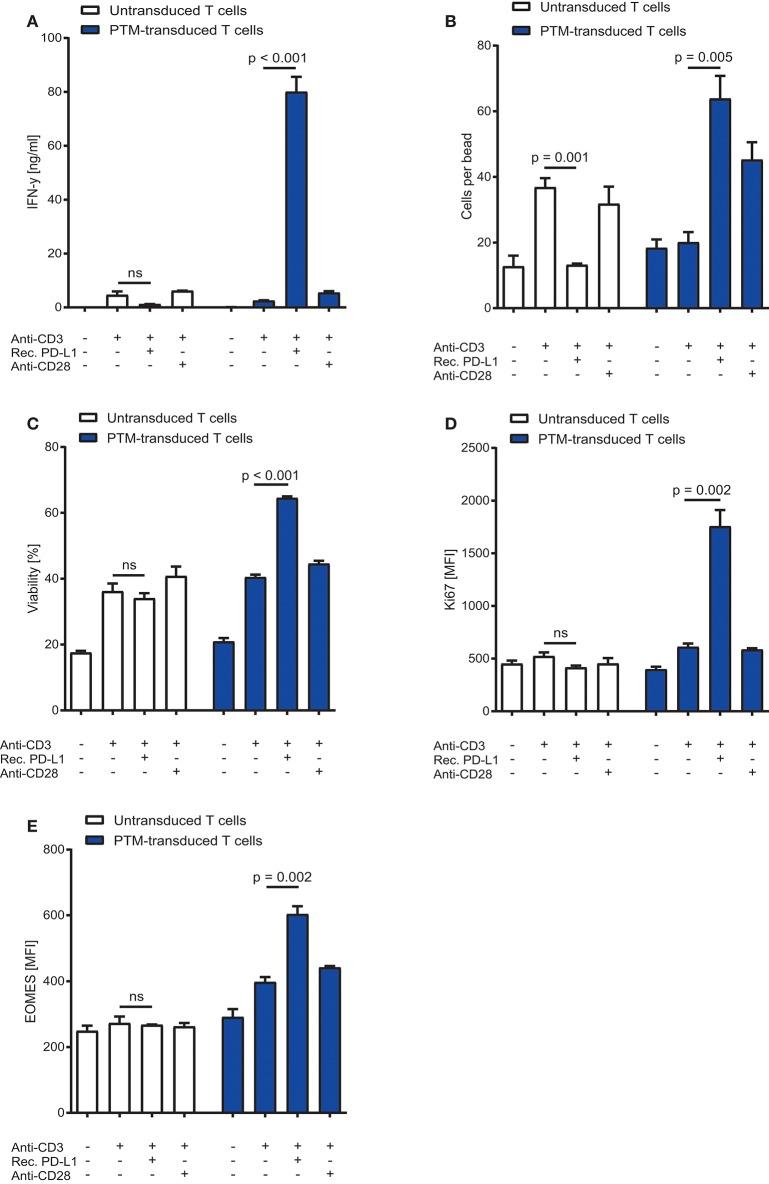
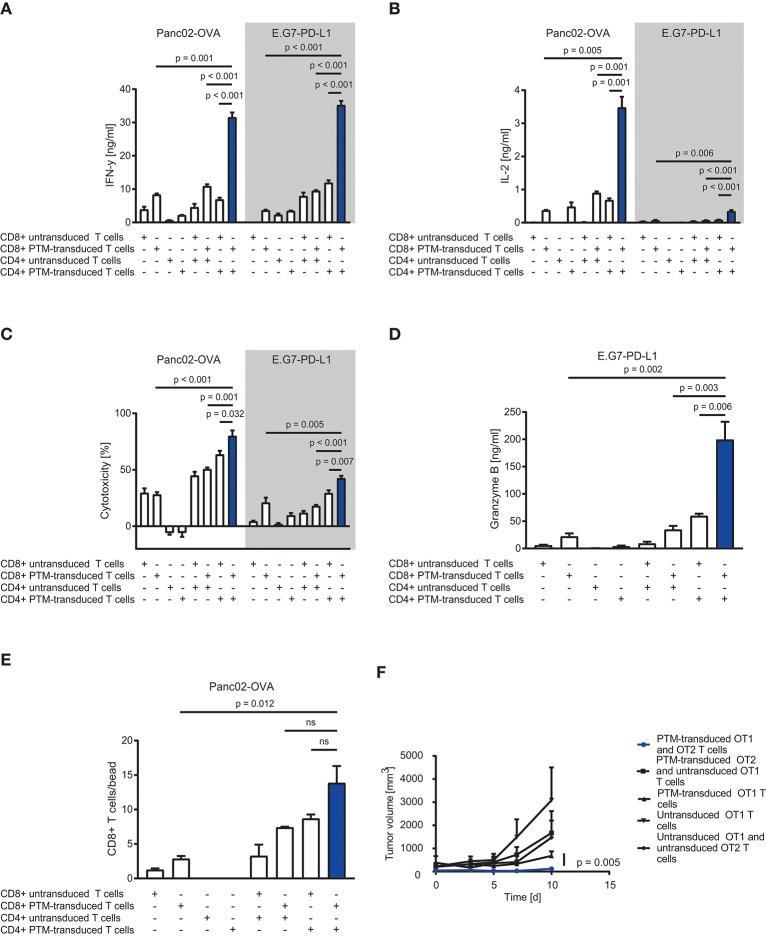
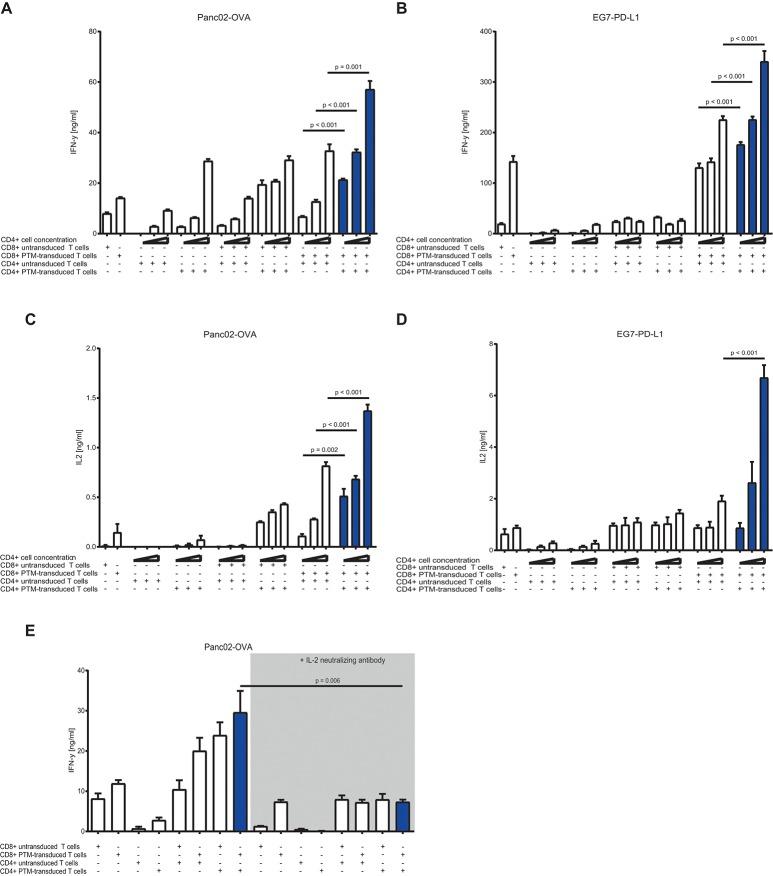
Interaction of the programmed death receptor 1 (PD-1) and its ligand, PD-L1, suppresses T cell activity and permits tumors to evade T cell-mediated immune surveillance. We have recently demonstrated that antigen-specific CD8+ T cells transduced with a PD1-CD28 fusion protein are protected from PD-1-mediated inhibition. We have now investigated the potential of PD1-CD28 fusion protein-transduced CD4+ T cells alone or in combination with CD8+ T cells for immunotherapy of pancreatic cancer and non-Hodgkin lymphoma. OVA-specific CD4+ and CD8+ were retrovirally transduced with the PD1-CD28 fusion protein. Cytokine release, proliferation, cytotoxic activity, and phenotype of transduced T cells were assessed in the context of Panc02-OVA (murine pancreatic cancer model) and E.G7-PD-L1 (murine T cell lymphoma model) cells. Stimulation of PD1-CD28 fusion protein-transduced CD4+ T cells with anti-CD3 and recombinant PD-L1 induced specific T cell activation, as measured by IFN-y release and T cell proliferation. Coculture with Panc02-OVA or E.G7-PD-L1 tumor cells also led to specific activation of CD4+ T cells. Cytokine release and T cell proliferation was most effective when tumor cells simultaneously encountered genetically engineered CD4+ and CD8+ T cells. Synergy between both cell populations was also observed for specific tumor cell lysis. T cell cytotoxicity was mediated via granzyme B release and mediated enhanced tumor control . Transduced CD4+ and CD8+ T cells in co-culture with tumor cells developed a predominant central memory phenotype over time. Different ratios of CD4+ and CD8+ transduced T cells led to a significant increase of IFN-y and IL-2 secretion positively correlating with CD4+ T cell numbers used. Mechanistically, IL-2 and MHC-I were central to the synergistic activity of CD4+ and CD8+ T cells, since neutralization of IL-2 prevented the crosstalk between these cell populations. PD1-CD28 fusion protein-transduced CD4+ T cells significantly improved anti-tumoral effect of fusion protein-transduced CD8+ T cells. Thus, our results indicate that PD1-CD28 fusion protein-transduced CD4+ T cells have the potential to overcome the PD-1-PD-L1 immunosuppressive axis in pancreatic cancer and non-Hodgkin lymphoma.
程序性死亡受体 1(PD-1)及其配体 PD-L1 的相互作用抑制了 T 细胞的活性,使肿瘤能够逃避 T 细胞介导的免疫监视。我们最近证明,转导 PD1-CD28 融合蛋白的抗原特异性 CD8+T 细胞可免受 PD-1 介导的抑制。我们现在研究了单独或与 CD8+T 细胞联合使用 PD1-CD28 融合蛋白转导的 CD4+T 细胞用于胰腺癌和非霍奇金淋巴瘤免疫治疗的潜力。OVA 特异性 CD4+和 CD8+通过逆转录病毒转导 PD1-CD28 融合蛋白。在 Panc02-OVA(小鼠胰腺癌模型)和 E.G7-PD-L1(小鼠 T 细胞淋巴瘤模型)细胞的情况下,评估了转导 T 细胞的细胞因子释放、增殖、细胞毒性活性和表型。用抗 CD3 和重组 PD-L1 刺激 PD1-CD28 融合蛋白转导的 CD4+T 细胞会诱导特异性 T 细胞激活,如 IFN-y 释放和 T 细胞增殖所测量。与 Panc02-OVA 或 E.G7-PD-L1 肿瘤细胞共培养也导致 CD4+T 细胞的特异性激活。当肿瘤细胞同时遇到基因工程 CD4+和 CD8+T 细胞时,细胞因子释放和 T 细胞增殖最为有效。两个细胞群体之间也观察到协同作用,用于特异性肿瘤细胞裂解。T 细胞细胞毒性通过颗粒酶 B 释放介导,并介导增强的肿瘤控制。转导的 CD4+和 CD8+T 细胞在与肿瘤细胞共培养中随着时间的推移发展为主要的中央记忆表型。不同比例的转导 CD4+和 CD8+T 细胞导致 IFN-y 和 IL-2 分泌显著增加,与使用的 CD4+T 细胞数量呈正相关。从机制上讲,IL-2 和 MHC-I 是 CD4+和 CD8+T 细胞协同作用的核心,因为中和 IL-2 可防止这些细胞群体之间的串扰。PD1-CD28 融合蛋白转导的 CD4+T 细胞显著改善了融合蛋白转导的 CD8+T 细胞的抗肿瘤作用。因此,我们的结果表明,PD1-CD28 融合蛋白转导的 CD4+T 细胞有可能克服胰腺癌和非霍奇金淋巴瘤中的 PD-1-PD-L1 免疫抑制轴。
 Zotero 插件