
免疫检查点抑制剂相关结肠炎和肝炎。
Immune Checkpoint Inhibitor-Associated Colitis and Hepatitis.
机构信息
Rogel Cancer Center, Division of Hematology/Oncology, Department of Internal Medicine, University of Michigan, Ann Arbor, MI, USA.
Division of Gastroenterology, Department of Internal Medicine, University of Michigan, Ann Arbor, MI, USA.
出版信息
Clin Transl Gastroenterol. 2018 Sep 19;9(9):180. doi: 10.1038/s41424-018-0049-9.
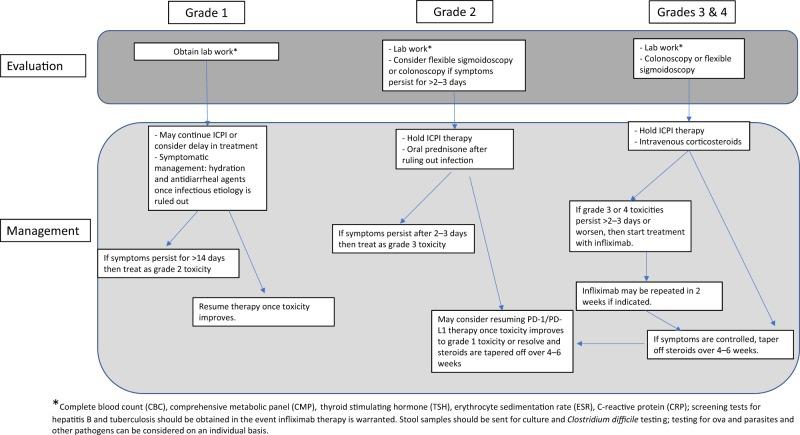
Immune checkpoint inhibitors (ICPIs) are monoclonal antibodies that target downregulators of the anti-cancer immune response: cytotoxic T-lymphocyte antigen-4, programmed cell death protein-1, and its ligand PD-L1. ICPIs are now approved for the treatment of a wide array of malignancies, with rates of durable responses in the metastatic setting far exceeding what would be expected from conventional chemotherapy. ICPIs have also been associated with rare but serious immune-related adverse events due to over-activation of the immune system that can affect any organ, including the gastrointestinal tract and liver. As the use of ICPIs in oncology continues to increase, ICPI-associated colitis and hepatitis will be encountered frequently by gastroenterologists and hepatologists. This review will focus on the diagnosis and management of ICPI-associated colitis and hepatitis. We will also compare these ICPI-related toxicities with sporadic inflammatory bowel disease and autoimmune liver disease.
免疫检查点抑制剂(ICPIs)是一种靶向抗癌免疫反应负调节剂的单克隆抗体:细胞毒性 T 淋巴细胞相关抗原 4、程序性细胞死亡蛋白 1 及其配体 PD-L1。ICPIs 现已获准用于治疗多种恶性肿瘤,转移性疾病中的持久缓解率远远超过传统化疗的预期。由于免疫系统过度激活,ICPIs 还与罕见但严重的免疫相关不良事件相关,这些事件可影响包括胃肠道和肝脏在内的任何器官。随着 ICPIs 在肿瘤学中的应用不断增加,胃肠病学家和肝病学家将经常遇到与 ICPIs 相关的结肠炎和肝炎。本综述将重点讨论 ICPI 相关结肠炎和肝炎的诊断和管理。我们还将比较这些与 ICPI 相关的毒性与散发性炎症性肠病和自身免疫性肝病。

 Zotero 插件