
在线步行干预 12 周对癌症幸存者健康和生活质量的影响:一项准随机对照试验。
Effect of a 12-Week Online Walking Intervention on Health and Quality of Life in Cancer Survivors: A Quasi-Randomized Controlled Trial.
机构信息
School of Psychology Social Work and Social Policy, University of South Australia, Adelaide, SA 5001, Australia.
Sansom Institute for Health Research, School of Health Sciences, University of South Australia, Adelaide, SA 5001, Australia.
出版信息
Int J Environ Res Public Health. 2018 Sep 21;15(10):2081. doi: 10.3390/ijerph15102081.
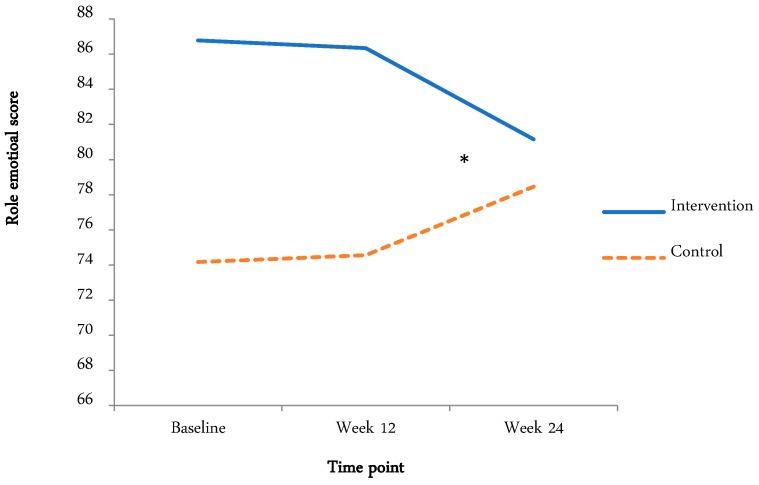
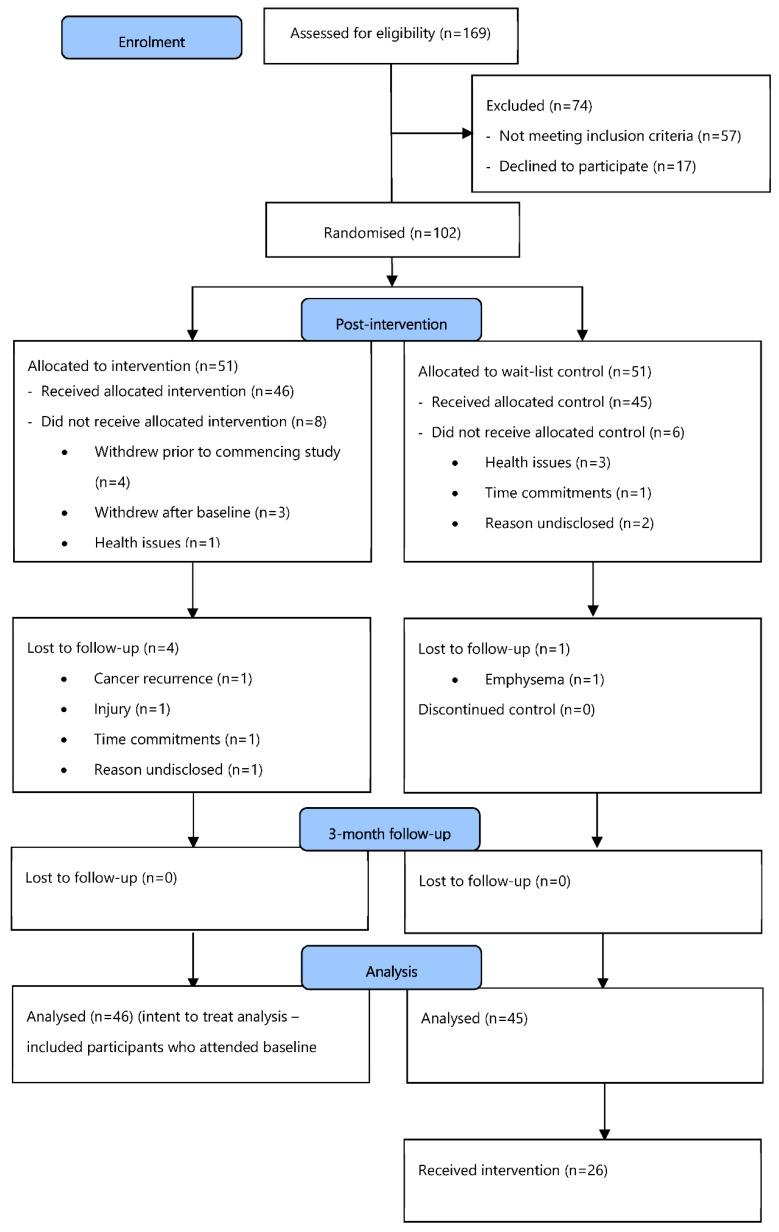
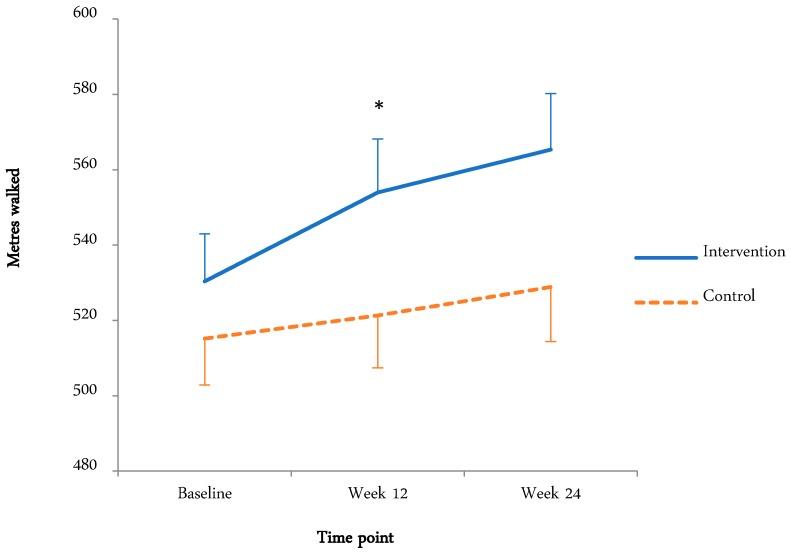
Cancer survivors are at an increased risk of experiencing physical and psychological ill-effects following cancer treatment. Rural cancer survivors are at a greater risk of future health problems following a cancer diagnosis compared to their urban counterparts. Physical activity has been targeted as a health promotion priority in cancer survivors. Research indicates that a large portion of cancer survivors do not meet physical activity recommendations. The purpose of this quasi-randomized controlled trial was to test the effectiveness of an online 12-week walking intervention designed for cancer survivors, and to explore its impact on physical health indicators and quality of life outcomes. Steps Toward Improving Diet and Exercise among cancer survivors (STRIDE) is an online resource designed according to Social Cognitive Theory and Self Determination Theory, based on individualized step goal setting. Measures of physiology, physical fitness, and quality of life were taken at the baseline, post-intervention, and three-month follow-up in an Intervention group ( = 46) and active Control group ( = 45). The Control group was provided with a pedometer but did not have access to the online program. Three-factor repeated measures ANOVAs indicated that there were improvements in physical fitness ( < 0.01), systolic blood pressure ( < 0.01), diastolic blood pressure ( < 0.01), waist girth ( < 0.01), mental health ( < 0.05), social functioning ( < 0.01), and general health ( < 0.01), but an increase in bodily pain ( < 0.01), from the baseline to week 12 and the three-month follow-up, irrespective of group allocation. Pedometer interventions, delivered with or without online support and step goal setting, show promise for improving the overall health of cancer survivors, at least in the short term.
癌症幸存者在癌症治疗后会面临身体和心理不良影响的风险增加。与城市癌症幸存者相比,农村癌症幸存者在癌症诊断后更有可能出现未来的健康问题。身体活动已被确定为癌症幸存者健康促进的重点。研究表明,很大一部分癌症幸存者不符合身体活动建议。本准随机对照试验的目的是测试针对癌症幸存者设计的 12 周在线步行干预措施的有效性,并探讨其对身体健康指标和生活质量结果的影响。Steps Toward Improving Diet and Exercise among cancer survivors (STRIDE) 是一种在线资源,根据社会认知理论和自我决定理论设计,基于个性化的目标设定。在干预组(n=46)和主动对照组(n=45)中,在基线、干预后和三个月随访时测量生理、身体适应性和生活质量指标。对照组被提供计步器,但无法访问在线计划。三因素重复测量方差分析表明,身体适应性(<0.01)、收缩压(<0.01)、舒张压(<0.01)、腰围(<0.01)、心理健康(<0.05)、社会功能(<0.01)和一般健康(<0.01)都有所改善,但身体疼痛(<0.01)从基线到第 12 周和三个月随访时都有所增加,而不论分组如何。无论是否提供在线支持和目标设定,计步器干预都显示出改善癌症幸存者整体健康状况的潜力,至少在短期内如此。
 Zotero 插件