
作为强效类固醇硫酸酯酶抑制剂的C-3和C-4取代双环香豆素氨基磺酸盐
C-3- and C-4-Substituted Bicyclic Coumarin Sulfamates as Potent Steroid Sulfatase Inhibitors.
作者信息
Ganeshapillai Dharshini, Woo L W Lawrence, Thomas Mark P, Purohit Atul, Potter Barry V L
机构信息
Medicinal Chemistry, Department of Pharmacy and Pharmacology, University of Bath, Claverton Down, Bath BA2 7AY, U.K.
Section of Investigative Medicine, Diabetes, Endocrinology & Metabolism, Imperial College London, 6th Floor, Commonwealth Building (6N2B), Hammersmith Hospital, Du Cane Road, London W12 0NN, U.K.
出版信息
ACS Omega. 2018 Sep 30;3(9):10748-10772. doi: 10.1021/acsomega.8b01383. Epub 2018 Sep 6.
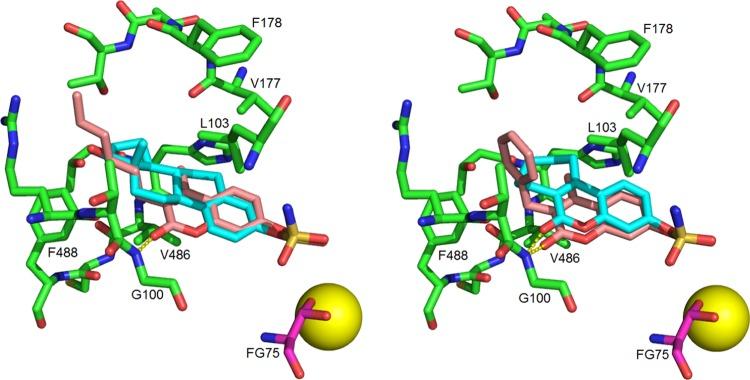
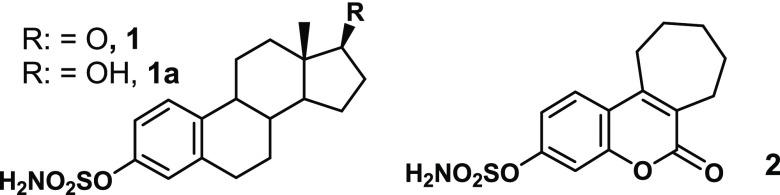
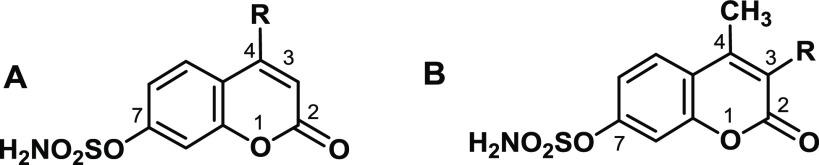
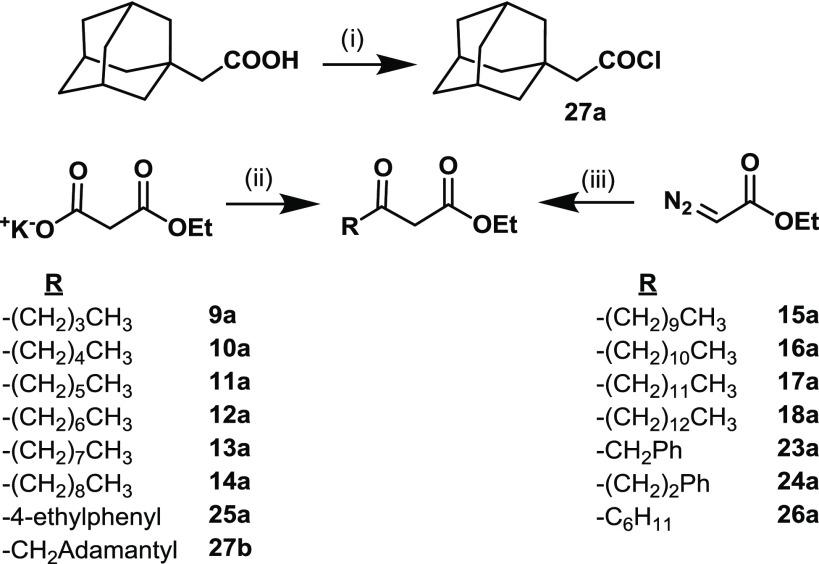
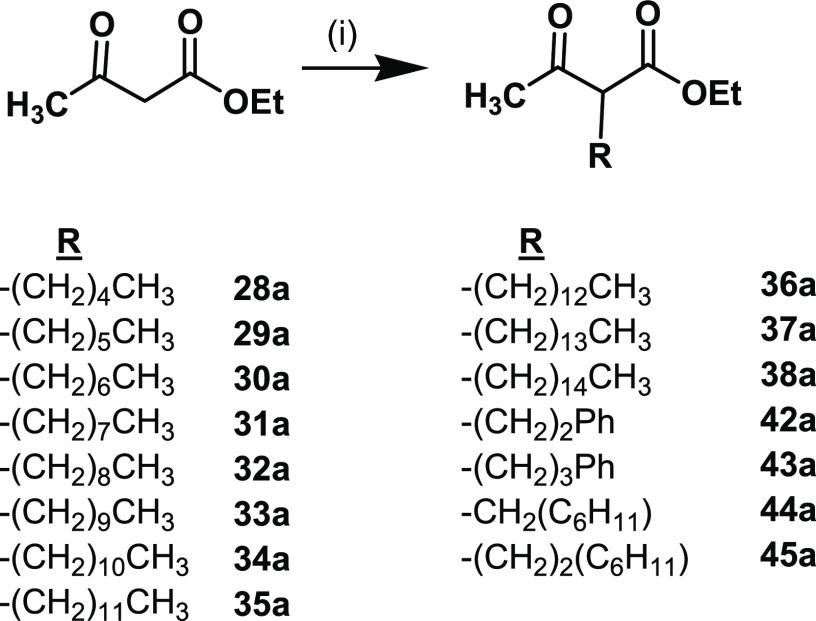
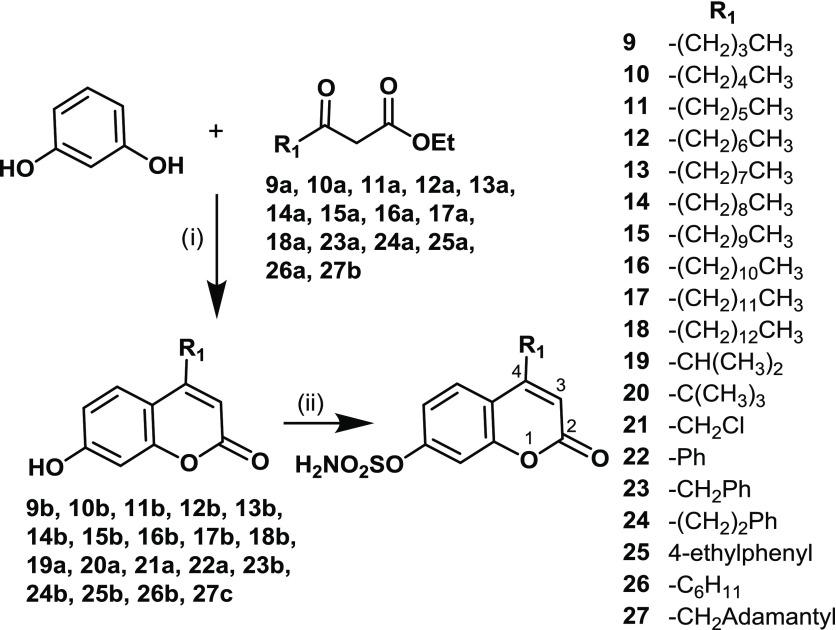
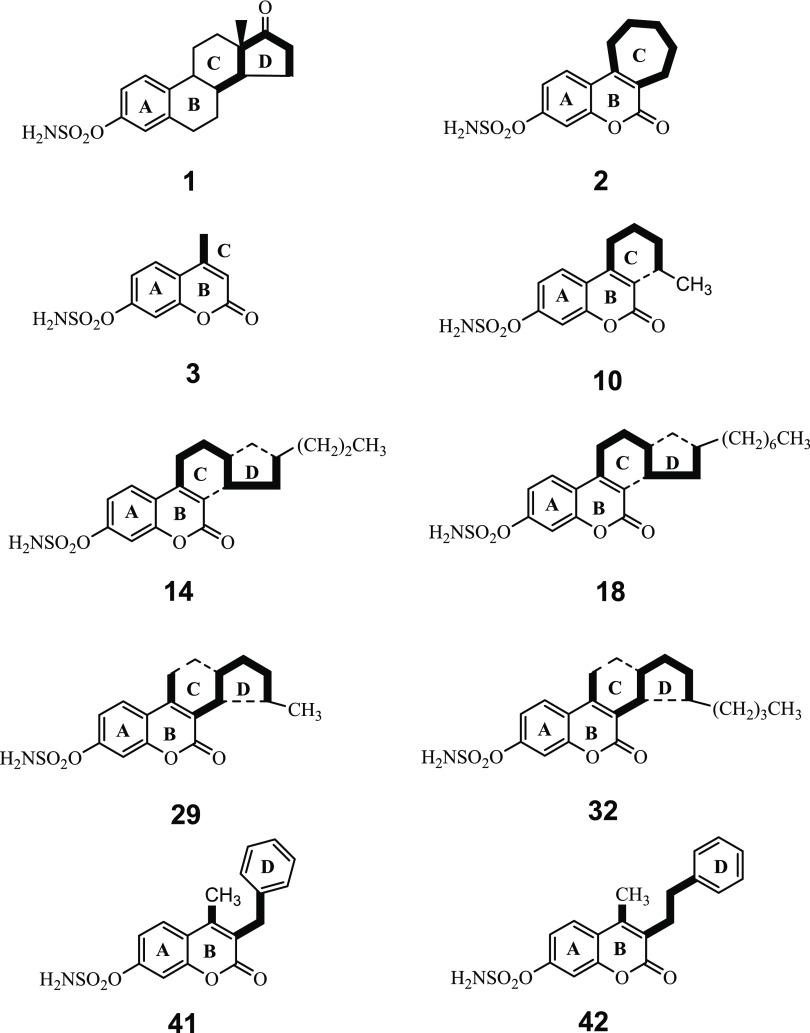
Synthetic routes to potent bicyclic nonsteroidal sulfamate-based active-site-directed inhibitors of the enzyme steroid sulfatase (STS), an emerging target in the treatment of postmenopausal hormone-dependent diseases, including breast cancer, are described. Sulfamate analogs - and - of the core in vivo active two-ring coumarin template, modified at the 4- and 3-positions, respectively, were synthesized to expand structure-activity relationships. α-Alkylacetoacetates were used to synthesize coumarin sulfamate derivatives with 3-position modifications, and the bicyclic ring of other parent coumarins was primarily constructed via the Pechmann synthesis of hydroxyl coumarins. Compounds were examined for STS inhibition in intact MCF-7 breast cancer cells and in placental microsomes. Low nanomolar potency STS inhibitors were achieved, and some were found to inhibit the enzyme in MCF-7 cells ca. 100-500 more potently than the parent 4-methylcoumarin-7--sulfamate , with the best compounds close in potency to the tricyclic clinical drug Irosustat. 3-Hexyl-4-methylcoumarin-7--sulfamate and 3-benzyl-4-methylcoumarin-7--sulfamate were particularly effective inhibitors with IC values of 0.68 and 1 nM in intact MCF-7 cells and 8 and 32 nM for placental microsomal STS, respectively. They were docked into the STS active site for comparison with estrone 3--sulfamate and Irosustat, showing their sulfamate group close to the catalytic hydrated formylglycine residue and their pendant group lying between the hydrophobic sidechains of L103, F178, and F488. Such highly potent STS inhibitors expand the structure-activity relationship for these coumarin sulfamate-based agents that possess therapeutic potential and may be worthy of further development.
本文描述了合成强效双环非甾体氨基磺酸酯类甾体硫酸酯酶(STS)活性位点导向抑制剂的路线,STS是治疗绝经后激素依赖性疾病(包括乳腺癌)的一个新兴靶点。合成了氨基磺酸酯类似物——分别在4位和3位修饰的体内活性二环香豆素模板核心的类似物,以拓展构效关系。使用α-烷基乙酰乙酸酯合成具有3位修饰的香豆素氨基磺酸酯衍生物,其他母体香豆素的双环主要通过羟基香豆素的Pechmann合成构建。在完整的MCF-7乳腺癌细胞和胎盘微粒体中检测了化合物对STS的抑制作用。获得了低纳摩尔效力的STS抑制剂,发现一些化合物在MCF-7细胞中抑制该酶的效力比母体4-甲基香豆素-7-氨基磺酸酯高约100 - 500倍,最佳化合物的效力与三环临床药物伊罗司他相近。3-己基-4-甲基香豆素-7-氨基磺酸酯和3-苄基-4-甲基香豆素-7-氨基磺酸酯是特别有效的抑制剂,在完整的MCF-7细胞中的IC值分别为0.68和1 nM,对胎盘微粒体STS的IC值分别为8和32 nM。将它们对接至STS活性位点并与雌酮3-硫酸酯和伊罗司他进行比较,结果显示它们的氨基磺酸酯基团靠近催化水合甲酰甘氨酸残基,且其侧链位于L103、F178和F488的疏水侧链之间。这类高效的STS抑制剂拓展了这些具有治疗潜力的香豆素氨基磺酸酯类药物的构效关系,可能值得进一步开发。


 Zotero 插件