
生殖道支原体黏附素 P110 结合唾液酸类人受体。
Mycoplasma genitalium adhesin P110 binds sialic-acid human receptors.
机构信息
Instituto de Biología Molecular de Barcelona (IBMB-CSIC) and Maria de Maeztu Unit of Excellence, Parc Científic de Barcelona, Baldiri Reixac 10, 08028, Barcelona, Spain.
Institut de Biotecnologia i Biomedicina and Departament de Bioquímica i Biologia Molecular, Universitat Autònoma de Barcelona, 08193, Bellaterra, Barcelona, Spain.
出版信息
Nat Commun. 2018 Oct 26;9(1):4471. doi: 10.1038/s41467-018-06963-y.
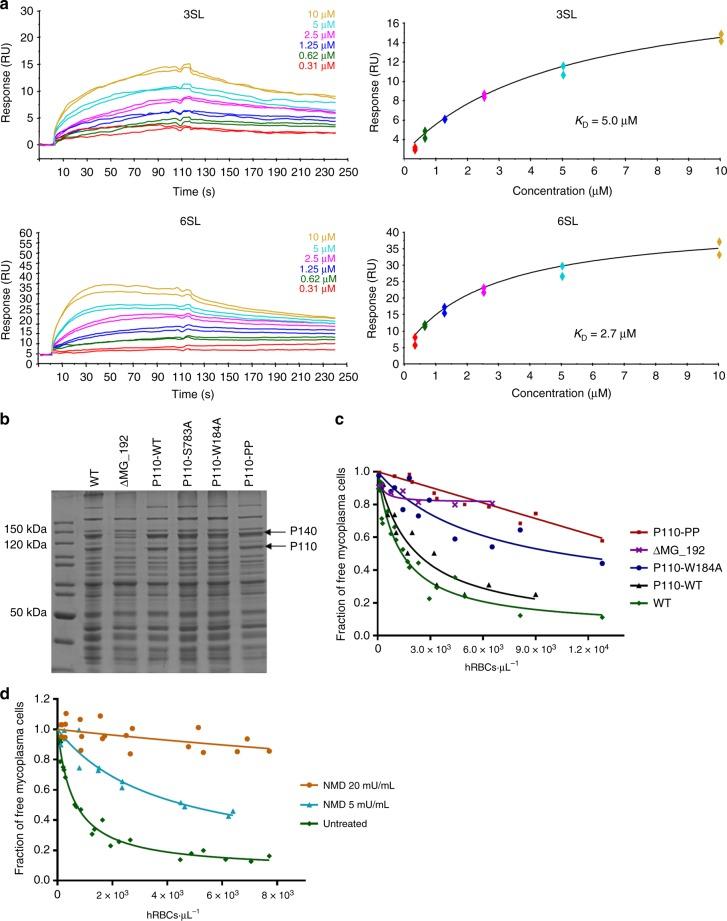
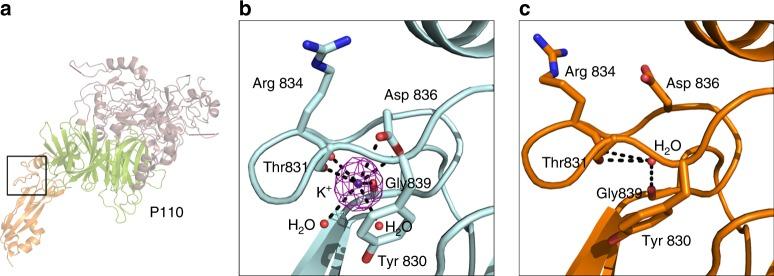
Adhesion of pathogenic bacteria to target cells is a prerequisite for colonization and further infection. The main adhesins of the emerging sexually transmitted pathogen Mycoplasma genitalium, P140 and P110, interact to form a Nap complex anchored to the cell membrane. Herein, we present the crystal structures of the extracellular region of the virulence factor P110 (916 residues) unliganded and in complex with sialic acid oligosaccharides. P110 interacts only with the neuraminic acid moiety of the oligosaccharides and experiments with human cells demonstrate that these interactions are essential for mycoplasma cytadherence. Additionally, structural information provides a deep insight of the P110 antigenic regions undergoing programmed variation to evade the host immune response. These results enlighten the interplay of M. genitalium with human target cells, offering new strategies to control mycoplasma infections.
病原菌黏附于靶细胞是定植和进一步感染的前提。新兴性传播病原体生殖支原体的主要黏附素 P140 和 P110 相互作用形成一个 Nap 复合物,该复合物锚定在细胞膜上。在此,我们展示了毒力因子 P110(916 个残基)的细胞外区在无配体和与唾液酸寡糖复合物的晶体结构。P110 仅与寡糖的神经氨酸部分相互作用,并且用人细胞进行的实验表明这些相互作用对于支原体细胞黏附是必需的。此外,结构信息深入了解了经历程序性变异以逃避宿主免疫反应的 P110 抗原区域。这些结果阐明了生殖支原体与人类靶细胞的相互作用,为控制支原体感染提供了新的策略。


 Zotero 插件