
从科学发现到罕见病治疗——来自国家转化医学科学中心(罕见病研究办公室)的观点。
From scientific discovery to treatments for rare diseases - the view from the National Center for Advancing Translational Sciences - Office of Rare Diseases Research.
机构信息
Avexis Inc. Formerly of Office of Rare Diseases Research (ORDR), National Center for Advancing Translational Sciences (NCATS), National Institutes of Health (NIH), Bethesda, MD, USA.
ORDR, NCATS, NIH, Bethesda, MD, USA.
出版信息
Orphanet J Rare Dis. 2018 Nov 6;13(1):196. doi: 10.1186/s13023-018-0936-x.
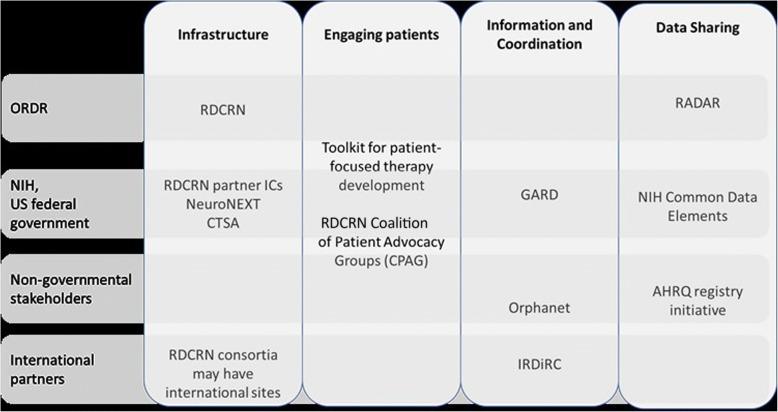
We now live in a time of unprecedented opportunities to turn scientific discoveries into better treatments for the estimated 30 million people in the US living with rare diseases. Despite these scientific advances, more than 90% of rare diseases still lack an effective treatment. New data and genetics technologies have resulted in the first transformational new treatments for a handful of rare diseases. This challenges us as a society to accelerate progress so that no disease and no patient is, ultimately, left behind in getting access to safe and effective therapeutics. This article reviews initiatives of the National Center for Advancing Translational Sciences (NCATS) Office of Rare Diseases Research (ORDR) that are aimed at catalyzing rare diseases research. These initiatives fall into two groups: Promoting information sharing; and building multi-disciplinary multi-stakeholder collaborations. Among ORDR's information sharing initiatives are GARD (The Genetics and Rare Diseases Information Center), RaDaR (The Rare Diseases Registries Program) and the NCATS Toolkit for Patient-Focused Therapy Development (Toolkit). Among the collaboration initiatives are the RDCRN (Rare Diseases Clinical Research Network), and the NCATS ORDR support for conferences and workshops. Despite the success of these programs, there remains substantial work to be done to build enhanced collaborations, clinical harmonization and interoperability, and stakeholder engagement so that the recent scientific advances can benefit all patients on the long list of rare diseases waiting for help.
我们现在生活在一个前所未有的时代,有机会将科学发现转化为更好的治疗方法,为数以千万计的美国罕见病患者带来福音。尽管取得了这些科学进步,但仍有超过 90%的罕见病缺乏有效的治疗方法。新的数据和基因技术已经为少数罕见病带来了首批变革性的新治疗方法。这就要求我们整个社会加快步伐,确保每一种疾病和每一位患者都能获得安全有效的治疗方法,不被落下。本文回顾了国家转化医学中心(NCATS)罕见病研究办公室(ORDR)旨在促进罕见病研究的举措。这些举措分为两类:促进信息共享;建立多学科多利益相关者合作。ORDR 的信息共享举措包括 GARD(遗传和罕见疾病信息中心)、RaDaR(罕见疾病登记计划)和 NCATS 以患者为中心的治疗开发工具包(Toolkit)。合作举措包括 RDCRN(罕见疾病临床研究网络),以及 NCATS 对会议和研讨会的支持。尽管这些项目取得了成功,但仍有大量工作要做,以加强合作、临床协调和互操作性,并吸引利益相关者参与,使最近的科学进步能够使所有患者受益,而这些患者都在等待帮助的众多罕见病患者名单上。
 Zotero 插件