
帕金森病中的运动速度-准确性权衡
Movement Speed-Accuracy Trade-Off in Parkinson's Disease.
作者信息
Fernandez Laure, Huys Raoul, Issartel Johann, Azulay Jean-Philippe, Eusebio Alexandre
机构信息
Aix-Marseille Université, CNRS, ISM, Marseille, France.
Université de Toulouse, UMR 5549 CERCO (Centre de Recherche Cerveau et Cognition), UPS, CNRS, Toulouse, France.
出版信息
Front Neurol. 2018 Oct 24;9:897. doi: 10.3389/fneur.2018.00897. eCollection 2018.
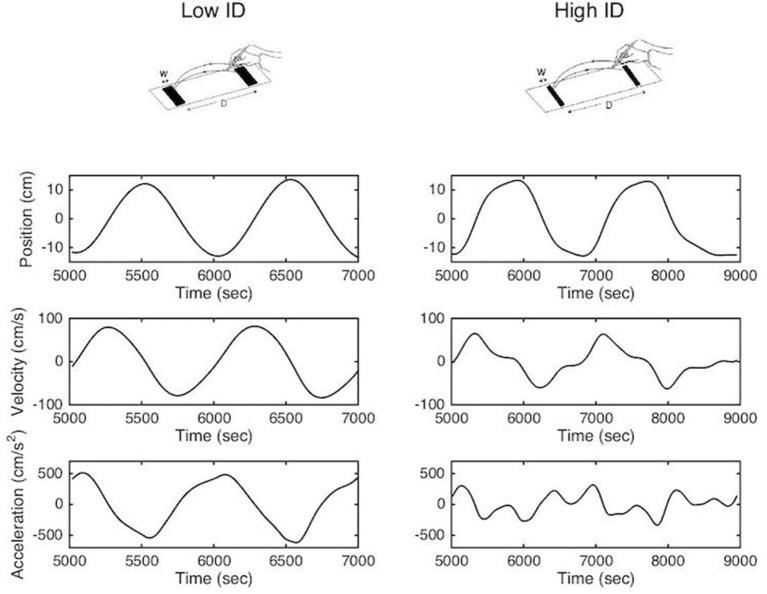
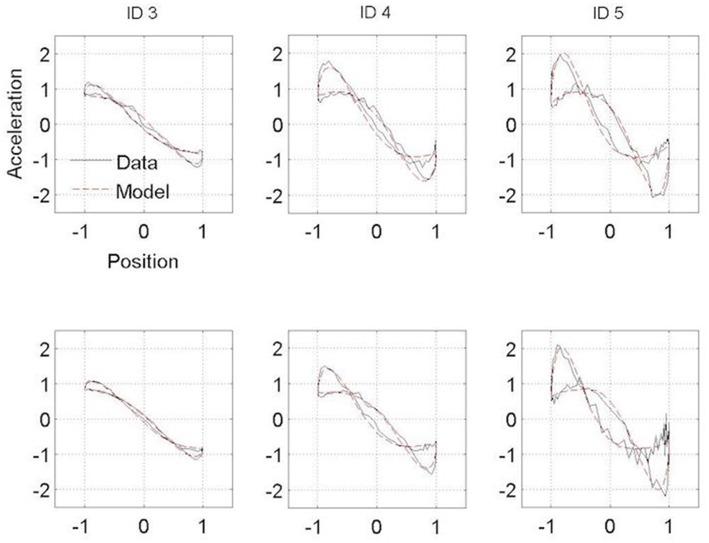
Patients with Parkinson's disease (PD) often have difficulties generating rhythmic movements, and also difficulties on movement adjustments to accuracy constraints. In the reciprocal aiming task, maintaining a high accuracy comes with the cost of diminished movement speed, whereas increasing movement speed disrupts end-point accuracy, a phenomenon well known as the speed-accuracy trade-off. The aim of this study was to examine how PD impacts speed-accuracy trade-off during rhythmic aiming movements by studying the structural kinematic movement organization and to determine the influence of dopamine replacement therapy on continuous movement speed and accuracy. Eighteen patients with advanced idiopathic Parkinson's disease performed a reciprocal aiming task, where the difficulty of the task was manipulated through target width. All patients were tested in two different sessions: ON-medication and OFF-medication state. A control group composed of healthy age-matched participants was also included in the study. The following variables were used for the analyses: Movement time, Error rate, effective target width, and Performance Index. Percentage of acceleration time and percentage of non-linearity were completed with kinematics patterns description using Rayleigh-Duffing model. Both groups traded off speed against accuracy as the constraints pertaining to the latter increased. The trade-off was more pronounced with the PD patients. Dopamine therapy allowed the PD patients to move faster, but at the cost of movement accuracy. Surprisingly, the structural kinematic organization did not differ across group nor across medication condition. These results suggest that PD patients, when involved in a reciprocal aiming task, are able to produce rhythmic movements. PD patients' overall slowing down seems to reflect a global adaptation to the disease in the absence of a structurally altered kinematic organization.
帕金森病(PD)患者在产生节律性运动时常有困难,在根据准确性限制进行运动调整时也存在困难。在双向瞄准任务中,保持高精度会以降低运动速度为代价,而提高运动速度则会破坏终点准确性,这一现象被称为速度-准确性权衡。本研究的目的是通过研究结构运动学运动组织来考察帕金森病如何影响节律性瞄准运动中的速度-准确性权衡,并确定多巴胺替代疗法对连续运动速度和准确性的影响。18名晚期特发性帕金森病患者执行了一项双向瞄准任务,该任务的难度通过目标宽度进行操纵。所有患者在两个不同阶段接受测试:服药状态和未服药状态。研究中还纳入了一个由年龄匹配的健康参与者组成的对照组。分析使用了以下变量:运动时间、错误率、有效目标宽度和表现指数。使用瑞利-达芬模型对运动学模式进行描述,完成加速时间百分比和非线性百分比的计算。随着与准确性相关的限制增加,两组均在速度和准确性之间进行权衡。帕金森病患者的这种权衡更为明显。多巴胺疗法使帕金森病患者能够移动得更快,但以运动准确性为代价。令人惊讶的是,结构运动学组织在组间和服药状态间均无差异。这些结果表明,帕金森病患者在参与双向瞄准任务时能够产生节律性运动。帕金森病患者整体运动减慢似乎反映了在运动学组织未发生结构改变的情况下对疾病的一种整体适应。



 Zotero 插件