
心脏骤停后复苏患者的目标平均动脉压为正常低值或正常高值:一项随机先导试验。
Targeting low-normal or high-normal mean arterial pressure after cardiac arrest and resuscitation: a randomised pilot trial.
机构信息
Department of Anaesthesiology, Intensive Care and Pain Medicine, University of Helsinki and Helsinki University Hospital, Helsinki, Finland.
Department of Emergency Medicine and Services, University of Helsinki and Helsinki University Hospital, Helsinki, Finland.
出版信息
Intensive Care Med. 2018 Dec;44(12):2091-2101. doi: 10.1007/s00134-018-5446-8. Epub 2018 Nov 15.
PURPOSE
We aimed to determine the feasibility of targeting low-normal or high-normal mean arterial pressure (MAP) after out-of-hospital cardiac arrest (OHCA) and its effect on markers of neurological injury.
METHODS
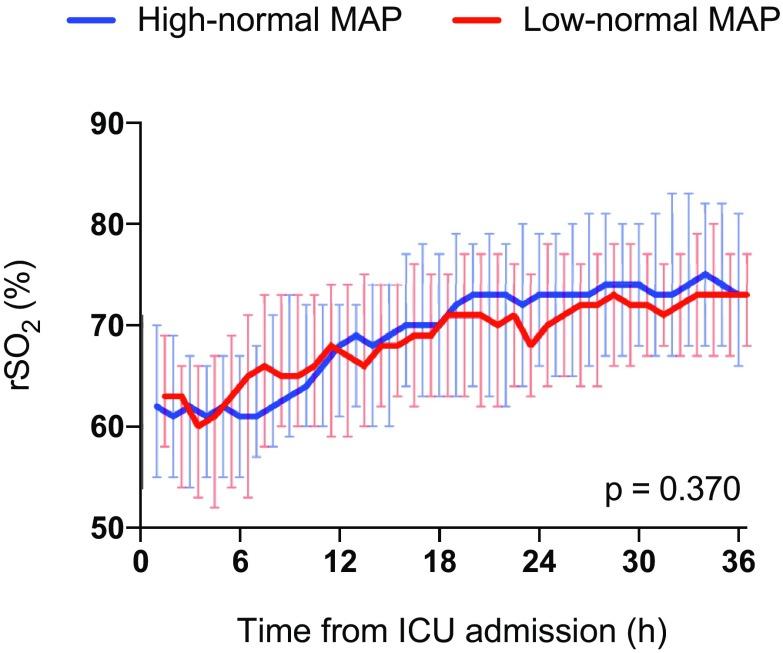
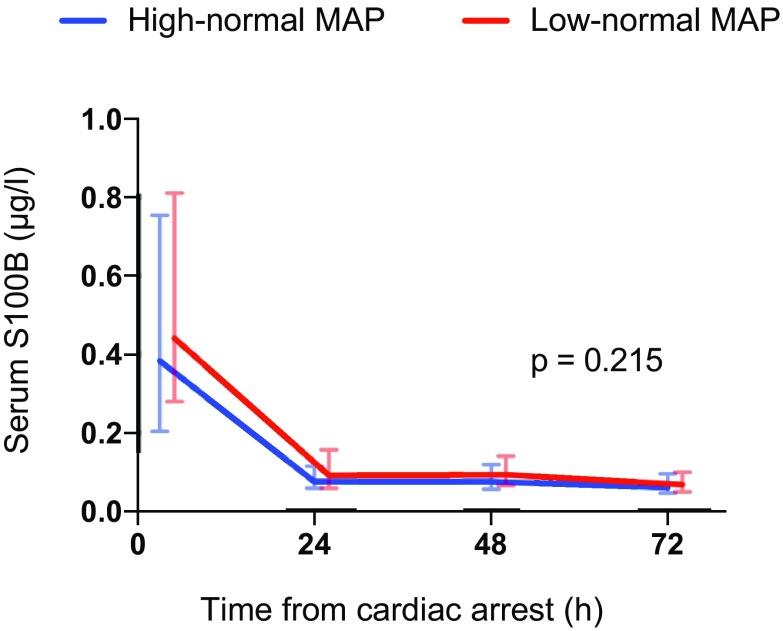
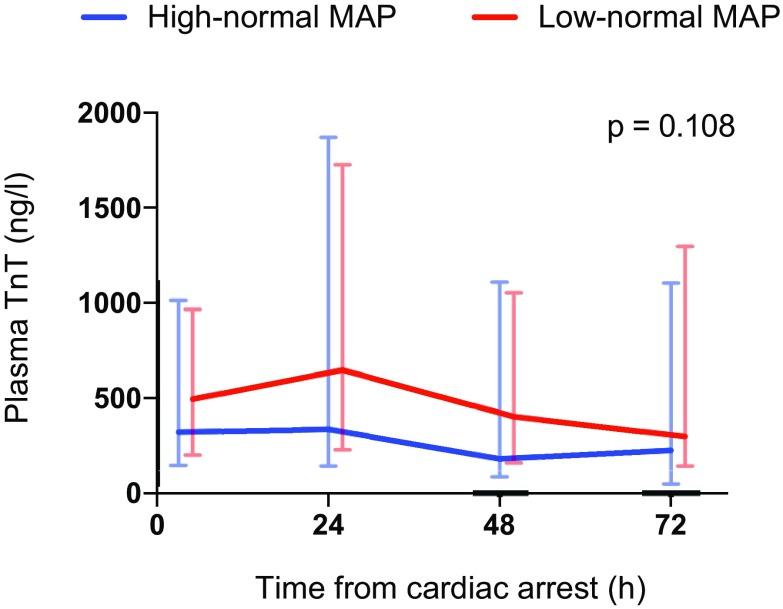
In the Carbon dioxide, Oxygen and Mean arterial pressure After Cardiac Arrest and REsuscitation (COMACARE) trial, we used a 2 factorial design to randomly assign patients after OHCA and resuscitation to low-normal or high-normal levels of arterial carbon dioxide tension, to normoxia or moderate hyperoxia, and to low-normal or high-normal MAP. In this paper we report the results of the low-normal (65-75 mmHg) vs. high-normal (80-100 mmHg) MAP comparison. The primary outcome was the serum concentration of neuron-specific enolase (NSE) at 48 h after cardiac arrest. The feasibility outcome was the difference in MAP between the groups. Secondary outcomes included S100B protein and cardiac troponin (TnT) concentrations, electroencephalography (EEG) findings, cerebral oxygenation and neurological outcome at 6 months after cardiac arrest.
RESULTS
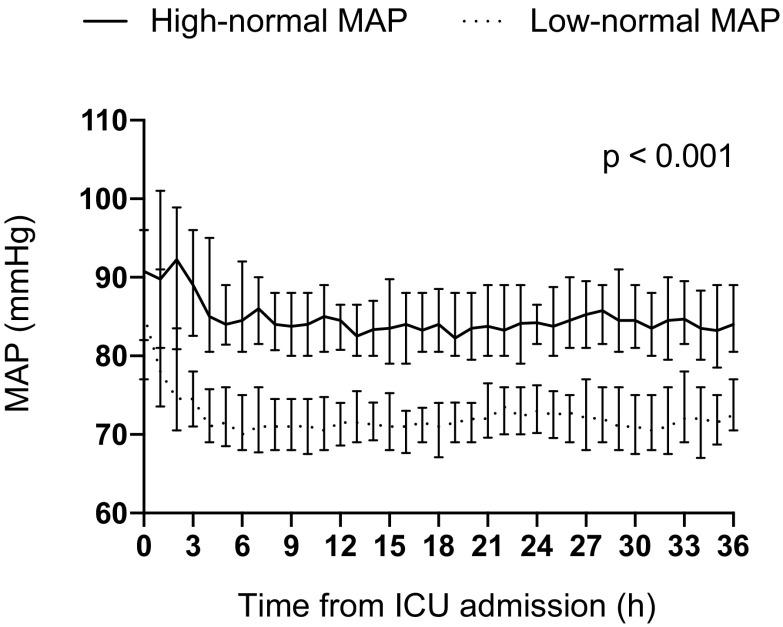
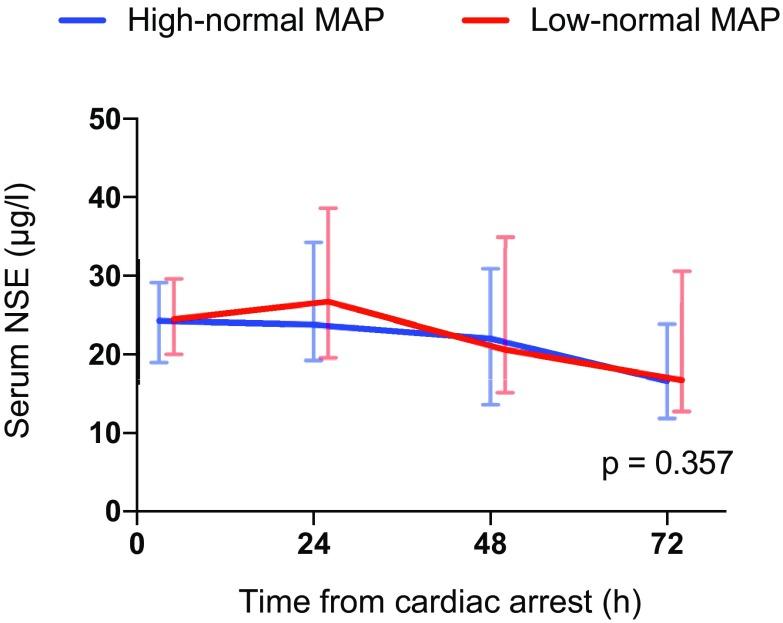
We recruited 123 patients and included 120 in the final analysis. We found a clear separation in MAP between the groups (p < 0.001). The median (interquartile range) NSE concentration at 48 h was 20.6 µg/L (15.2-34.9 µg/L) in the low-normal MAP group and 22.0 µg/L (13.6-30.9 µg/L) in the high-normal MAP group, p = 0.522. We found no differences in the secondary outcomes.
CONCLUSIONS
Targeting a specific range of MAP was feasible during post-resuscitation intensive care. However, the blood pressure level did not affect the NSE concentration at 48 h after cardiac arrest, nor any secondary outcomes.
目的
我们旨在确定院外心脏骤停(OHCA)后目标设定为正常低值或正常高值平均动脉压(MAP)的可行性及其对神经损伤标志物的影响。
方法
在二氧化碳、氧气和心脏骤停后平均动脉压及复苏(COMACARE)试验中,我们使用 2 因素设计随机分配 OHCA 及复苏后的患者接受低正常或高正常动脉二氧化碳张力、常氧或中度高氧,以及低正常或高正常 MAP。在本文中,我们报告低正常(65-75mmHg)与高正常(80-100mmHg)MAP 比较的结果。主要结局是心脏骤停后 48 小时血清神经元特异性烯醇化酶(NSE)浓度。可行性结局是两组间 MAP 的差异。次要结局包括 S100B 蛋白和肌钙蛋白(TnT)浓度、脑电图(EEG)发现、脑氧合和心脏骤停后 6 个月的神经结局。
结果
我们招募了 123 名患者,最终分析包括 120 名患者。我们发现两组间 MAP 明显分离(p<0.001)。低正常 MAP 组 48 小时 NSE 浓度的中位数(四分位距)为 20.6µg/L(15.2-34.9µg/L),高正常 MAP 组为 22.0µg/L(13.6-30.9µg/L),p=0.522。我们未发现次要结局存在差异。
结论
在复苏后重症监护期间,目标设定特定的 MAP 范围是可行的。然而,血压水平并不影响心脏骤停后 48 小时的 NSE 浓度,也不影响任何次要结局。

 Zotero 插件