
移植到裸鼠体内的F-box蛋白FBXW2和FBXL14在骨再生起始过程中的特性分析
Characterization of the F-box Proteins FBXW2 and FBXL14 in the Initiation of Bone Regeneration in Transplants given to Nude Mice.
作者信息
Akiyama Mari
机构信息
Department of Biomaterials, Osaka Dental University, Osaka 573-1121, Japan.
出版信息
Open Biomed Eng J. 2018 Oct 18;12:75-89. doi: 10.2174/1874120701812010075. eCollection 2018.
BACKGROUND
Cultured bovine-periosteum-derived cells can form three-dimensional structures on tissue culture dishes without artificial scaffolding material, can induce bone regeneration . The utility of cultured bovine-periosteum-derived cells for bone tissue regeneration after their transplantation into nude mice has been reported, the precise F-box molecular mechanism was unclear.
OBJECTIVE
The aim of this study was to investigate the specific F-box proteins required for bone regeneration by cultured bovine-periosteum-derived cells .
METHODS
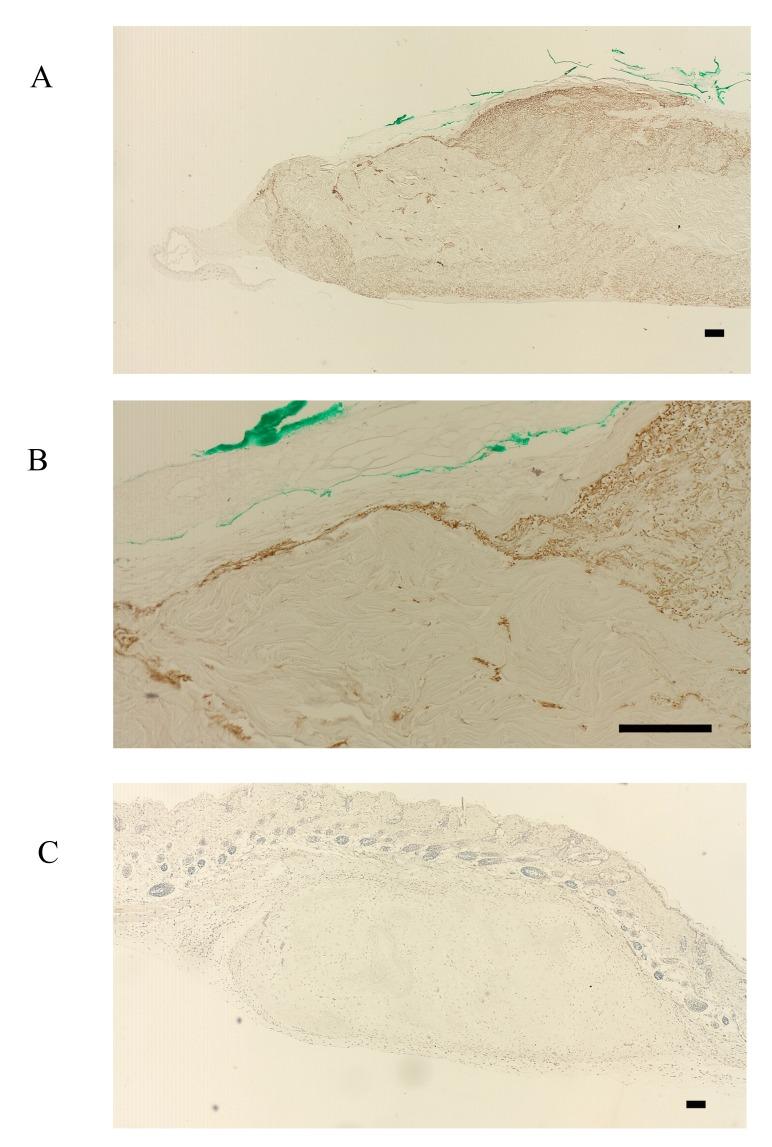
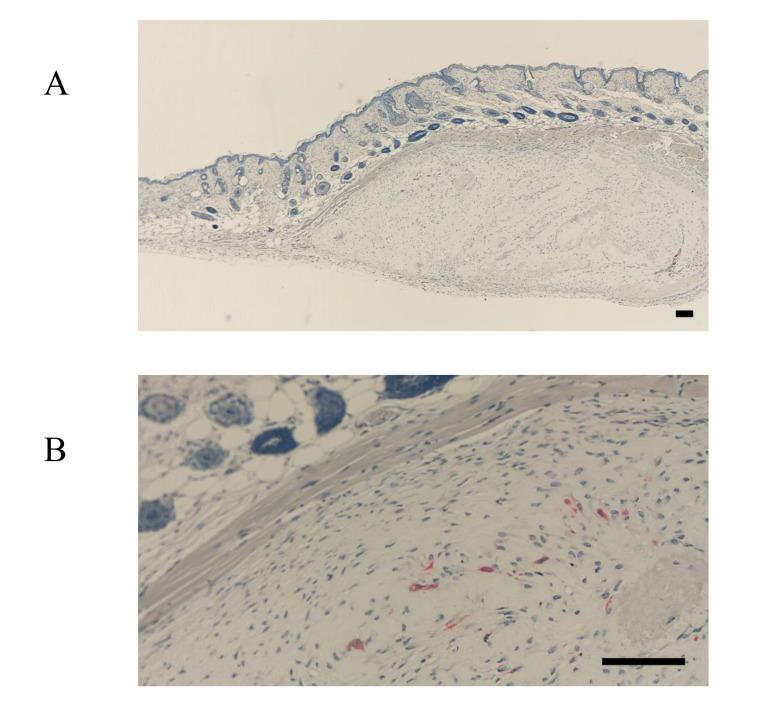
In the present study, periosteum tissue and cultured periosteum-derived cells were cultured for 5 weeks and then embedded in collagen gel with a green tissue-marking dye. Electrophoresis and immunohistochemistry were used to identify the specific F-box proteins required for tissue bone regeneration.
RESULTS
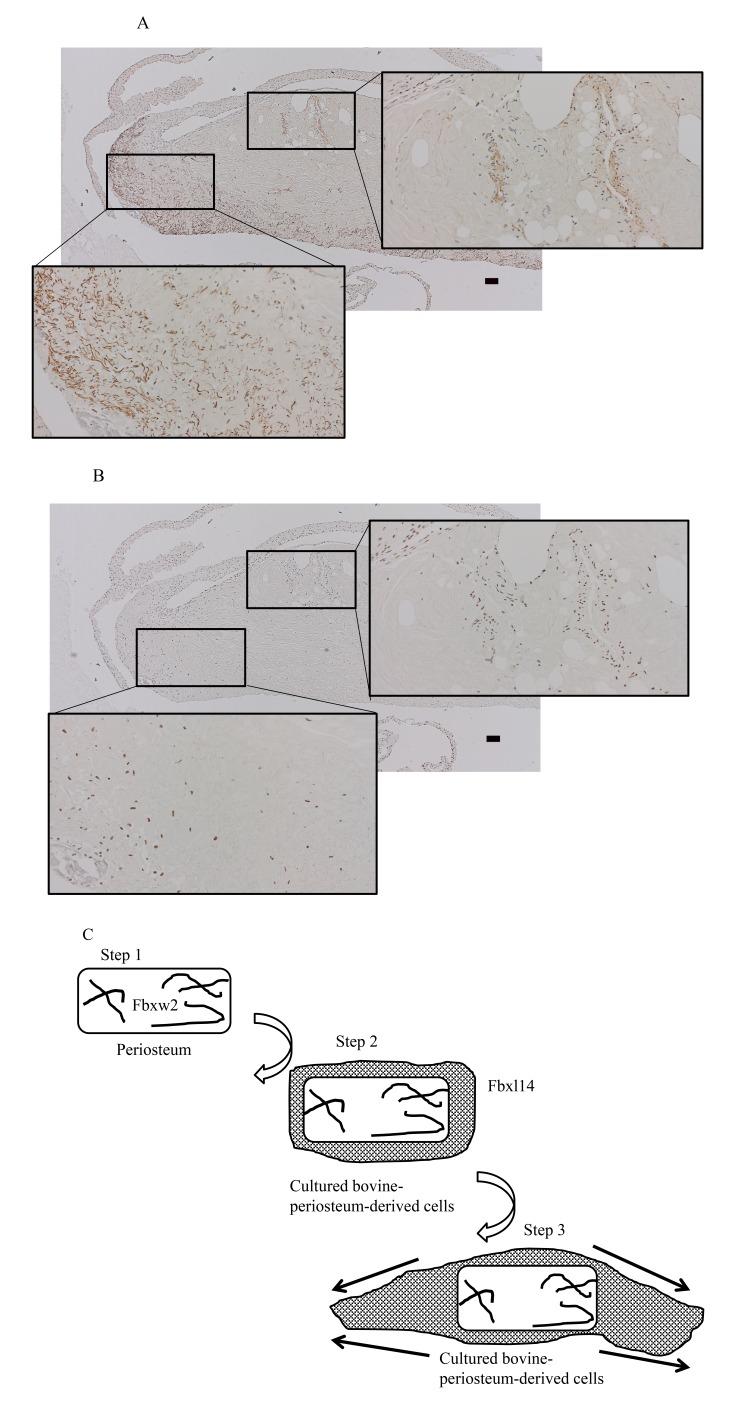
The bovine-periosteum-derived cells were observed to form bone shortly after the expression of F-box proteins. After the initial phase of bone formation, the expression of the F-box proteins ceased. FBXW2 was shown to be expressed in the periosteum, but not in cultured periosteum-derived cells. Furthermore, FBXL14 disappeared during bone formation.
CONCLUSIONS
Bone regeneration requires progenitor cells, such as bovine-periosteum-derived cells and the activation of the F-box Proteins FBXW2 and FBXL14, over time the expression of these proteins ceases. Further scientific and clinical trials are needed to investigate how the F-box Proteins can be used therapeutically to treat osteoporosis and osteonecrosis.
背景
培养的牛骨膜来源细胞能够在无人工支架材料的组织培养皿上形成三维结构,可诱导骨再生。已有报道称培养的牛骨膜来源细胞移植到裸鼠体内后对骨组织再生具有效用,但确切的F-box分子机制尚不清楚。
目的
本研究旨在探究培养的牛骨膜来源细胞进行骨再生所需的特定F-box蛋白。
方法
在本研究中,将骨膜组织和培养的骨膜来源细胞培养5周,然后用绿色组织标记染料包埋于胶原凝胶中。采用电泳和免疫组织化学方法鉴定组织骨再生所需的特定F-box蛋白。
结果
观察到牛骨膜来源细胞在F-box蛋白表达后不久形成骨。在骨形成的初始阶段之后,F-box蛋白的表达停止。FBXW2在骨膜中表达,但在培养的骨膜来源细胞中不表达。此外,FBXL14在骨形成过程中消失。
结论
骨再生需要祖细胞,如牛骨膜来源细胞以及F-box蛋白FBXW2和FBXL14的激活,随着时间推移这些蛋白的表达会停止。需要进一步的科学和临床试验来研究F-box蛋白如何用于治疗骨质疏松症和骨坏死。




 Zotero 插件