
DksA 控制莱姆病螺旋体对饥饿的反应。
DksA Controls the Response of the Lyme Disease Spirochete to Starvation.
机构信息
Department of Medical Microbiology and Immunology, Creighton University, Omaha, Nebraska, USA.
Laboratory of Bacteriology, Gene Regulation Section, Division of Intramural Research, Rocky Mountain Laboratories, National Institute of Allergy and Infectious Diseases, National Institutes of Health, Hamilton, Montana, USA.
出版信息
J Bacteriol. 2019 Jan 28;201(4). doi: 10.1128/JB.00582-18. Print 2019 Feb 15.
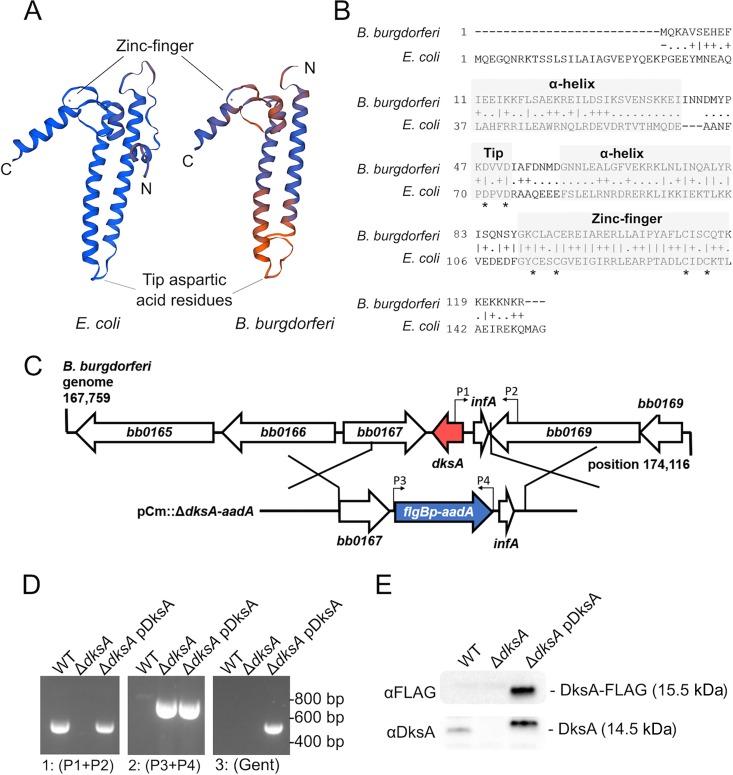
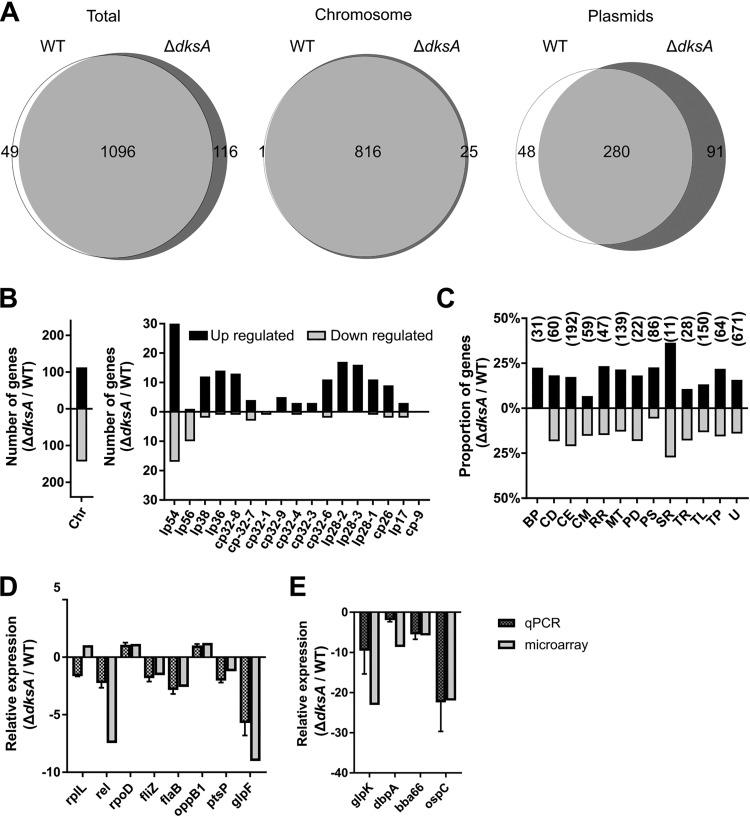
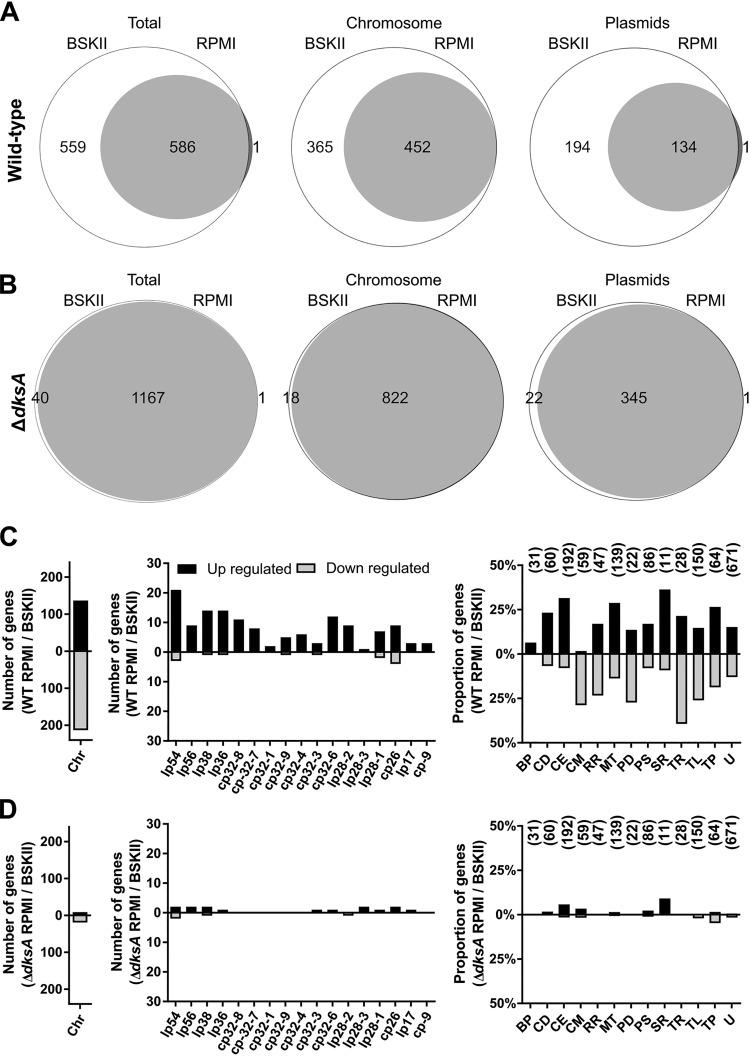
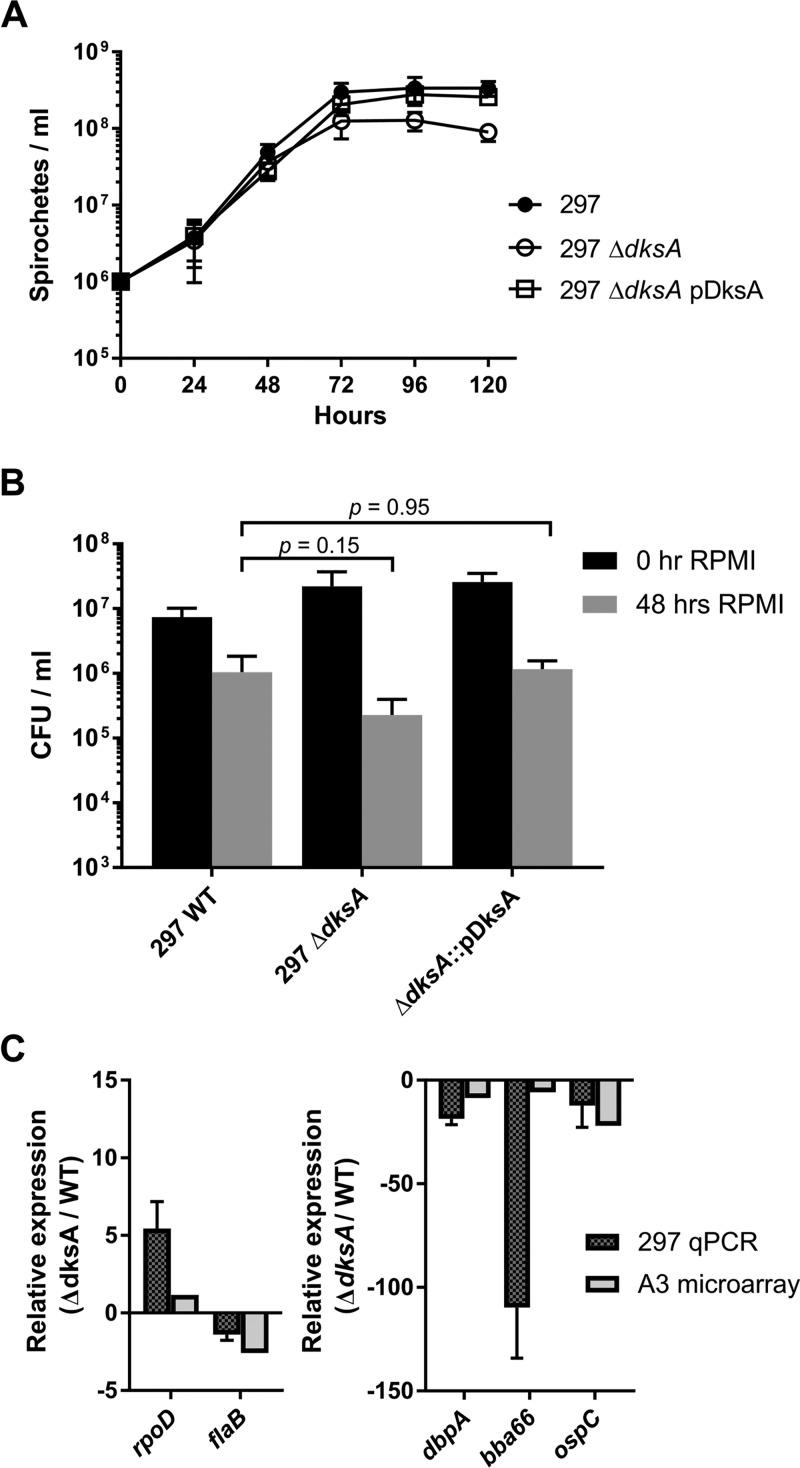
The pathogenic spirochete senses and responds to changes in the environment, including changes in nutrient availability, throughout its enzootic cycle in ticks and vertebrate hosts. This study examined the role of DnaK suppressor protein (DksA) in the transcriptional response of to starvation. Wild-type and mutant strains were subjected to starvation by shifting cultures grown in rich complete medium, Barbour-Stoenner-Kelly II (BSK II) medium, to a defined mammalian tissue culture medium, RPMI 1640, for 6 h under microaerobic conditions (5% CO, 3% O). Microarray analyses of wild-type revealed that genes encoding flagellar components, ribosomal proteins, and DNA replication machinery were downregulated in response to starvation. DksA mediated transcriptomic responses to starvation in , as the -deficient strain differentially expressed only 47 genes in response to starvation compared to the 500 genes differentially expressed in wild-type strains. Consistent with a role for DksA in the starvation response of , fewer CFU of mutants were observed after prolonged starvation in RPMI 1640 medium than CFU of wild-type spirochetes. Transcriptomic analyses revealed a partial overlap between the DksA regulon and the regulon of Rel, the guanosine tetraphosphate and guanosine pentaphosphate [(p)ppGpp] synthetase that controls the stringent response; the DksA regulon also included many plasmid-borne genes. Additionally, the mutant exhibited constitutively elevated (p)ppGpp levels compared to those of the wild-type strain, implying a regulatory relationship between DksA and (p)ppGpp. Together, these data indicate that DksA, along with (p)ppGpp, directs the stringent response to effect adaptation to its environment. The Lyme disease bacterium survives diverse environmental challenges as it cycles between its tick vectors and various vertebrate hosts. must withstand prolonged periods of starvation while it resides in unfed ticks. In this study, the regulatory protein DksA is shown to play a pivotal role controlling the transcriptional responses of to starvation. The results suggest that DksA gene regulatory activity impacts metabolism, virulence gene expression, and the ability of this bacterium to complete its natural life cycle.
致病螺旋体能够感知并响应环境变化,包括其在蜱和脊椎动物宿主中的地方性循环过程中的营养可用性变化。本研究探讨了 DnaK 抑制蛋白(DksA)在饥饿应答中的转录反应中的作用。野生型和 突变菌株在微需氧条件(5% CO、3% O)下,从富含完整培养基、Barbour-Stoenner-Kelly II (BSK II) 培养基转移至特定哺乳动物组织培养基 RPMI 1640 中,培养 6 小时以进行饥饿处理。野生型 微阵列分析表明,鞭毛成分、核糖体蛋白和 DNA 复制机制的基因在饥饿时下调。DksA 介导 对饥饿的转录组反应,因为 -缺陷株仅在饥饿时差异表达 47 个基因,而野生型菌株差异表达 500 个基因。与 DksA 在 饥饿反应中的作用一致,在 RPMI 1640 培养基中长时间饥饿后, 突变体的 CFU 比野生型 螺旋体的 CFU 少。转录组分析显示,DksA 调节子与 Rel(鸟苷四磷酸和鸟苷五磷酸 [(p)ppGpp] 合酶)的调节子之间存在部分重叠,Rel 控制严格反应;DksA 调节子还包括许多质粒携带的基因。此外, 突变体与野生型菌株相比,(p)ppGpp 水平持续升高,暗示 DksA 与 (p)ppGpp 之间存在调节关系。这些数据表明,DksA 与 (p)ppGpp 一起,指导严格反应以适应其环境。莱姆病细菌在其在蜱和各种脊椎动物宿主之间的循环过程中,能够应对多种环境挑战。当它在未进食的蜱中生存时, 必须忍受长时间的饥饿。在这项研究中,调节蛋白 DksA 被证明在控制饥饿应答中的转录反应中发挥关键作用。结果表明,DksA 基因调节活性影响 代谢、毒力基因表达以及该细菌完成其自然生命周期的能力。




 Zotero 插件