
巨细胞病毒(CMV)在适应性 Δg NK 细胞中启动功能性替代信号,但在恒河猴中被慢病毒感染所颠覆。
CMV Primes Functional Alternative Signaling in Adaptive Δg NK Cells but Is Subverted by Lentivirus Infection in Rhesus Macaques.
机构信息
Center for Virology and Vaccine Research, Beth Israel Deaconess Medical Center, Harvard Medical School, Boston, MA 02115, USA.
Human Vaccine Institute, Duke University Medical Center, Durham, NC 27710, USA.
出版信息
Cell Rep. 2018 Dec 4;25(10):2766-2774.e3. doi: 10.1016/j.celrep.2018.11.020.
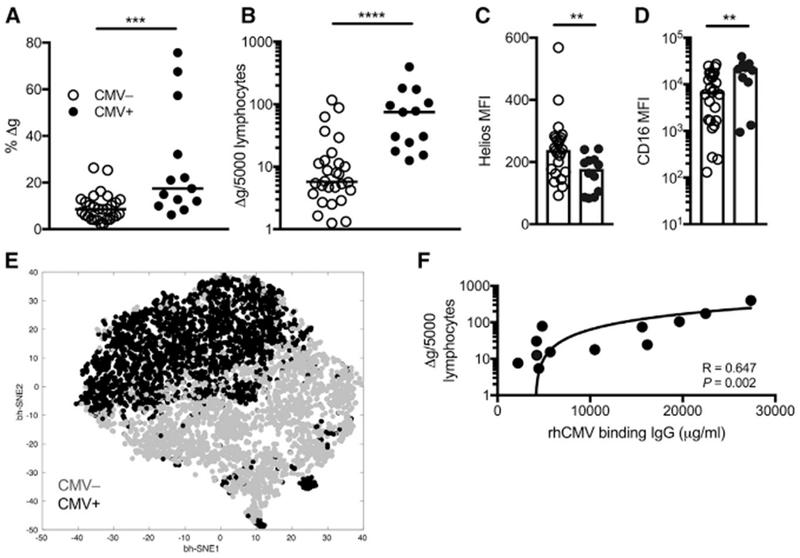
Despite burgeoning evidence demonstrating the adaptive properties of natural killer (NK) cells, mechanistic data explaining these phenomena are lacking. Following antibody sensitization, NK cells lacking the Fc receptor (FcR) signaling chain (Δg) acquire adaptive features, including robust proliferation, multifunctionality, rapid killing, and mobilization to sites of virus exposure. Using the rhesus macaque model, we demonstrate the systemic distribution of Δg NK cells expressing memory features, including downregulated Helios and Eomes. Furthermore, we find that Δg NK cells abandon typical γ-chain/Syk in lieu of CD3ζ-Zap70 signaling. FCγRIIIa (CD16) density, mucosal homing, and function are all coupled to this alternate signaling, which in itself requires priming by rhesus cytomegalovirus (rhCMV). Simian immunodeficiency virus (SIV) infections further expand gut-homing adaptive NK cells but result in pathogenic suppression of CD3ζ-Zap70 signaling and function. Herein, we provide a mechanism of virus-dependent alternative signaling that may explain the acquisition of adaptive features by primate NK cells and could be targeted for future vaccine or curative therapies.
尽管越来越多的证据表明自然杀伤 (NK) 细胞具有适应性,但解释这些现象的机制数据仍很缺乏。在抗体致敏后,缺乏 Fc 受体 (FcR) 信号链 (Δg) 的 NK 细胞获得了适应性特征,包括强大的增殖、多功能性、快速杀伤和向病毒暴露部位的迁移。利用恒河猴模型,我们证明了表达记忆特征的 ΔgNK 细胞的全身分布,包括下调的 Helios 和 Eomes。此外,我们发现 ΔgNK 细胞放弃了典型的 γ 链/Syk,转而采用 CD3ζ-Zap70 信号。FCγRIIIa(CD16)密度、黏膜归巢和功能都与这种替代信号相关联,而这种替代信号本身需要恒河猴巨细胞病毒 (rhCMV) 的启动。猴免疫缺陷病毒 (SIV) 感染进一步扩大了肠道归巢适应性 NK 细胞,但导致 CD3ζ-Zap70 信号和功能的致病性抑制。本文提供了一种依赖病毒的替代信号机制,该机制可能解释了灵长类 NK 细胞获得适应性特征的原因,并可能成为未来疫苗或治疗性治疗的靶点。




 Zotero 插件