
卟啉接枝脂质自组装成纳米颗粒,包载阿霉素用于协同化疗-光动力治疗和荧光成像。
Self-assembly of porphyrin-grafted lipid into nanoparticles encapsulating doxorubicin for synergistic chemo-photodynamic therapy and fluorescence imaging.
机构信息
Department of Biomedical Engineering, College of Engineering, Peking University, Beijing 100871, China.
Department of Ultrasonography, Peking University Third Hospital, Beijing 100191, China.
出版信息
Theranostics. 2018 Nov 3;8(19):5501-5518. doi: 10.7150/thno.27721. eCollection 2018.
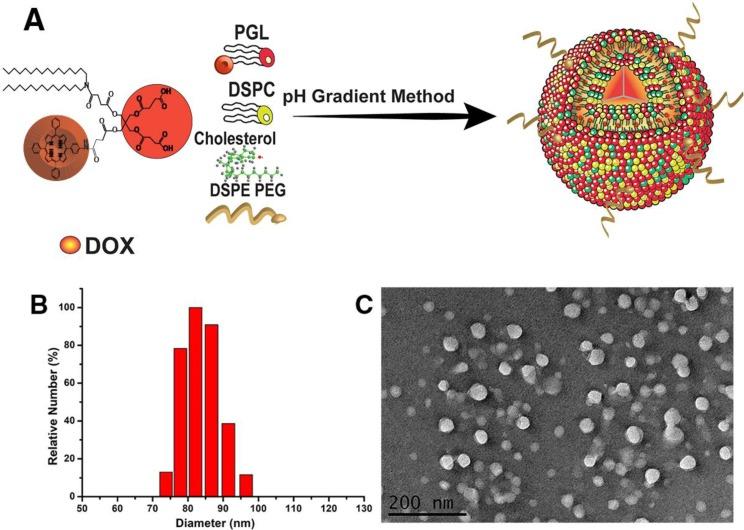
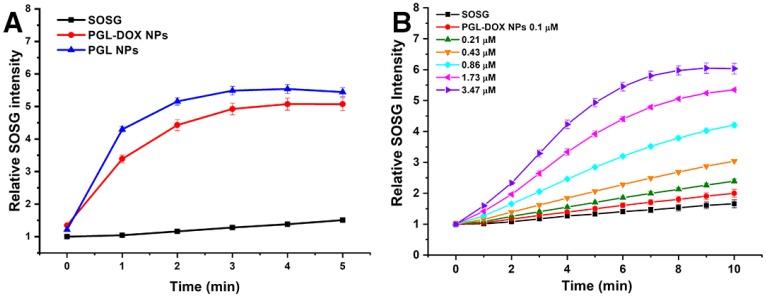
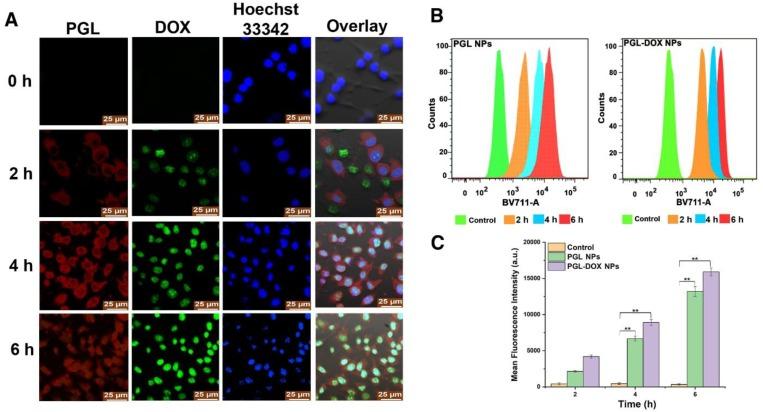
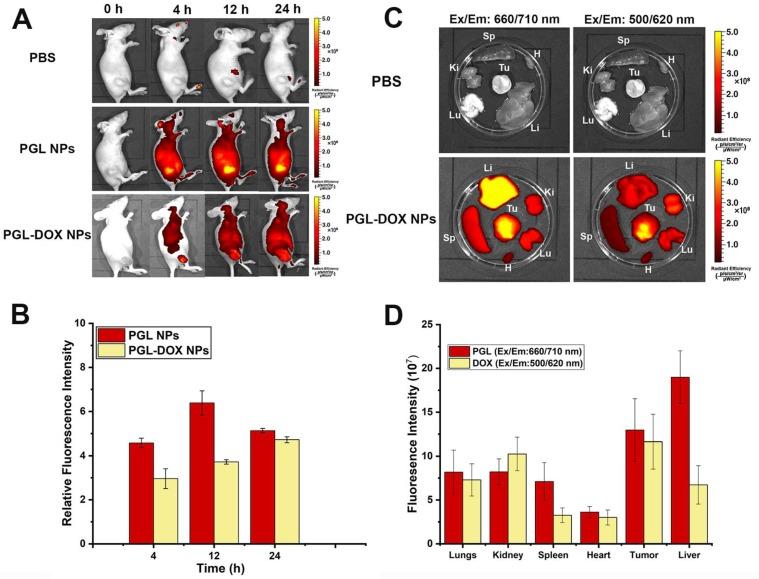
The limited clinical efficacy of monotherapies in the clinic has urged the development of novel combination platforms. Taking advantage of light-triggered photodynamic treatment combined together with the controlled release of nanomedicine, it has been possible to treat cancer without eliciting any adverse effects. However, the challenges imposed by limited drug loading capacity and complex synthesis process of organic nanoparticles (NPs) have seriously impeded advances in chemo-photodynamic combination therapy. In this experiment, we utilize our previously synthesized porphyrin-grafted lipid (PGL) NPs to load highly effective chemotherapeutic drug, doxorubicin (DOX) for synergistic chemo-photodynamic therapy. A relatively simple and inexpensive rapid injection method was used to prepare porphyrin-grafted lipid (PGL) NPs. The self-assembled PGL NPs were used further to encapsulate DOX a pH-gradient loading protocol. The self-assembled liposome-like PGL NPs having a hydrophilic core were optimized to load DOX at an encapsulation efficiency (EE) of ~99%. The resultant PGL-DOX NPs were intact, highly stable and importantly these NPs successfully escaped from the endo-lysosomal compartment after laser irradiation to release DOX in the cytosol. The therapeutic efficacy of the aforementioned formulation was validated both and . PGL-DOX NPs demonstrated excellent cellular uptake, chemo-photodynamic response, and fluorescence imaging ability in different cell lines. Under laser irradiation, cells treated with a low molar concentration of PGL-DOX NPs reduced cell viability significantly. Moreover, experiments conducted in a xenograft mouse model further demonstrated the excellent tumor accumulation capability of PGL-DOX NPs driven by the enhanced permeability and retention (EPR) effect. Through fluorescence imaging, the biodistribution of PGL-DOX NPs in tumor and major organs was also easily monitored in real time . The inherent ability of porphyrin to generate ROS under laser irradiation combined with the cytotoxic effect of the anticancer drug DOX significantly suppressed tumor growth . : In summary, the PGL-DOX NPs combined chemo-photodynamic nanoplatform may serve as a potential candidate for cancer theranostics.
在临床中,单药治疗的疗效有限,这促使人们开发新的联合平台。利用光触发光动力治疗与纳米药物的控制释放相结合,有可能在不引起任何不良反应的情况下治疗癌症。然而,有机纳米粒子(NPs)的载药能力有限和复杂的合成工艺所带来的挑战,严重阻碍了化疗-光动力联合治疗的发展。在本实验中,我们利用之前合成的卟啉接枝脂质(PGL) NPs 来负载高效的化疗药物阿霉素(DOX),以进行协同化疗-光动力治疗。我们采用相对简单且廉价的快速注射法制备卟啉接枝脂质(PGL) NPs。进一步将自组装的 PGL NPs 用于封装 DOX,采用 pH 梯度加载方案。优化具有亲水核的自组装类似脂质体的 PGL NPs 以实现 DOX 的高载药效率(EE)~99%。所得的 PGL-DOX NPs 完整且高度稳定,重要的是,这些 NPs 在激光照射后成功逃离内溶酶体隔间,在细胞质中释放 DOX。通过体外和体内实验验证了上述制剂的治疗效果。PGL-DOX NPs 在不同细胞系中表现出优异的细胞摄取、化疗-光动力反应和荧光成像能力。在激光照射下,用低摩尔浓度的 PGL-DOX NPs 处理的细胞,其细胞活力显著降低。此外,在异种移植小鼠模型中的实验进一步证明了 PGL-DOX NPs 具有优异的肿瘤积累能力,这是由增强的通透性和保留(EPR)效应驱动的。通过荧光成像,也可以实时轻松监测 PGL-DOX NPs 在肿瘤和主要器官中的生物分布。卟啉在激光照射下产生 ROS 的固有能力与抗癌药物 DOX 的细胞毒性作用相结合,显著抑制了肿瘤生长。结论:PGL-DOX NPs 联合化疗-光动力纳米平台可作为癌症治疗和诊断的潜在候选物。







 Zotero 插件