
高热量饮食加剧威尔逊病大鼠的线粒体功能障碍并引发严重肝损伤。
A High-Calorie Diet Aggravates Mitochondrial Dysfunction and Triggers Severe Liver Damage in Wilson Disease Rats.
机构信息
Institute of Molecular Toxicology and Pharmacology, Helmholtz Center Munich, German Research Center for Environmental Health, Neuherberg, Germany; Department of Medicine II, University Hospital, Ludwig-Maximilians-University Munich, Munich, Germany.
Institute of Molecular Toxicology and Pharmacology, Helmholtz Center Munich, German Research Center for Environmental Health, Neuherberg, Germany.
出版信息
Cell Mol Gastroenterol Hepatol. 2019;7(3):571-596. doi: 10.1016/j.jcmgh.2018.12.005. Epub 2018 Dec 23.
BACKGROUND & AIMS: In Wilson disease, ATP7B mutations impair copper excretion into bile. Hepatic copper accumulation may induce mild to moderate chronic liver damage or even acute liver failure. Etiologic factors for this heterogeneous phenotype remain enigmatic. Liver steatosis is a frequent finding in Wilson disease patients, suggesting that impaired copper homeostasis is linked with liver steatosis. Hepatic mitochondrial function is affected negatively both by copper overload and steatosis. Therefore, we addressed the question of whether a steatosis-promoting high-calorie diet aggravates liver damage in Wilson disease via amplified mitochondrial damage.
METHODS
Control Atp7b and Wilson disease Atp7b rats were fed either a high-calorie diet (HCD) or a normal diet. Copper chelation using the high-affinity peptide methanobactin was used in HCD-fed Atp7b rats to test for therapeutic reversal of mitochondrial copper damage.
RESULTS
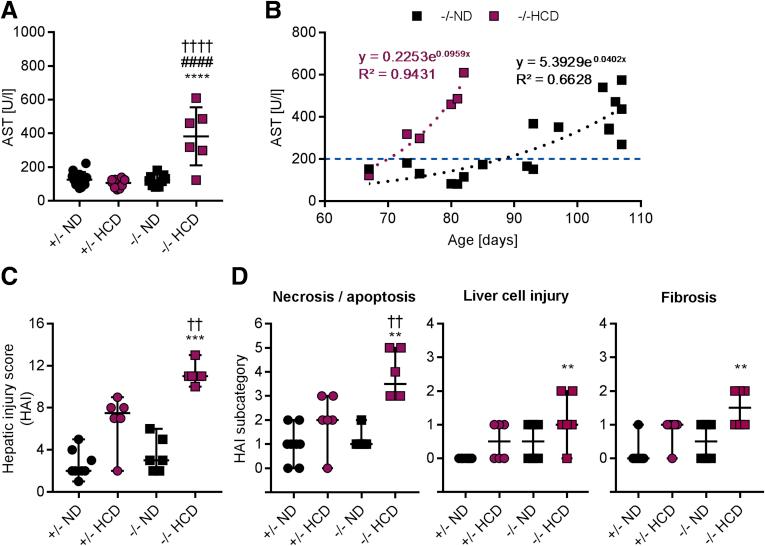
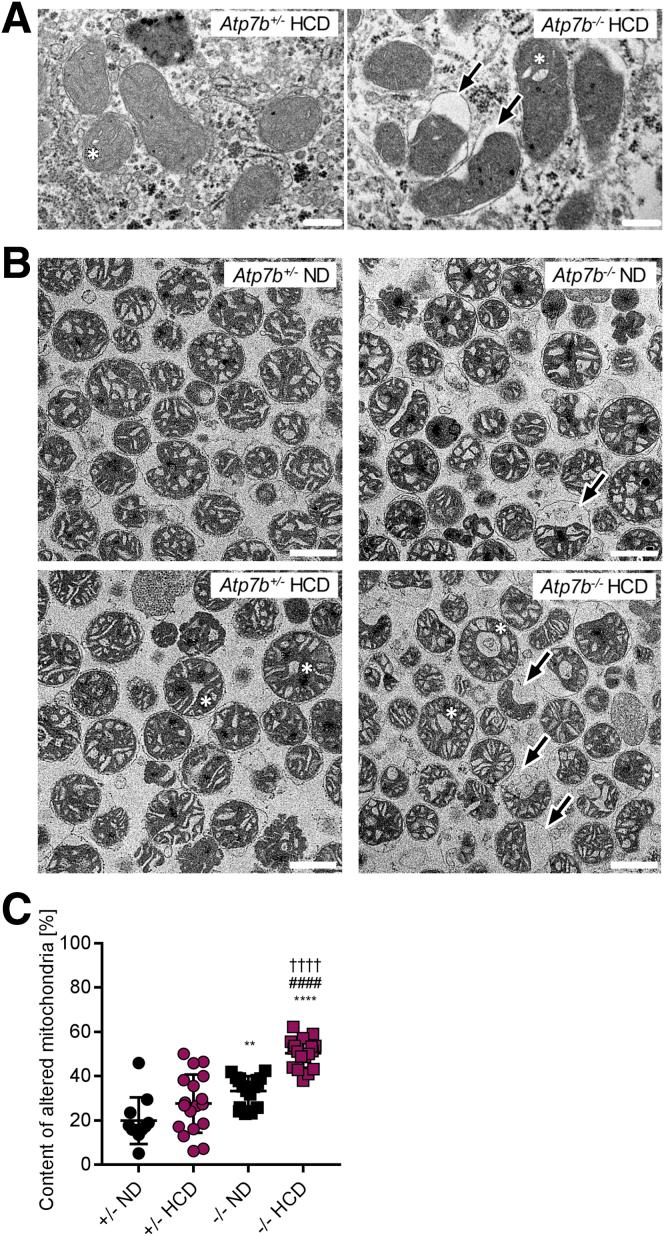
In comparison with a normal diet, HCD feeding of Atp7b rats resulted in a markedly earlier onset of clinically apparent hepatic injury. Strongly increased mitochondrial copper accumulation was observed in HCD-fed Atp7b rats, correlating with severe liver injury. Mitochondria presented with massive structural damage, increased HO emergence, and dysfunctional adenosine triphosphate production. Hepatocellular injury presumably was augmented as a result of oxidative stress. Reduction of mitochondrial copper by methanobactin significantly reduced mitochondrial impairment and ameliorated liver damage.
CONCLUSIONS
A high-calorie diet severely aggravates hepatic mitochondrial and hepatocellular damage in Wilson disease rats, causing an earlier onset of the disease and enhanced disease progression.
背景与目的
在威尔逊病中,ATP7B 突变会损害铜向胆汁的排泄。肝内铜积累可能导致轻度至中度慢性肝损伤,甚至急性肝衰竭。这种异质表型的病因仍然是个谜。肝脂肪变性是威尔逊病患者的常见发现,这表明铜稳态失调与肝脂肪变性有关。铜过载和脂肪变性都会对肝线粒体功能产生负面影响。因此,我们提出了一个问题,即促进脂肪变性的高热量饮食是否会通过放大的线粒体损伤加重威尔逊病患者的肝损伤。
方法
对照组 Atp7b 和威尔逊病 Atp7b 大鼠分别喂食高热量饮食(HCD)或正常饮食。用高亲和力肽甲羟戊酸对 HCD 喂养的 Atp7b 大鼠进行铜螯合,以测试线粒体铜损伤的治疗逆转。
结果
与正常饮食相比,HCD 喂养的 Atp7b 大鼠更早出现明显的临床肝损伤。在 HCD 喂养的 Atp7b 大鼠中观察到强烈增加的线粒体铜积累,与严重的肝损伤相关。线粒体呈现出大量的结构损伤、HO 生成增加和功能障碍的三磷酸腺苷生成。肝细胞损伤可能是由于氧化应激而加剧的。甲羟戊酸还原线粒体铜可显著减少线粒体损伤,改善肝损伤。
结论
高热量饮食可严重加重威尔逊病大鼠的肝线粒体和肝细胞损伤,导致疾病更早发作和疾病进展加速。





 Zotero 插件