
基于网络药理学分析探讨对创伤性脑损伤的作用
A Network Pharmacology Analysis to Explore the Effect of on Traumatic Brain Injury.
机构信息
Institute of Integrative Medicine, Xiangya Hospital, Central South University, Changsha 410008, Hunan, China.
Institute of Integrative Medicine, 2nd Xiangya Hospital, Central South University, Changsha 410008, Hunan, China.
出版信息
Biomed Res Int. 2018 Nov 25;2018:3951783. doi: 10.1155/2018/3951783. eCollection 2018.
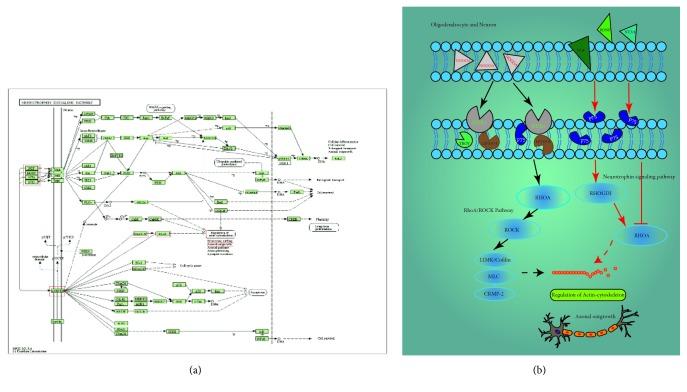
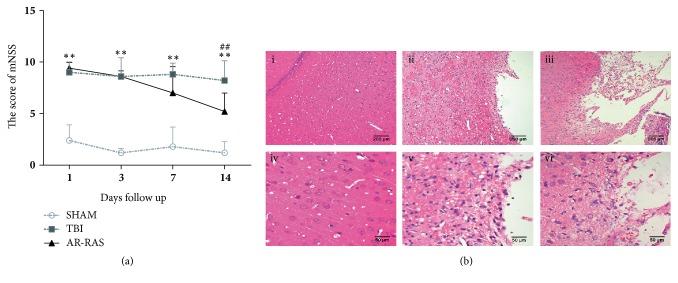
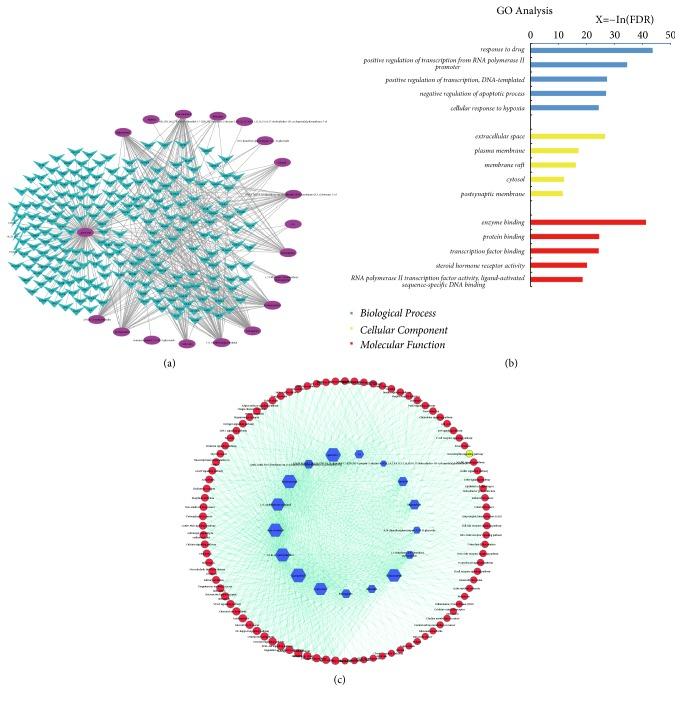
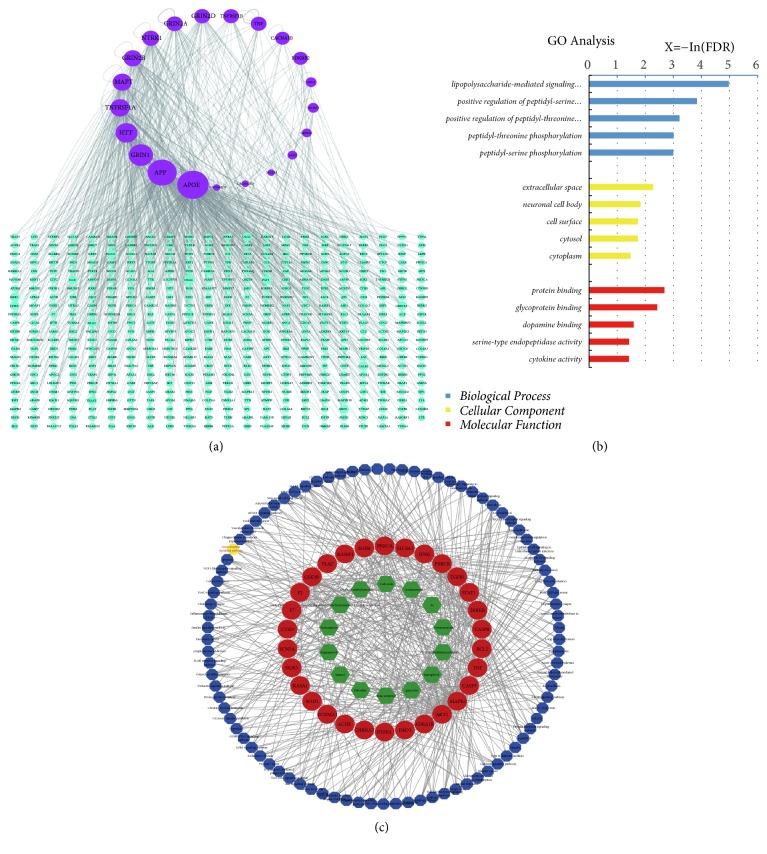
Traumatic brain injury (TBI) is a critical public health and socioeconomic problem worldwide. The herb pair (AR)- (RAS) is a common prescribed herbal formula or is added to other Chinese medicine prescriptions for traumatic brain injury (TBI) treatment. However, the underlying mechanisms are unclear. In this study, we aimed to explore the active ingredients and action targets of AR-RAS based on the combined methods of network pharmacology prediction and experimental verification. Furthermore, the corresponding potential mechanisms of "multicomponents, multitargets, and multipathways" were disclosed. . A network pharmacology approach including ADME (absorption, distribution, metabolism, and excretion) filter analysis, target prediction, known therapeutic targets collection, Gene Ontology (GO), pathway enrichment analysis, and network construction was used in this study. Further verification experiments were performed to reveal the therapeutic effects of AR-RAS in a rat model of TBI. . The comprehensive systematic approach was to successfully identify 14 bioactive ingredients in AR-RAS, while 33 potential targets hit by these ingredients related to TBI. Based on GO annotation analysis, multiple biological processes were significantly regulated by AR-RAS. In addition, 89 novel signaling pathways (P<0.05) underlying the effects of AR-RAS for TBI treatment were identified by DAVID. The neurotrophin signaling pathway was suggested as the major related pathway targeted by AR-RAS to improve axonal growth. The animal experiment confirmed that AR-RAS significantly induced tissue recovery and improved neurological deficits on the 14th day (P<0.01). Treatment with AR-RAS markedly reduced the protein and mRNA expression level of NogoA in the hippocampus of TBI rats. . Our work illuminates the "multicompounds, multitargets, and multipathways" curative action of AR-RAS in the treatment of TBI by network pharmacology. The animal experiment verifies the effects of AR-RAS on neurological function improvement and axonal outgrowth via downregulation of NogoA expression, providing a theoretical basis for further research on treatment of TBI.
创伤性脑损伤(TBI)是全球范围内一个严重的公共卫生和社会经济问题。药对(AR)-(RAS)是一种常见的处方草药配方,或添加到其他中药处方中用于治疗创伤性脑损伤(TBI)。然而,其潜在的机制尚不清楚。在这项研究中,我们旨在通过网络药理学预测和实验验证相结合的方法,探索 AR-RAS 的活性成分和作用靶点。此外,还揭示了“多成分、多靶点、多途径”的相应潜在机制。我们采用了一种网络药理学方法,包括 ADME(吸收、分布、代谢和排泄)过滤分析、靶点预测、已知治疗靶点收集、基因本体论(GO)、通路富集分析和网络构建,用于本研究。进一步的验证实验用于揭示 AR-RAS 在 TBI 大鼠模型中的治疗作用。通过综合系统方法,成功鉴定了 AR-RAS 中的 14 种生物活性成分,而这些成分与 TBI 相关的潜在靶点有 33 个。基于 GO 注释分析,AR-RAS 显著调节了多个生物学过程。此外,通过 DAVID 还鉴定了 89 个与 AR-RAS 治疗 TBI 相关的新型信号通路(P<0.05)。神经生长因子信号通路被认为是 AR-RAS 改善轴突生长的主要相关通路。动物实验证实,AR-RAS 能显著诱导组织恢复,改善第 14 天的神经功能缺损(P<0.01)。AR-RAS 治疗明显降低了 TBI 大鼠海马区 NogoA 的蛋白和 mRNA 表达水平。本研究通过网络药理学阐明了 AR-RAS 治疗 TBI 的“多成分、多靶点、多途径”作用机制。动物实验验证了 AR-RAS 通过下调 NogoA 表达对神经功能改善和轴突生长的作用,为进一步研究 TBI 的治疗提供了理论依据。

 Zotero 插件