
生酮饮食影响严重癫痫儿童肠道微生物群落的分类和功能组成。
The ketogenic diet influences taxonomic and functional composition of the gut microbiota in children with severe epilepsy.
机构信息
1Neuropediatric Department, Astrid Lindgren Children's Hospital, Karolinska Hospital, Stockholm, Sweden.
2Department of Genome Sciences, University of Washington, Seattle, WA 98195 USA.
出版信息
NPJ Biofilms Microbiomes. 2019 Jan 23;5(1):5. doi: 10.1038/s41522-018-0073-2. eCollection 2019.
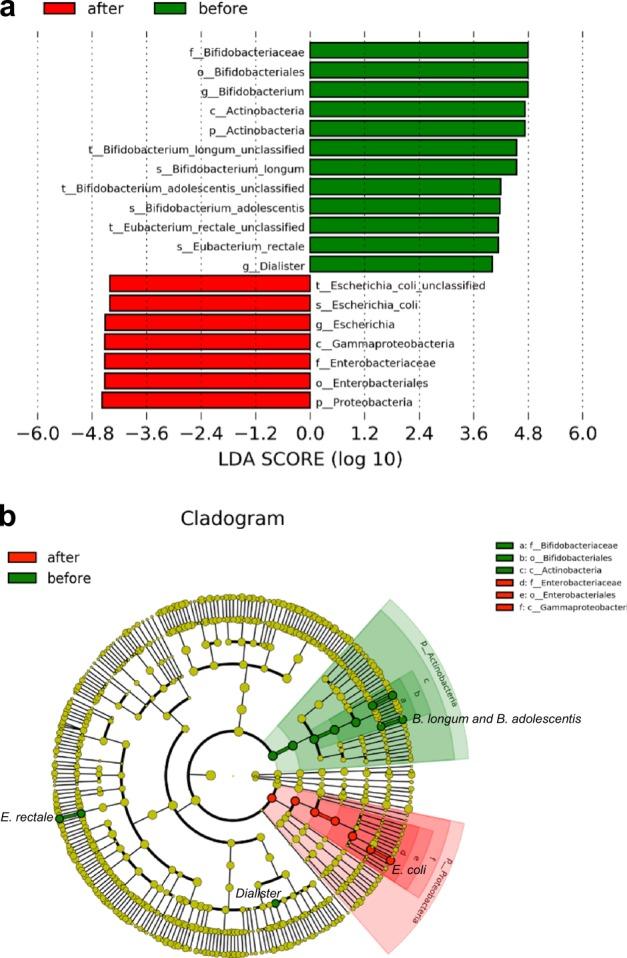
The gut microbiota has been linked to various neurological disorders via the gut-brain axis. Diet influences the composition of the gut microbiota. The ketogenic diet (KD) is a high-fat, adequate-protein, low-carbohydrate diet established for treatment of therapy-resistant epilepsy in children. Its efficacy in reducing seizures has been confirmed, but the mechanisms remain elusive. The diet has also shown positive effects in a wide range of other diseases, including Alzheimer's, depression, autism, cancer, and type 2 diabetes. We collected fecal samples from 12 children with therapy-resistant epilepsy before starting KD and after 3 months on the diet. Parents did not start KD and served as diet controls. Applying shotgun metagenomic DNA sequencing, both taxonomic and functional profiles were established. Here we report that alpha diversity is not changed significantly during the diet, but differences in both taxonomic and functional composition are detected. Relative abundance of bifidobacteria as well as and is significantly diminished during the intervention. An increase in relative abundance of is observed on KD. Functional analysis revealed changes in 29 SEED subsystems including the reduction of seven pathways involved in carbohydrate metabolism. Decomposition of these shifts indicates that bifidobacteria and are important contributors to the observed functional shifts. As relative abundance of health-promoting, fiber-consuming bacteria becomes less abundant during KD, we raise concern about the effects of the diet on the gut microbiota and overall health. Further studies need to investigate whether these changes are necessary for the therapeutic effect of KD.
肠道微生物群通过肠脑轴与各种神经紊乱有关。饮食会影响肠道微生物群的组成。生酮饮食(KD)是一种高脂肪、适量蛋白质、低碳水化合物的饮食,适用于治疗儿童难治性癫痫。其减少癫痫发作的疗效已得到证实,但机制仍不清楚。该饮食在其他广泛的疾病中也显示出积极的效果,包括阿尔茨海默病、抑郁症、自闭症、癌症和 2 型糖尿病。我们收集了 12 名接受难治性癫痫治疗的儿童在开始 KD 前和接受 KD 治疗 3 个月后的粪便样本。父母没有开始 KD,作为饮食对照。通过应用 shotgun 宏基因组 DNA 测序,建立了分类和功能图谱。我们报告说,在饮食过程中,alpha 多样性没有显著变化,但在分类和功能组成上都存在差异。双歧杆菌和的相对丰度在干预过程中显著降低。在 KD 上观察到的相对丰度增加。功能分析显示 29 个 SEED 亚系统发生变化,包括参与碳水化合物代谢的 7 条途径减少。这些变化的分解表明双歧杆菌和是观察到的功能变化的重要贡献者。由于在 KD 期间促进健康、消耗纤维的细菌的相对丰度减少,我们对饮食对肠道微生物群和整体健康的影响表示担忧。需要进一步的研究来调查这些变化是否是 KD 治疗效果所必需的。



 Zotero 插件