
Hfq/Crc 介导的基因表达调控的结构原理。
Architectural principles for Hfq/Crc-mediated regulation of gene expression.
机构信息
Department of Biochemistry, University of Cambridge, Cambridge, United Kingdom.
Department of Microbiology, Immunobiology and Genetics, Max F Perutz Laboratories, Center of Molecular Biology, University of Vienna, Vienna Biocenter, Vienna, Austria.
出版信息
Elife. 2019 Feb 13;8:e43158. doi: 10.7554/eLife.43158.
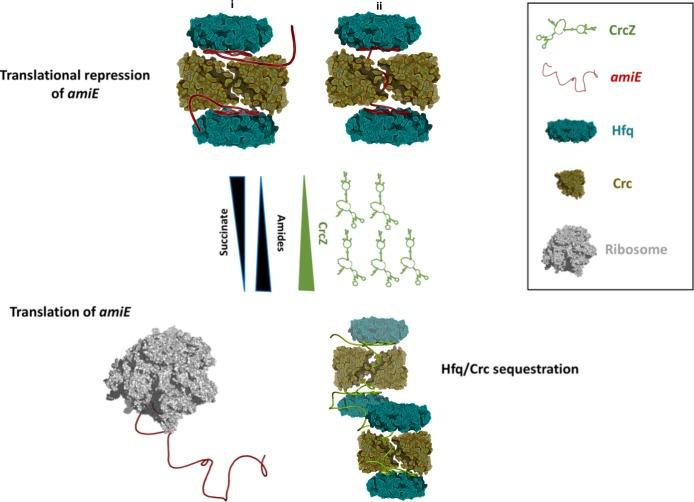
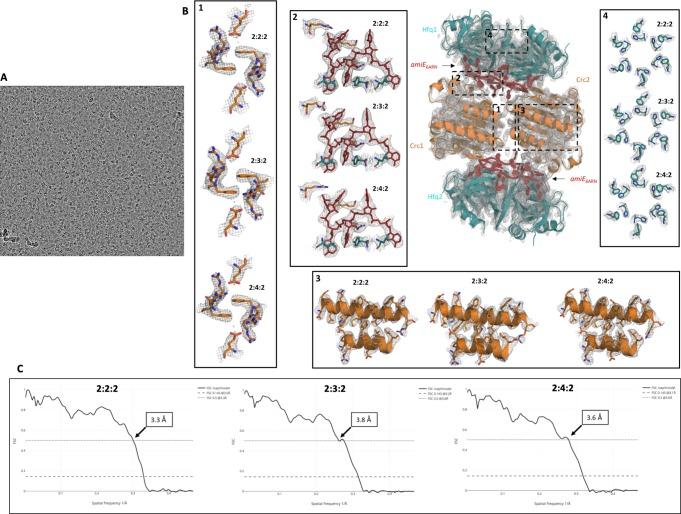
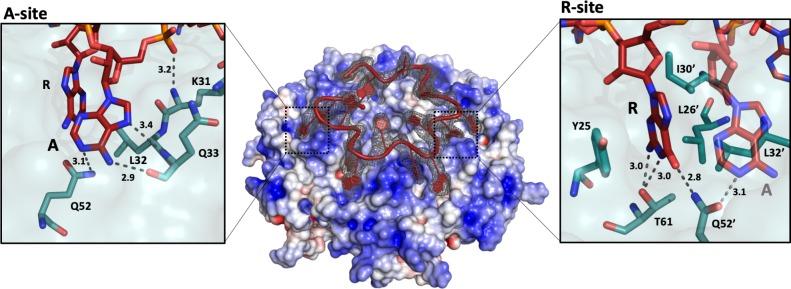
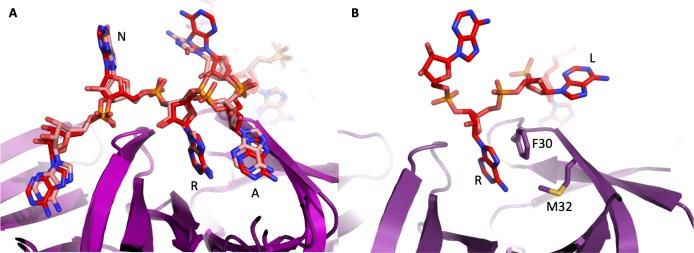
In diverse bacterial species, the global regulator Hfq contributes to post-transcriptional networks that control expression of numerous genes. Hfq of the opportunistic pathogen inhibits translation of target transcripts by forming a regulatory complex with the catabolite repression protein Crc. This repressive complex acts as part of an intricate mechanism of preferred nutrient utilisation. We describe high-resolution cryo-EM structures of the assembly of Hfq and Crc bound to the translation initiation site of a target mRNA. The core of the assembly is formed through interactions of two cognate RNAs, two Hfq hexamers and a Crc pair. Additional Crc protomers are recruited to the core to generate higher-order assemblies with demonstrated regulatory activity in vivo. This study reveals how Hfq cooperates with a partner protein to regulate translation, and provides a structural basis for an RNA code that guides global regulators to interact cooperatively and regulate different RNA targets.
在不同的细菌物种中,全局调节因子 Hfq 有助于控制许多基因表达的转录后网络。机会性病原体的 Hfq 通过与分解代谢物抑制物蛋白 Crc 形成调节复合物来抑制靶转录本的翻译。该抑制复合物作为优先利用营养物质的复杂机制的一部分发挥作用。我们描述了 Hfq 和 Crc 与靶 mRNA 翻译起始位点结合的组装的高分辨率冷冻电镜结构。组装的核心是通过两个同源 RNA、两个 Hfq 六聚体和一对 Crc 的相互作用形成的。额外的 Crc 原聚体被募集到核心,以生成具有体内证明的调节活性的高阶组装体。这项研究揭示了 Hfq 如何与伴侣蛋白合作来调节翻译,并为指导全局调节剂进行合作并调节不同 RNA 靶标的 RNA 密码提供了结构基础。



 Zotero 插件