
FcγRIIIb 限制人中性粒细胞通过抗体依赖性方式破坏癌细胞。
FcγRIIIb Restricts Antibody-Dependent Destruction of Cancer Cells by Human Neutrophils.
机构信息
Sanquin Research, and Landsteiner Laboratory, Amsterdam UMC, University of Amsterdam, Amsterdam, Netherlands.
Department of Molecular Cell Biology and Immunology, Amsterdam UMC, Amsterdam Infection and Immunity Institute, Vrije Universiteit Amsterdam, Amsterdam, Netherlands.
出版信息
Front Immunol. 2019 Jan 30;9:3124. doi: 10.3389/fimmu.2018.03124. eCollection 2018.
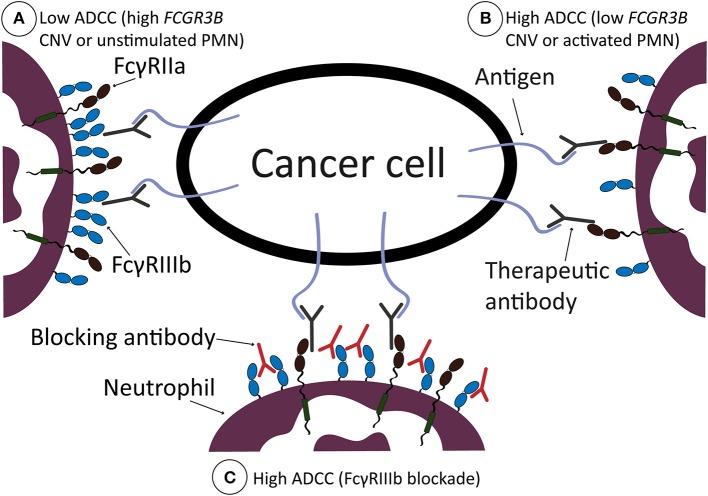
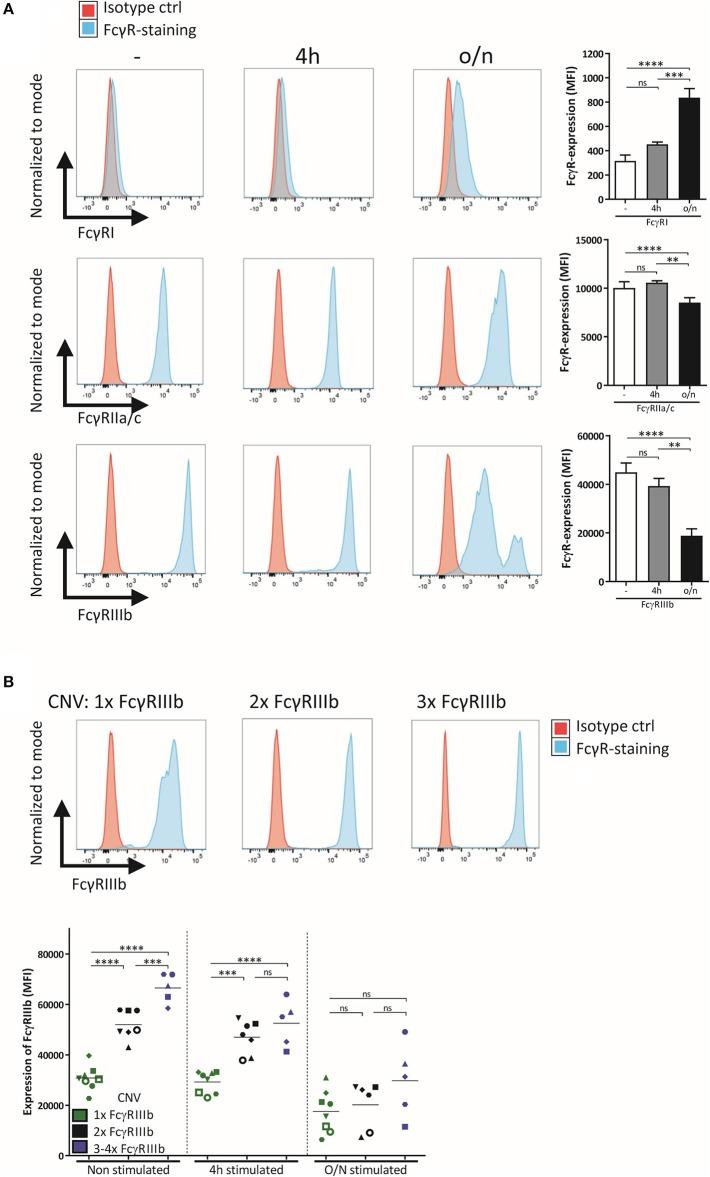
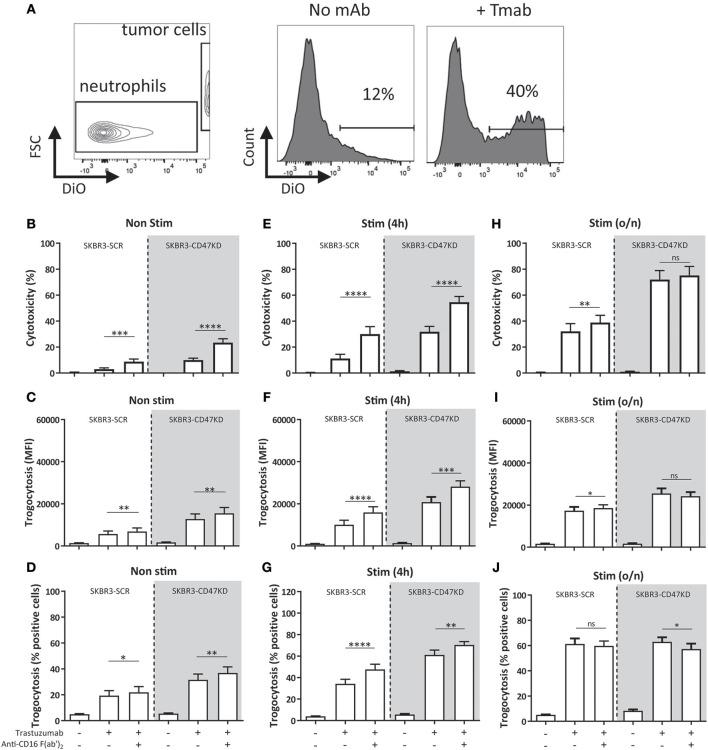
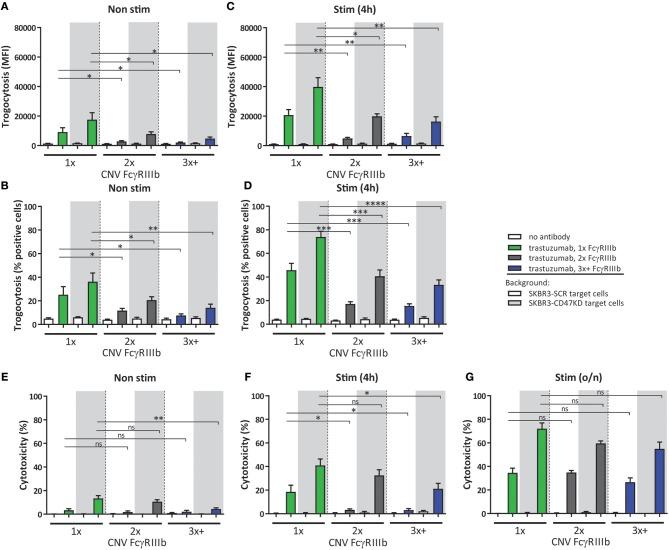
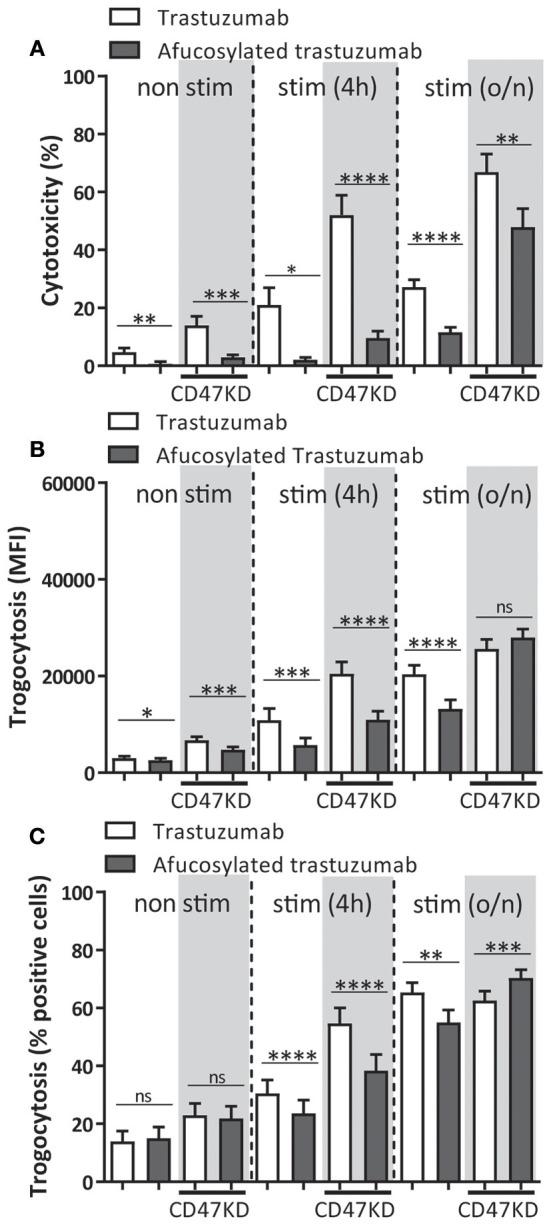
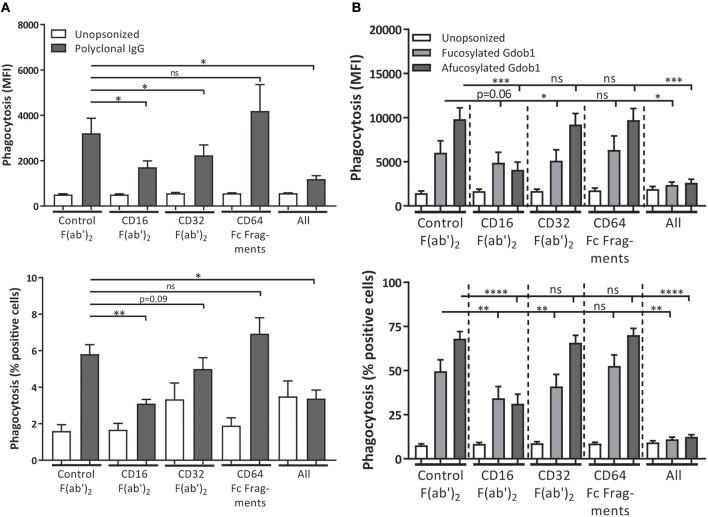
The function of the low-affinity IgG-receptor FcγRIIIb (CD16b), which is uniquely and abundantly expressed on human granulocytes, is not clear. Unlike the other Fcγ receptors (FcγR), it is a glycophosphatidyl inositol (GPI) -anchored molecule and does not have intracellular signaling motifs. Nevertheless, FcγRIIIb can cooperate with other FcγR to promote phagocytosis of antibody-opsonized microbes by human neutrophils. Here we have investigated the role of FcγRIIIb during antibody-dependent cellular cytotoxicity (ADCC) by neutrophils toward solid cancer cells coated with either trastuzumab (anti-HER2) or cetuximab (anti-EGFR). Inhibiting FcγRIIIb using CD16-F(ab') blocking antibodies resulted in substantially enhanced ADCC. ADCC was completely dependent on FcγRIIa (CD32a) and the enhanced ADCC seen after FcγRIIIb blockade therefore suggested that FcγRIIIb was competing with FcγRIIa for IgG on the opsonized target cells. Interestingly, the function of neutrophil FcγRIIIb as a decoy receptor was further supported by using neutrophils from individuals with different gene copy numbers of causing different levels of surface FcγRIIIb expression. Individuals with one copy of showed higher levels of ADCC compared to those with two or more copies. Finally, we show that therapeutic antibodies intended to improve FcγRIIIa (CD16a)-dependent natural killer (NK) cell ADCC due to the lack of fucosylation on the N-linked glycan at position N297 of the IgG heavy chain Fc-region, show decreased ADCC as compared to regularly fucosylated antibodies. Together, these data confirm FcγRIIIb as a negative regulator of neutrophil ADCC toward tumor cells and a potential target for enhancing tumor cell destruction by neutrophils.
低亲和力 IgG 受体 FcγRIIIb(CD16b)在人类粒细胞上独特且丰富表达,但功能尚不清楚。与其他 Fcγ 受体(FcγR)不同,它是一种糖磷脂酰肌醇(GPI)锚定分子,没有细胞内信号基序。然而,FcγRIIIb 可以与其他 FcγR 合作,促进人类中性粒细胞吞噬抗体包被的微生物。在这里,我们研究了 FcγRIIIb 在针对用曲妥珠单抗(抗 HER2)或西妥昔单抗(抗 EGFR)包被的实体癌细胞的抗体依赖性细胞毒性(ADCC)中的作用。使用 CD16-F(ab')阻断抗体抑制 FcγRIIIb 导致 ADCC 显著增强。ADCC 完全依赖于 FcγRIIa(CD32a),FcγRIIIb 阻断后观察到的增强的 ADCC 表明 FcγRIIIb 与 FcγRIIa 竞争 IgG 与包被的靶细胞结合。有趣的是,使用具有不同基因拷贝数的个体的中性粒细胞进一步支持了中性粒细胞 FcγRIIIb 作为诱饵受体的功能,导致表面 FcγRIIIb 表达水平不同。与具有两个或更多拷贝的个体相比,具有一个拷贝的个体显示出更高水平的 ADCC。最后,我们表明,由于 IgG 重链 Fc 区 N 连接聚糖在位置 N297 上缺乏岩藻糖基化,旨在改善 FcγRIIIa(CD16a)依赖性自然杀伤(NK)细胞 ADCC 的治疗性抗体与正常岩藻糖基化的抗体相比,ADCC 降低。总之,这些数据证实了 FcγRIIIb 是中性粒细胞对肿瘤细胞 ADCC 的负调节因子,也是增强中性粒细胞破坏肿瘤细胞的潜在靶点。
 Zotero 插件