
睡眠、自主神经功能与动脉粥样硬化。
Sleep, Autonomic Nervous Function and Atherosclerosis.
机构信息
Department of Internal Medicine, Division of Diabetes, Endocrinology and Metabolism, Hyogo College of Medicine, Nishinomiya, Hyogo 663-8501, Japan.
出版信息
Int J Mol Sci. 2019 Feb 13;20(4):794. doi: 10.3390/ijms20040794.
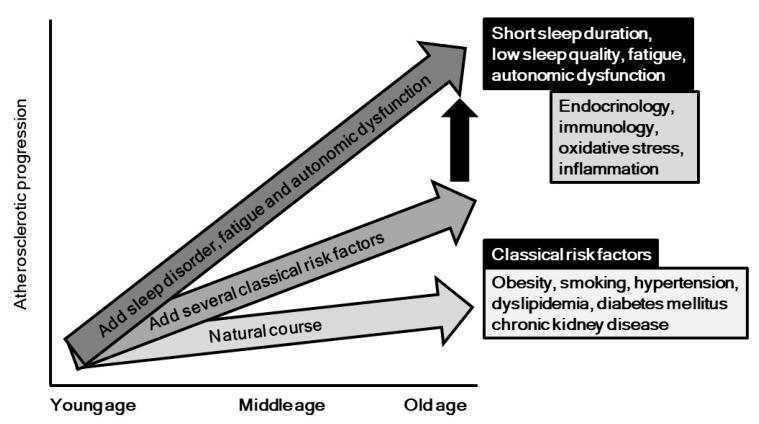
Behavioral and psychosocial factors related to development of cardiovascular disease have been gaining increased attention. Notably, sleep is considered to be one of the most important behavioral factors involved in progression of atherosclerosis and cardiovascular events, with autonomic nervous function a potential mechanism. Several studies have shown associations of sleep and autonomic dysfunction with major surrogate markers of atherosclerosis, such as carotid intima-media thickness and arterial stiffness. Endocrinological, immunological, oxidative, inflammatory, and metabolic responses, as well as endothelial dysfunction may mediate the effects of the autonomic nervous system. For this review, we examined recent findings related to sleep, autonomic nervous dysfunction, and atherosclerosis, with the aim of understanding the involved pathophysiological mechanisms.
与心血管疾病发展相关的行为和心理社会因素受到了越来越多的关注。值得注意的是,睡眠被认为是动脉粥样硬化和心血管事件进展中最重要的行为因素之一,自主神经功能是其潜在机制。多项研究表明,睡眠和自主神经功能障碍与动脉粥样硬化的主要替代标志物(如颈动脉内膜中层厚度和动脉僵硬度)之间存在关联。内分泌、免疫、氧化、炎症和代谢反应以及内皮功能障碍可能介导自主神经系统的作用。在本次综述中,我们检查了与睡眠、自主神经功能障碍和动脉粥样硬化相关的最新发现,旨在了解其中涉及的病理生理机制。


 Zotero 插件