
邻里社会经济地位是否可预测早产风险?基于社区的加拿大队列研究。
Does neighborhood socioeconomic status predict the risk of preterm birth? A community-based Canadian cohort study.
机构信息
Department of Community Health Sciences, University of Calgary, Calgary, Canada.
Applied Research and Evaluation- Primary Health Care, Alberta Health Services, Edmonton, Alberta, Canada.
出版信息
BMJ Open. 2019 Feb 20;9(2):e025341. doi: 10.1136/bmjopen-2018-025341.
OBJECTIVE
This study developed and internally validated a predictive model for preterm birth (PTB) to examine the ability of neighbourhood socioeconomic status (SES) to predict PTB.
DESIGN
Cohort study using individual-level data from two community-based prospective pregnancy cohort studies (All Our Families (AOF) and Alberta Pregnancy Outcomes and Nutrition (APrON)) and neighbourhood SES data from the 2011 Canadian census.
SETTING
Calgary, Alberta, Canada.
PARTICIPANTS
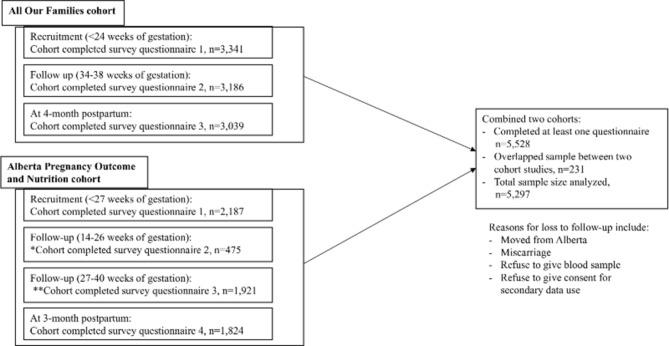
Pregnant women who were <24 weeks of gestation and >15 years old were enrolled in the cohort studies between 2008 and 2012. Overall, 5297 women participated in at least one of these cohorts: 3341 women participated in the AOF study, 2187 women participated in the APrON study and 231 women participated in both studies. Women who participated in both studies were only counted once.
PRIMARY AND SECONDARY OUTCOME MEASURES
PTB (delivery prior to 37 weeks of gestation).
RESULTS
The rates of PTB in the least and most deprived neighbourhoods were 7.54% and 10.64%, respectively. Neighbourhood variation in PTB was 0.20, with an intra-class correlation of 5.72%. Neighbourhood SES, combined with individual-level predictors, predicted PTB with an area under the receiver-operating characteristic curve (AUC) of 0.75. The sensitivity was 91.80% at a low-risk threshold, with a high false-positive rate (71.50%), and the sensitivity was 5.70% at a highest risk threshold, with a low false-positive rate (0.90%). An agreement between the predicted and observed PTB demonstrated modest model calibration. Individual-level predictors alone predicted PTB with an AUC of 0.60.
CONCLUSION
Although neighbourhood SES combined with individual-level predictors improved the overall prediction of PTB compared with individual-level predictors alone, the detection rate was insufficient for application in clinical or public health practice. A prediction model with better predictive ability is required to effectively find women at high risk of preterm delivery.
目的
本研究旨在开发并内部验证一种早产(PTB)预测模型,以检验社区社会经济地位(SES)预测 PTB 的能力。
设计
使用来自两项基于社区的前瞻性妊娠队列研究(All Our Families(AOF)和 Alberta Pregnancy Outcomes and Nutrition(APrON))的个体水平数据以及 2011 年加拿大人口普查的社区 SES 数据,进行队列研究。
地点
加拿大阿尔伯塔省卡尔加里市。
参与者
<24 周妊娠且年龄>15 岁的孕妇参加了 2008 年至 2012 年期间的队列研究。总体而言,有 5297 名妇女参加了这些队列研究中的至少一项:3341 名妇女参加了 AOF 研究,2187 名妇女参加了 APrON 研究,231 名妇女参加了这两项研究。仅计算参加两项研究的妇女一次。
主要和次要结果
PTB(妊娠 37 周前分娩)。
结果
最贫困和最富裕社区的 PTB 发生率分别为 7.54%和 10.64%。PTB 社区间变异为 0.20,组内相关系数为 5.72%。社区 SES 与个体水平预测因素相结合,预测 PTB 的受试者工作特征曲线(ROC)下面积(AUC)为 0.75。低风险阈值的灵敏度为 91.80%,假阳性率高(71.50%),最高风险阈值的灵敏度为 5.70%,假阳性率低(0.90%)。预测 PTB 与观察到的 PTB 之间的一致性表明模型校准适度。个体水平预测因素单独预测 PTB 的 AUC 为 0.60。
结论
尽管社区 SES 与个体水平预测因素相结合,与单独使用个体水平预测因素相比,可提高 PTB 的总体预测能力,但检测率不足以用于临床或公共卫生实践。需要具有更好预测能力的预测模型来有效发现有早产高风险的妇女。

 Zotero 插件