
假定的癌症干细胞标志物CD44、CD133、野生型表皮生长因子受体(EGFR)和EGFRvIII在转移性结直肠癌中的共表达及其预后意义
Co-expression and prognostic significance of putative CSC markers CD44, CD133, wild-type EGFR and EGFRvIII in metastatic colorectal cancer.
作者信息
Khelwatty Said Abdullah, Essapen Sharadah, Bagwan Izhar, Green Margaret, Seddon Alan M, Modjtahedi Helmout
机构信息
School of Life Sciences, Pharmacy and Chemistry, Kingston University London, Kingston, UK.
St. Luke's Cancer Centre, Royal Surrey County Hospital, Guildford, Surrey, UK.
出版信息
Oncotarget. 2019 Mar 1;10(18):1704-1715. doi: 10.18632/oncotarget.26722.
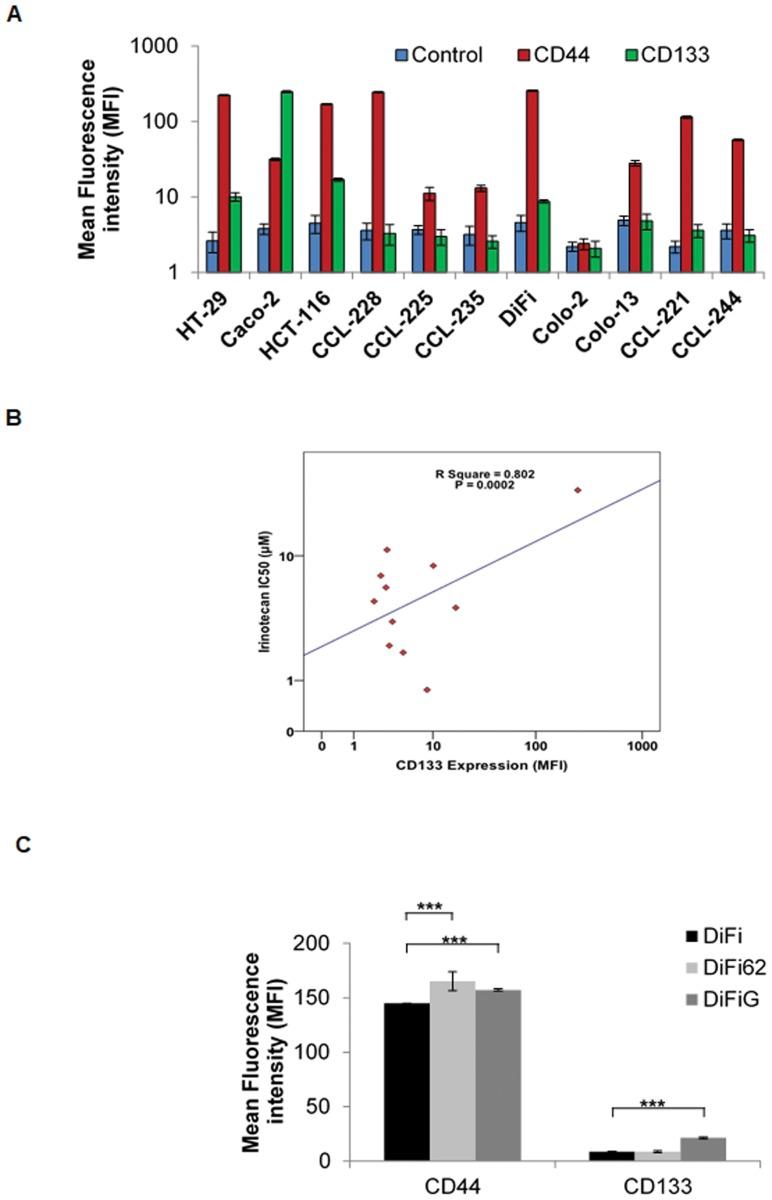
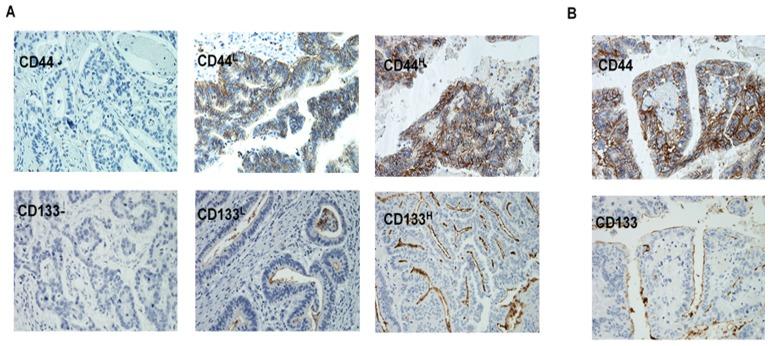
The presence of colorectal cancer stem cells (CSCs) have been associated with tumour initiation and resistance to therapy. This study investigated the co-expression and prognostic significance of the CSCs biomarkers CD44 and CD133 with wild-type EGFR (wtEGFR) and EGFRvIII in colorectal cancer (CRC). The expression of these biomarkers were determined in tumours from 70 patients with metastatic CRC by immunohistochemistry, and in a panel of human CRC cell lines, and their variants with acquired-resistance to EGFR inhibitors, by flow cytometry. The expression of CD44, CD133, wtEGFR and EGFRvIII were present in 17%, 23%, 26% and 13% of cases and the co-expression of CD44/CD133 with wtEGFR and EGFRvIII were present in 9% and 3% of the cases respectively. Only co-expression of CSCs/EGFRvIII ( = 0.037), and amphiregulin ( = 0.017) were associated with worse overall survival. Interestingly, disease-free survival was improved in BTC expressing patients ( = 0.025). CD133 expression and its co-expression with CD44 were associated with primary-resistance to irinotecan and acquired-resistance to anti-EGFR inhibitors respectively. Our results suggest co-expression of CSCs and EGFRvIII could be potential biomarkers of worse overall survival and resistance to therapy in patients with mCRC and warrants further validation in a larger cohort.
结直肠癌干细胞(CSCs)的存在与肿瘤起始及治疗耐药性相关。本研究调查了结直肠癌(CRC)中CSCs生物标志物CD44和CD133与野生型EGFR(wtEGFR)及EGFRvIII的共表达情况及其预后意义。通过免疫组织化学测定了70例转移性CRC患者肿瘤中这些生物标志物的表达,并通过流式细胞术在一组人CRC细胞系及其对EGFR抑制剂获得性耐药的变体中进行了测定。CD44、CD133、wtEGFR和EGFRvIII的表达分别出现在17%、23%、26%和13%的病例中,CD44/CD133与wtEGFR和EGFRvIII的共表达分别出现在9%和3%的病例中。只有CSCs/EGFRvIII的共表达(=0.037)和双调蛋白的共表达(=0.017)与较差的总生存期相关。有趣的是,表达BTC的患者无病生存期得到改善(=0.025)。CD133表达及其与CD44的共表达分别与对伊立替康的原发性耐药和对抗EGFR抑制剂的获得性耐药相关。我们的结果表明,CSCs与EGFRvIII的共表达可能是转移性CRC患者总生存期较差和治疗耐药的潜在生物标志物,值得在更大队列中进一步验证。

 Zotero 插件