
硬蜱属(Ixodes)蜱吸食犬类和人工膜传播嗜吞噬细胞无形体(Foggie,1949)。
Transmission of Anaplasma phagocytophilum (Foggie, 1949) by Ixodes ricinus (Linnaeus, 1758) ticks feeding on dogs and artificial membranes.
机构信息
Clinvet International (Pty) Ltd, Bloemfontein, South Africa.
Clinvet SA Morocco, Mohammedia, Morocco.
出版信息
Parasit Vectors. 2019 Mar 26;12(1):136. doi: 10.1186/s13071-019-3396-9.
BACKGROUND
The interplay of speed of activity of acaricidal products and tick-borne pathogen transmission time is the major driver for disease prevention. This study aimed to investigate the time required for transmission of Anaplasma phagocytophilum by adult Ixodes ricinus ticks in vivo on dogs, and to confirm the time required for transmission observed in vivo, in vitro.
METHODS
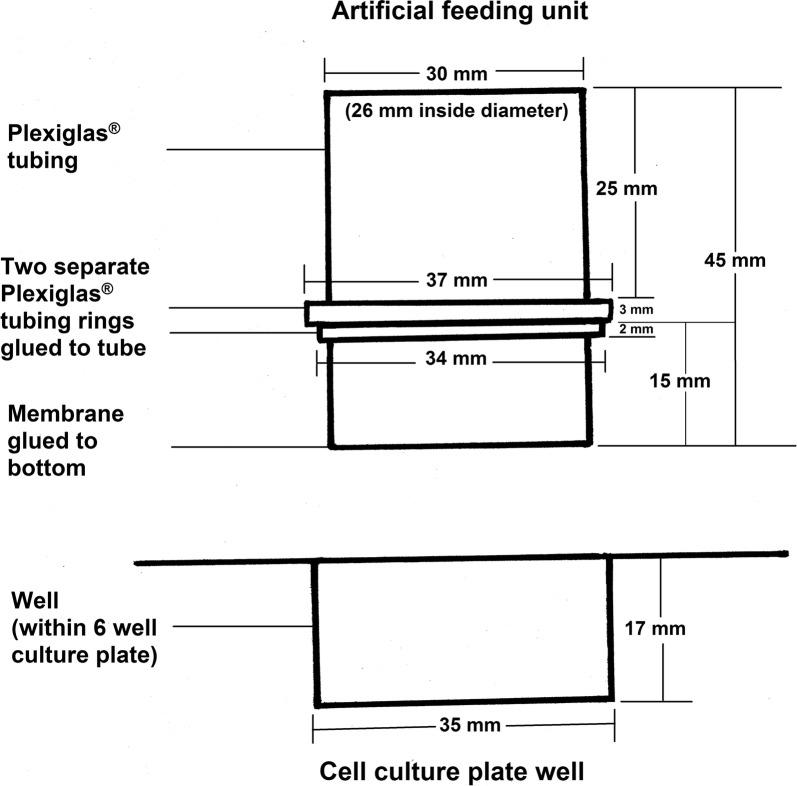
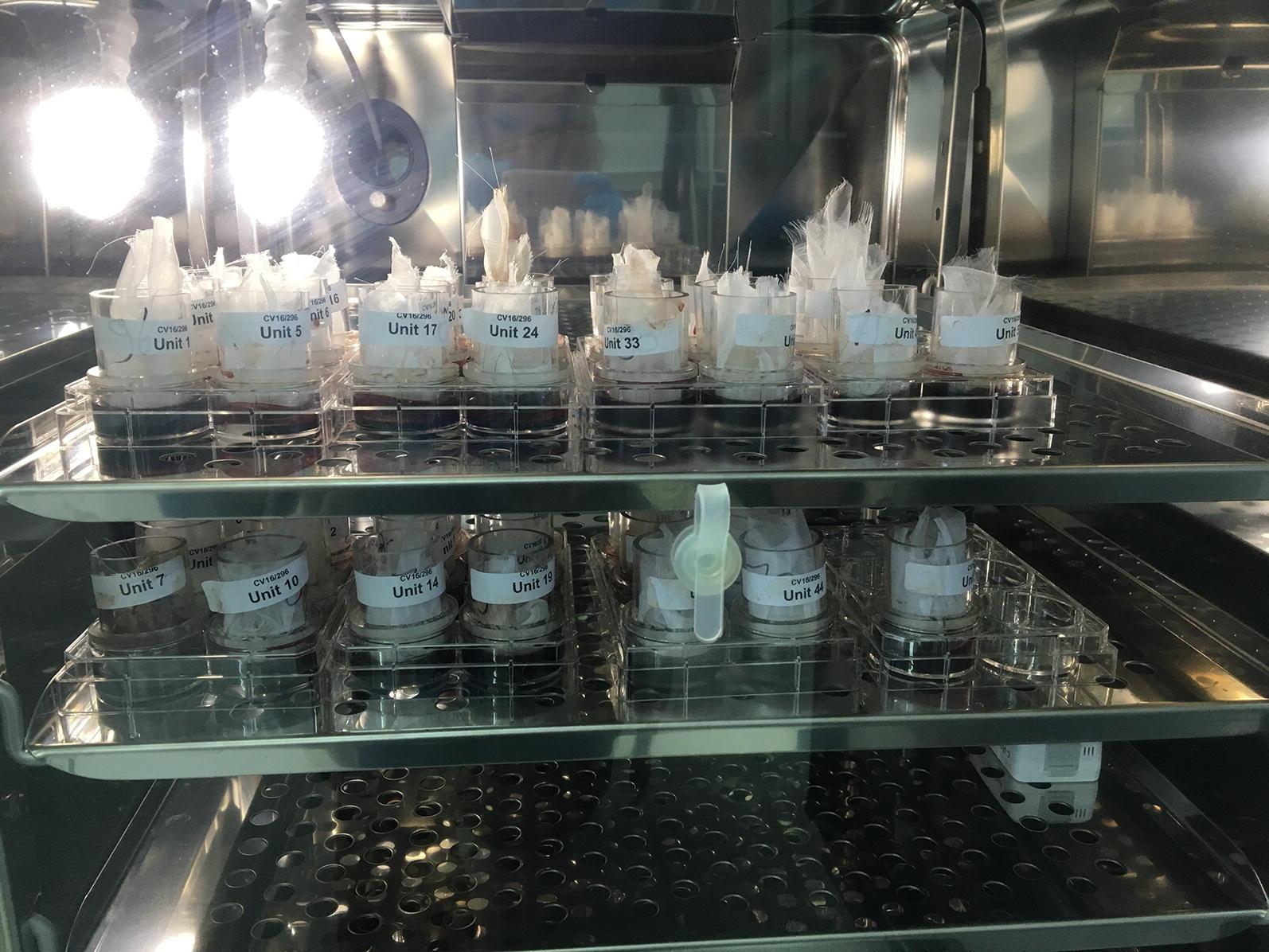
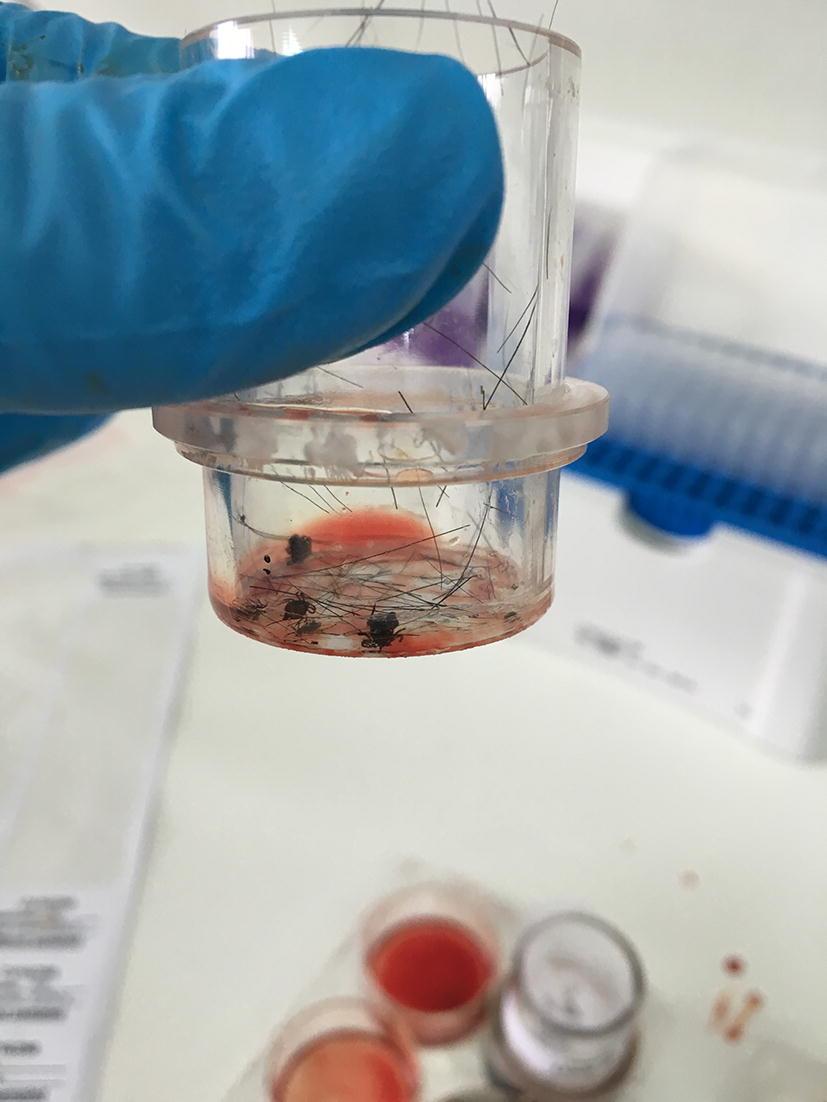
Nymphs of I. ricinus were experimentally infected with an A. phagocytophilum strain of canine origin. Dogs were allocated to 6 groups of 3 dogs each. Groups 1-5 were infested with 50 A. phagocytophilum-infected female adult ticks on Day 0. Ticks were removed post-infestation at 3, 6, 12, 24 and 48 h. Dogs in Group 6 were infested with 60 A. phagocytophilum-infected female adult ticks (left on dogs until engorged). Dogs were observed daily for general health and clinically examined on Day 0, and weekly from Day 14. Blood was collected for qPCR and serological analysis on Day 0 (pre-challenge) and weekly thereafter. In the in vitro study each artificial feeding chamber was seeded with 10 adult ticks (5 male/5 female), attachment assessed, and blood pools sampled for qPCR at 6 h intervals up to 72 h after first tick attachment.
RESULTS
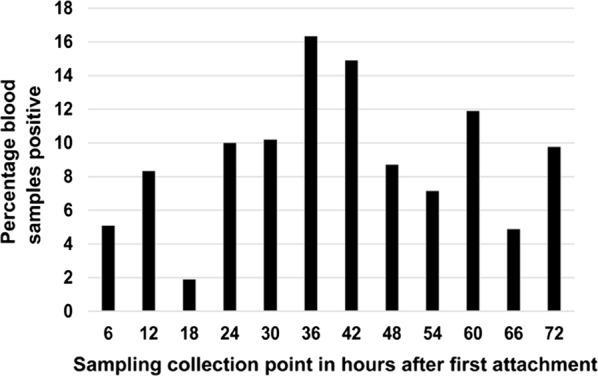
Anaplasma phagocytophilum specific antibodies and DNA were detected in all 3 dogs in Group 6. No A. phagocytophilum-specific antibodies or DNA were detected in any dogs in Groups 1-5. All dogs remained healthy. Female tick attachment in 60 artificial feeding chambers over 72 h ranged between 20-60%. Anaplasma phagocytophilum DNA was detected in the blood collected from 5% of chambers sampled at 6 h, with the highest number of positive samples (16.3%) observed at 36 h.
CONCLUSIONS
Transmission of A. phagocytophilum by I. ricinus ticks starts within a few hours after attachment but establishment of infections in dogs is apparently dependent on a minimum inoculation dose that was only observed when ticks attached for greater than 48 h. These findings highlight the need for acaricidal products to exert a repellent and/or rapid killing effect on ticks to forestall transmission and subsequent disease.
背景
杀蜱剂的杀虫速度与蜱传病原体传播时间的相互作用是预防疾病的主要驱动因素。本研究旨在调查在体内传播犬无形体的硬蜱(Ixodes ricinus)成虫所需的时间,并确认在体内和体外观察到的传播时间。
方法
用犬源无形体菌株对 I. ricinus 若虫进行实验感染。将狗分为 6 组,每组 3 只。第 1-5 组于第 0 天用 50 只感染 A. phagocytophilum 的雌性成蜱侵染。侵染后 3、6、12、24 和 48 h 后去除蜱虫。第 6 组的狗用 60 只感染 A. phagocytophilum 的雌性成蜱侵染(让其在狗身上饱食)。狗每天观察一般健康状况,并于第 0 天(攻毒前)和第 14 天开始每周进行临床检查。第 0 天(攻毒前)和此后每周采集血液进行 qPCR 和血清学分析。在体外研究中,每个人工饲养室接种 10 只成蜱(5 雄/5 雌),评估附着情况,并在首次附着后 6 h 间隔内采集血液样本进行 qPCR,直至 72 h。
结果
第 6 组的 3 只狗均检测到无形体特异性抗体和 DNA。第 1-5 组的狗均未检测到无形体特异性抗体或 DNA。所有狗均保持健康。在 72 h 内,60 个人工饲养室中的雌性蜱附着率在 20-60%之间。在 6 h 采样的 5%的血池中检测到无形体 DNA,在 36 h 时观察到最多的阳性样本(16.3%)。
结论
在附着后几小时内,无形体开始通过硬蜱传播,但狗的感染建立显然取决于最小接种剂量,只有当蜱附着超过 48 h 时才会观察到这种剂量。这些发现强调了杀蜱剂需要对蜱虫发挥驱避和/或快速杀灭作用,以阻止传播和随后的疾病。
 Zotero 插件