
CD32 在促进新型抗 IL-4Rα 治疗性抗体抑制 IL-4 诱导的免疫反应中的重要作用。
Important roles of CD32 in promoting suppression of IL-4 induced immune responses by a novel anti-IL-4Rα therapeutic antibody.
机构信息
a Department of Antibody and Protein Engineering , 3sBio Inc , Pudong , Shanghai , China.
出版信息
MAbs. 2019 Jul;11(5):837-847. doi: 10.1080/19420862.2019.1601985. Epub 2019 Apr 29.
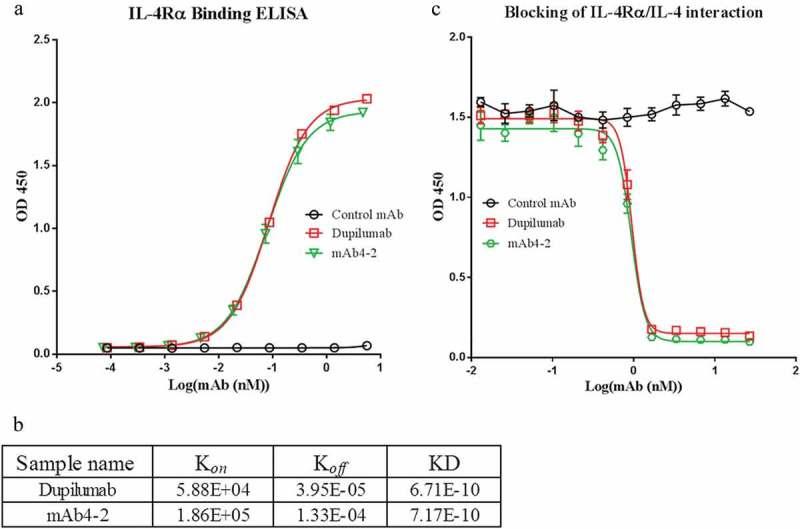
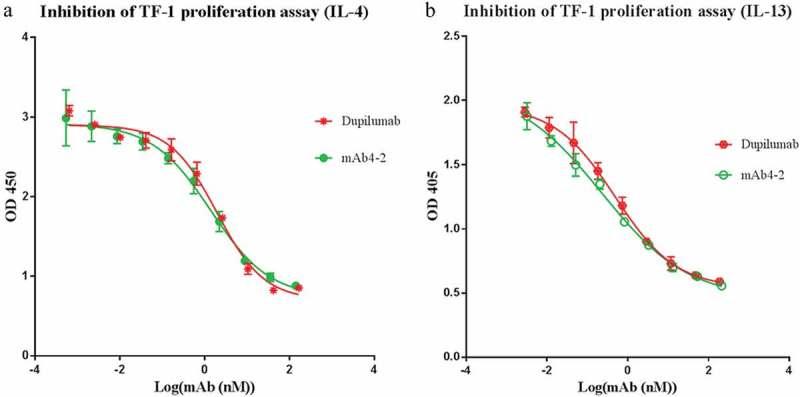
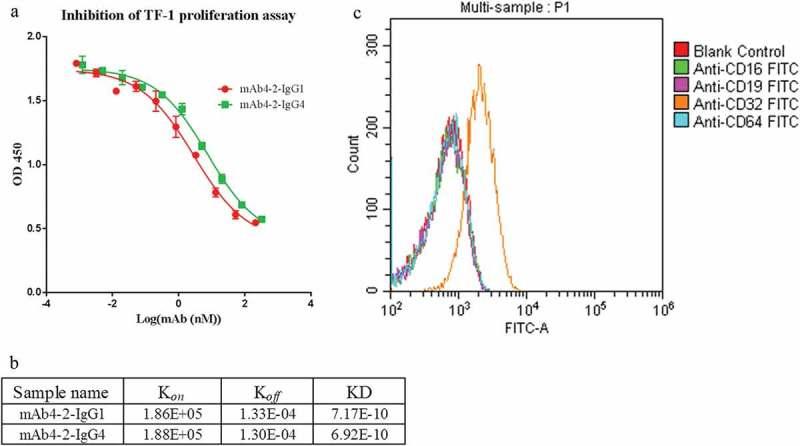
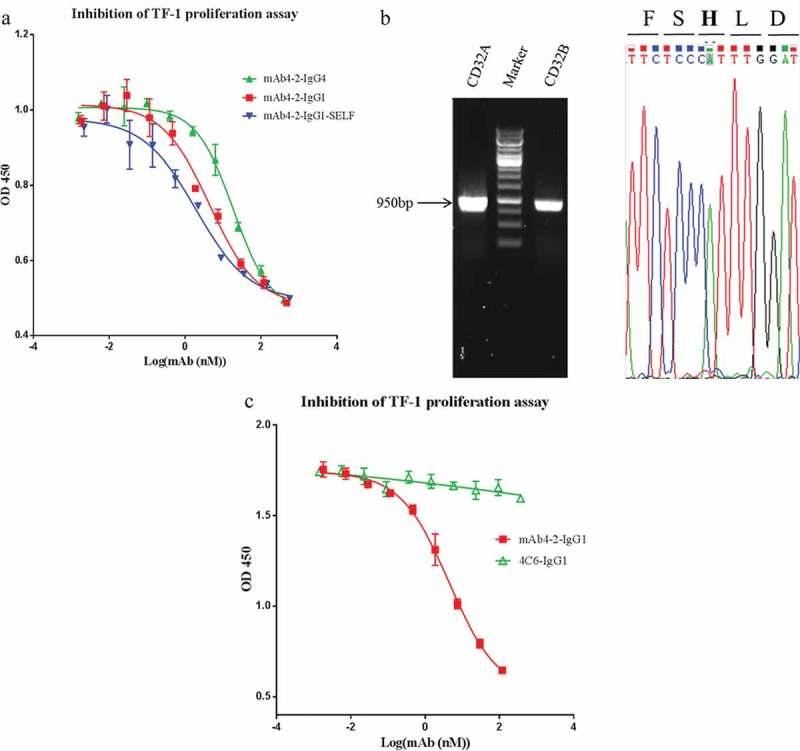
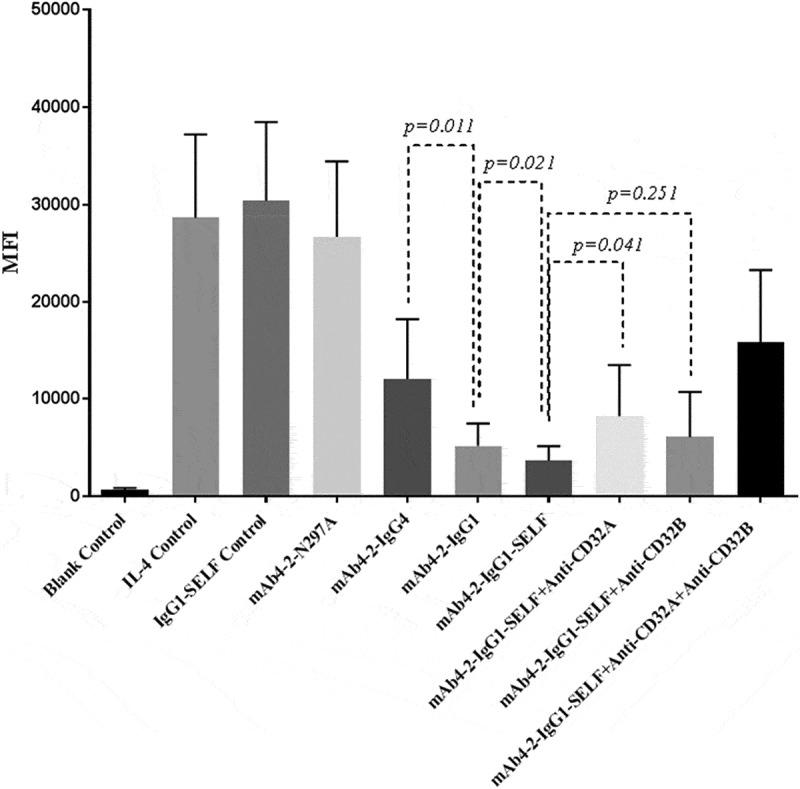
Asthma is characterized by airway hyperresponsiveness and inflammation, as well as underlying structural changes to the airways. Interleukin-4 (IL-4) is a key T-helper type 2 (Th2) cytokine that plays important roles in the pathogenesis of atopic and eosinophilic asthma. We developed a novel humanized anti-IL-4Rα antibody that can potently inhibit IL-4/IL-13-mediated TF-1 cell proliferation. Using monocytes isolated from human peripheral blood mononuclear cells (PBMCs), we revealed a critical role of CD32 in modulating the immune responses of monocytes in response to blockade of IL-4Rα signaling pathway. We, therefore, devised a new strategy to increase the efficacy of the anti-IL-4Rα monoclonal antibody for the treatment of asthma and other atopic diseases by co-engaging CD32 and IL-4Rα on monocytic cells by choosing IgG classes or Fc mutations with higher affinities for CD32. The antibody with selectively enhanced affinity for CD32A displayed superior suppression of IL-4-induced monocytes' activities, including the down-regulation of CD23 expression. Intriguingly, further analysis demonstrated that both CD32A and CD32B contributed to the enhancement of antibody-mediated suppression of CD23 expression from monocytes in response to blockade of IL-4Rα signaling. Furthermore, inhibition of IgE secretion from human PBMC by the antibody variants further suggests that the complex allergic inflammation mediated by IL-4/IL-4Rα signaling might result from a global network where multiple cell types that express multiple FcγRs are all involved, of which CD32, especially CD32A, is a key mediator. In this respect, our study provides new insights into designing therapeutic antibodies for targeting Th2 cytokine-mediated allergic pathogenesis.
哮喘的特征是气道高反应性和炎症,以及气道的潜在结构变化。白细胞介素-4(IL-4)是一种关键的 T 辅助型 2(Th2)细胞因子,在特应性和嗜酸性粒细胞性哮喘的发病机制中发挥重要作用。我们开发了一种新型的人源化抗 IL-4Rα 抗体,能够强烈抑制 IL-4/IL-13 介导的 TF-1 细胞增殖。使用从人外周血单核细胞(PBMC)中分离的单核细胞,我们揭示了 CD32 在调节单核细胞对 IL-4Rα 信号通路阻断的免疫反应中的关键作用。因此,我们设计了一种新策略,通过选择与 CD32 具有更高亲和力的 IgG 类别或 Fc 突变体,共同结合单核细胞上的 CD32 和 IL-4Rα,从而增加抗 IL-4Rα 单克隆抗体治疗哮喘和其他特应性疾病的疗效。对 CD32A 具有选择性增强亲和力的抗体显示出对 IL-4 诱导的单核细胞活性的优越抑制作用,包括下调 CD23 表达。有趣的是,进一步的分析表明,CD32A 和 CD32B 都有助于增强抗体介导的阻断 IL-4Rα 信号后单核细胞 CD23 表达的抑制作用。此外,抗体变体对人 PBMC 中 IgE 分泌的抑制进一步表明,由 IL-4/IL-4Rα 信号介导的复杂过敏炎症可能是由一个涉及表达多种 FcγRs 的多种细胞类型的全局网络引起的,其中 CD32,特别是 CD32A,是一个关键的介质。在这方面,我们的研究为设计针对 Th2 细胞因子介导的过敏发病机制的治疗性抗体提供了新的见解。


 Zotero 插件