
肠-肝轴在肝脏炎症、纤维化和癌症中的作用:特别关注肠道微生物群的关系
Role of the Gut-Liver Axis in Liver Inflammation, Fibrosis, and Cancer: A Special Focus on the Gut Microbiota Relationship.
作者信息
Ohtani Naoko, Kawada Norifumi
机构信息
Department of Pathophysiology Osaka City University, Graduate School of Medicine Osaka Japan.
Department of Hepatology Osaka City University, Graduate School of Medicine Osaka Japan.
出版信息
Hepatol Commun. 2019 Mar 1;3(4):456-470. doi: 10.1002/hep4.1331. eCollection 2019 Apr.
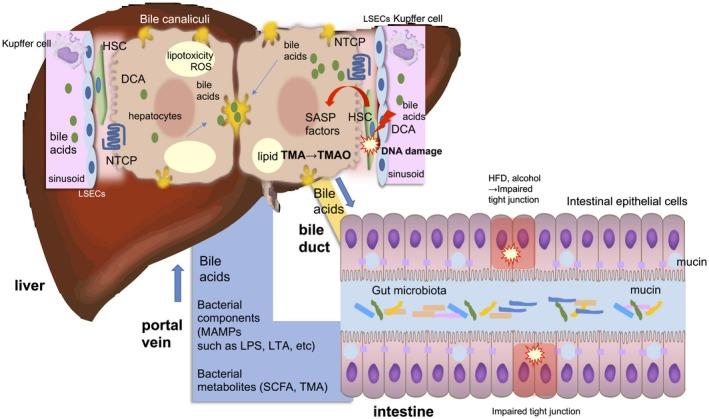
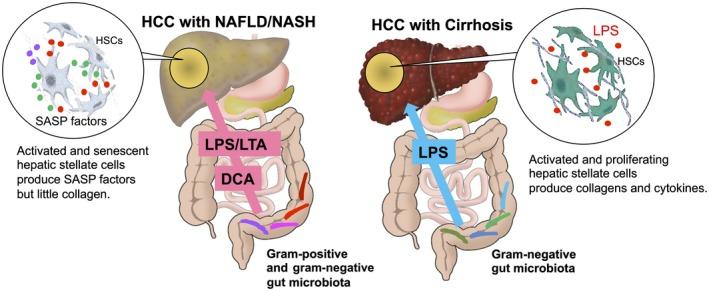
The gut and the liver are anatomically and physiologically connected, and this "gut-liver axis" exerts various influences on liver pathology. The gut microbiota consists of various microorganisms that normally coexist in the human gut and have a role of maintaining the homeostasis of the host. However, once homeostasis is disturbed, metabolites and components derived from the gut microbiota translocate to the liver and induce pathologic effects in the liver. In this review, we introduce and discuss the mechanisms of liver inflammation, fibrosis, and cancer that are influenced by gut microbial components and metabolites; we include recent advances in molecular-based therapeutics and novel mechanistic findings associated with the gut-liver axis and gut microbiota.
肠道与肝脏在解剖学和生理学上相互关联,这种“肠-肝轴”对肝脏病理产生多种影响。肠道微生物群由多种通常共存于人体肠道中的微生物组成,具有维持宿主内环境稳态的作用。然而,一旦内环境稳态受到干扰,源自肠道微生物群的代谢产物和成分就会转移至肝脏并在肝脏中诱导病理效应。在本综述中,我们介绍并讨论受肠道微生物成分和代谢产物影响的肝脏炎症、纤维化和癌症的机制;我们还纳入了基于分子的治疗方法的最新进展以及与肠-肝轴和肠道微生物群相关的新机制发现。


 Zotero 插件