
高迁移率族蛋白B1在缺血性卒中中的作用
The Role of High Mobility Group Box 1 in Ischemic Stroke.
作者信息
Ye Yingze, Zeng Zhi, Jin Tong, Zhang Hongfei, Xiong Xiaoxing, Gu Lijuan
机构信息
Central Laboratory, Renmin Hospital of Wuhan University, Wuhan, China.
Department of Pathology, Renmin Hospital of Wuhan University, Wuhan, China.
出版信息
Front Cell Neurosci. 2019 Apr 2;13:127. doi: 10.3389/fncel.2019.00127. eCollection 2019.
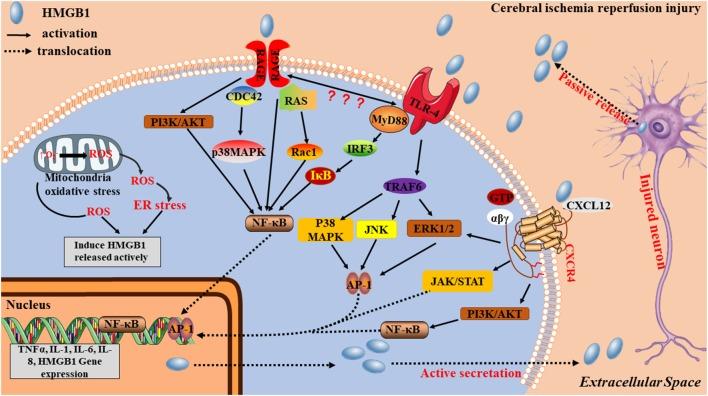
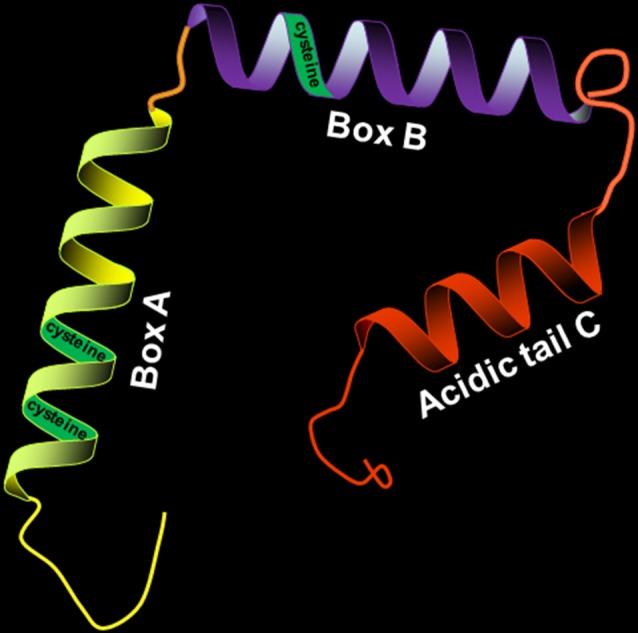
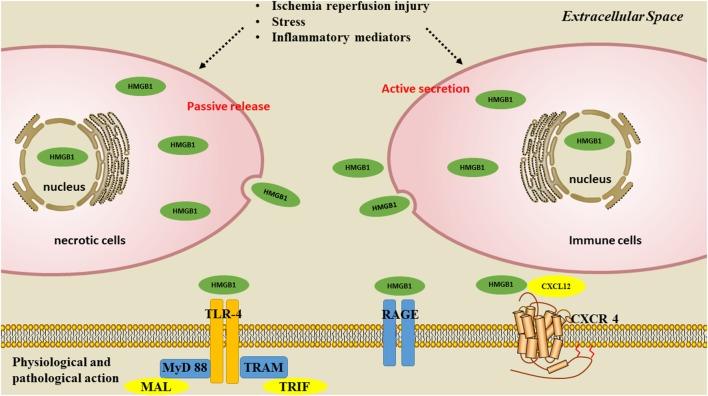
High-mobility group box 1 protein (HMGB1) is a novel, cytokine-like, and ubiquitous, highly conserved, nuclear protein that can be actively secreted by microglia or passively released by necrotic neurons. Ischemic stroke is a leading cause of death and disability worldwide, and the outcome is dependent on the amount of hypoxia-related neuronal death in the cerebral ischemic region. Acting as an endogenous danger-associated molecular pattern (DAMP) protein, HMGB1 mediates cerebral inflammation and brain injury and participates in the pathogenesis of ischemic stroke. It is thought that HMGB1 signals its presumed receptors, such as toll-like receptors (TLRs), matrix metalloproteinase (MMP) enzymes, and receptor for advanced glycation end products (RAGEs) during ischemic stroke. In addition, the release of HMGB1 from the brain into the bloodstream influences peripheral immune cells. However, the role of HMGB1 in ischemic stroke may be more complex than this and has not yet been clarified. Here, we summarize and review the research into HMGB1 in ischemic stroke.
高迁移率族蛋白B1(HMGB1)是一种新型的、细胞因子样的、普遍存在的、高度保守的核蛋白,可由小胶质细胞主动分泌或由坏死神经元被动释放。缺血性中风是全球范围内导致死亡和残疾的主要原因,其预后取决于脑缺血区域缺氧相关神经元死亡的数量。作为一种内源性危险相关分子模式(DAMP)蛋白,HMGB1介导脑内炎症和脑损伤,并参与缺血性中风的发病机制。据认为,在缺血性中风期间,HMGB1向其假定的受体发出信号,如Toll样受体(TLR)、基质金属蛋白酶(MMP)酶和晚期糖基化终产物受体(RAGE)。此外,HMGB1从脑内释放到血液中会影响外周免疫细胞。然而,HMGB1在缺血性中风中的作用可能比这更复杂,尚未完全阐明。在此,我们总结并综述了关于缺血性中风中HMGB1的研究。
 Zotero 插件