
氟维司群治疗激素受体阳性/人表皮生长因子受体 2 阴性晚期乳腺癌:综述。
Fulvestrant in the treatment of hormone receptor-positive/human epidermal growth factor receptor 2-negative advanced breast cancer: A review.
机构信息
Department of Surgery in Breast Cancer, Fudan University Shanghai Cancer Center, Shanghai, China.
出版信息
Cancer Med. 2019 May;8(5):1943-1957. doi: 10.1002/cam4.2095. Epub 2019 Apr 19.
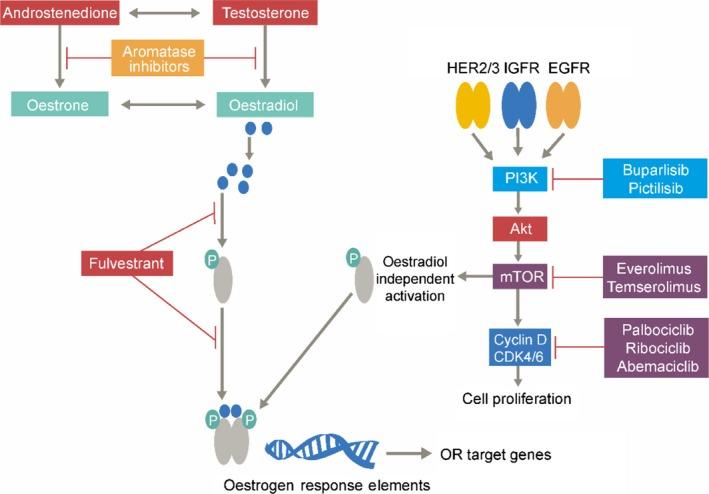
Nearly 75% of breast cancers are hormone receptor-positive (HR+) and human epidermal growth factor receptor type 2-negative (HER2-), making endocrine therapy the mainstay of treatment for HR+ and HER2- combination. Although endocrine therapy, such as therapy with fulvestrant, is widely used in the clinic, endocrine resistance (primary or secondary) is inevitable and poses a serious clinical concern. However, the therapeutic landscape of HR+/HER2- breast cancer is rapidly changing and evolving. In recent years, molecular insights into the genome of HR+/HER2- breast cancer have helped to identify promising targets, such as alterations in signaling pathways [phosphatidylinositide 3-kinase (PI3K/AKT/mammalian target of rapamycin (mTOR)], dysregulation of the cell cycle (CDK4/6), and identification of new ESR1 mutations. These insights have led to the development of newer targeted therapies, which aims at significantly improving survival in these patients. This review summarizes the role and rationale of fulvestrant when used as a monotherapy or in combination with targeted therapies in patients with HR+/HER2- advanced breast cancer. We also discuss other novel agents and potential future combination treatment options.
近 75%的乳腺癌是激素受体阳性(HR+)和人表皮生长因子受体 2 阴性(HER2-),使内分泌治疗成为 HR+和 HER2-联合治疗的主要方法。尽管内分泌治疗,如氟维司群治疗,在临床上广泛应用,但内分泌抵抗(原发性或继发性)是不可避免的,这是一个严重的临床关注点。然而,HR+/HER2-乳腺癌的治疗格局正在迅速变化和发展。近年来,对 HR+/HER2-乳腺癌基因组的分子研究有助于确定有前途的靶点,如信号通路改变(磷脂酰肌醇 3-激酶[PI3K/AKT/雷帕霉素靶蛋白(mTOR])、细胞周期失调(CDK4/6)和新的 ESR1 突变的鉴定。这些研究结果促使开发了更新的靶向治疗方法,旨在显著改善这些患者的生存。本文综述了氟维司群作为单一药物或与靶向治疗联合用于 HR+/HER2-晚期乳腺癌患者的作用和原理。我们还讨论了其他新型药物和潜在的未来联合治疗选择。

 Zotero 插件