
CD276 基因多态性与急性肝移植排斥反应风险评估模型。
A risk assessment model of acute liver allograft rejection by genetic polymorphism of CD276.
机构信息
Division of Hepatobiliary and Pancreatic Surgery, Department of Surgery, the First Affiliated Hospital, School of Medicine, Zhejiang University, Hangzhou, China.
NHFPC Key Laboratory of Combined Multi-organ Transplantation, Hangzhou, China.
出版信息
Mol Genet Genomic Med. 2019 Jun;7(6):e689. doi: 10.1002/mgg3.689. Epub 2019 May 1.
BACKGROUND
Liver transplantation is an effective therapy for end-stage liver diseases and acute liver failure. After the operation, however, recipients may suffer grafts loss induced by alloimmune reaction, which is termed as acute allograft rejection. The interaction between costimulatory molecules, CD276, and its ligand, TREML2, promotes T cell-mediated immune response, as well as acute or chronic allograft rejection. Our research aimed at correlating genetic polymorphisms of CD276/TREML2 with acute rejection, and evaluating its prognostic value of acute rejection after liver transplantation.
METHODS
The study enrolled a total of 388 recipients. Among them, acute allograft rejection was observed in 54 cases. We performed single nucleotide polymorphism genotyping of CD276, including rs11072431, rs11574495, rs12593558, rs12594627, rs2127015, rs3816661 and rs7176654, and TREML2, including rs4714431, rs6915083, rs7754593, and rs9394767 from preoperative peripheral blood genome DNA.
RESULTS
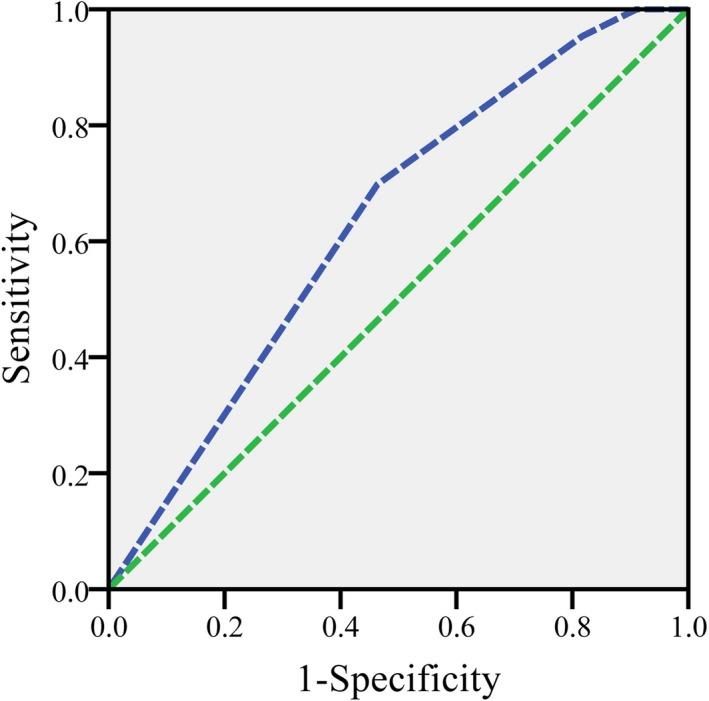
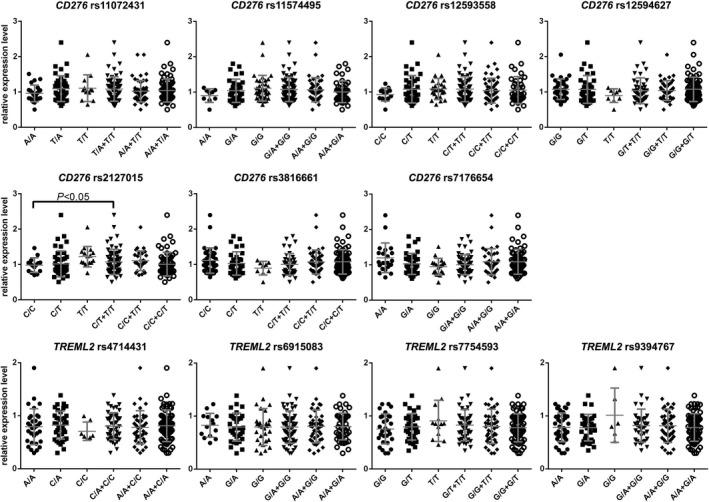
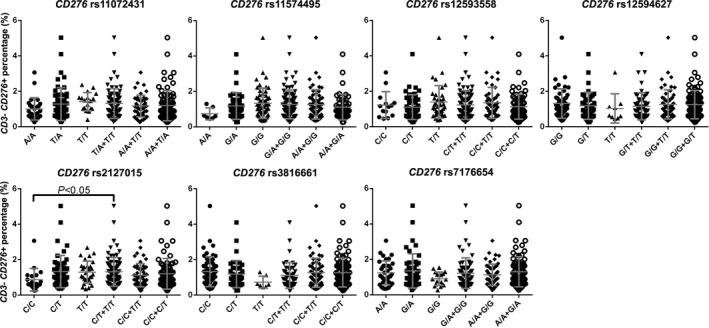
We found rs2127015 of CD276, rs6915083 and rs7754593 of TREML2, and HBV infection as well were associated with acute rejection. And, rs2127015 influences CD276 expression. Moreover, we established a risk assessment model, composited by statistically proved risk factors.
CONCLUSION
By integrating both clinical and genetic variables, liver transplant recipients can be categorized into different risk groups, and might benefit from individualized therapies.
背景
肝移植是治疗终末期肝病和急性肝衰竭的有效方法。然而,手术后,受者可能会因同种免疫反应而导致移植物丢失,即急性移植物排斥反应。共刺激分子 CD276 及其配体 TREML2 的相互作用促进了 T 细胞介导的免疫反应以及急性或慢性移植物排斥反应。我们的研究旨在探讨 CD276/TREML2 的遗传多态性与急性排斥反应的相关性,并评估其对肝移植后急性排斥反应的预后价值。
方法
该研究共纳入 388 例受者。其中,54 例发生急性移植物排斥反应。我们对 CD276 包括 rs11072431、rs11574495、rs12593558、rs12594627、rs2127015、rs3816661 和 rs7176654,以及 TREML2 包括 rs4714431、rs6915083、rs7754593 和 rs9394767 的单核苷酸多态性进行了基因分型,这些多态性均来自术前外周血基因组 DNA。
结果
我们发现 CD276 的 rs2127015、TREML2 的 rs6915083 和 rs7754593 以及 HBV 感染与急性排斥反应相关。此外,rs2127015 影响 CD276 的表达。并且,我们建立了一个风险评估模型,该模型由统计学上证明的风险因素组成。
结论
通过整合临床和遗传变量,肝移植受者可以分为不同的风险组,并可能受益于个体化治疗。

 Zotero 插件