
代谢激活的脂肪组织巨噬细胞将肥胖与三阴性乳腺癌联系起来。
Metabolically activated adipose tissue macrophages link obesity to triple-negative breast cancer.
机构信息
Committee on Cancer Biology, The University of Chicago, Chicago, IL.
Ben May Department for Cancer Research, The University of Chicago, Chicago, IL.
出版信息
J Exp Med. 2019 Jun 3;216(6):1345-1358. doi: 10.1084/jem.20181616. Epub 2019 May 3.
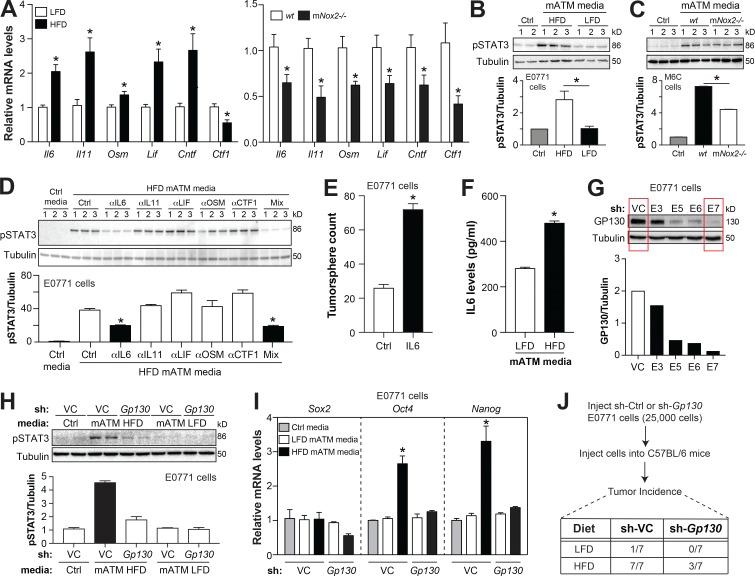
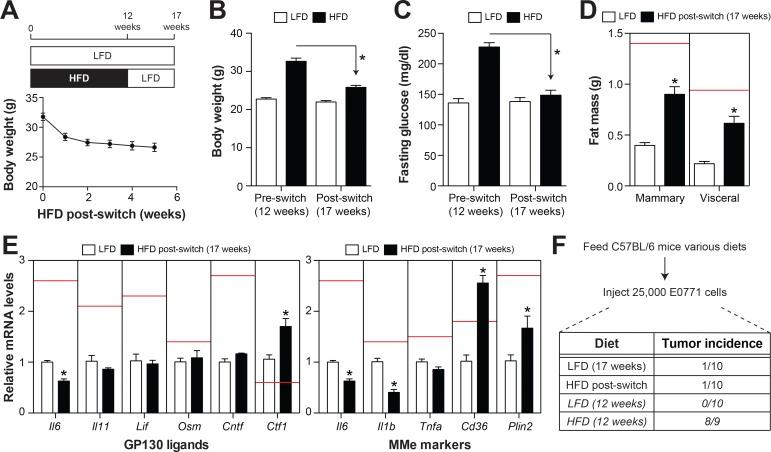
Obesity is associated with increased incidence and severity of triple-negative breast cancer (TNBC); however, mechanisms underlying this relationship are incompletely understood. Here, we show that obesity reprograms mammary adipose tissue macrophages to a pro-inflammatory metabolically activated phenotype (MMe) that alters the niche to support tumor formation. Unlike pro-inflammatory M1 macrophages that antagonize tumorigenesis, MMe macrophages are pro-tumorigenic and represent the dominant macrophage phenotype in mammary adipose tissue of obese humans and mice. MMe macrophages release IL-6 in an NADPH oxidase 2 (NOX2)-dependent manner, which signals through glycoprotein 130 (GP130) on TNBC cells to promote stem-like properties including tumor formation. Deleting in myeloid cells or depleting GP130 in TNBC cells attenuates obesity-augmented TNBC stemness. Moreover, weight loss reverses the effects of obesity on MMe macrophage inflammation and TNBC tumor formation. Our studies implicate MMe macrophage accumulation in mammary adipose tissue as a mechanism for promoting TNBC stemness and tumorigenesis during obesity.
肥胖与三阴性乳腺癌(TNBC)的发病率和严重程度增加有关;然而,这种关系的潜在机制尚不完全清楚。在这里,我们表明肥胖会使乳腺脂肪组织中的巨噬细胞重新编程为促炎代谢激活表型(MMe),从而改变肿瘤形成的微环境。与拮抗肿瘤发生的促炎 M1 巨噬细胞不同,MMe 巨噬细胞是促肿瘤的,并且代表肥胖人类和小鼠乳腺脂肪组织中占主导地位的巨噬细胞表型。MMe 巨噬细胞以 NADPH 氧化酶 2(NOX2)依赖性方式释放白细胞介素 6(IL-6),通过 TNBC 细胞上的糖蛋白 130(GP130)发出信号,促进包括肿瘤形成在内的干性特征。在髓样细胞中删除或在 TNBC 细胞中耗尽 GP130 可减弱肥胖对 TNBC 干性的增强作用。此外,减肥可逆转肥胖对 MMe 巨噬细胞炎症和 TNBC 肿瘤形成的影响。我们的研究表明,乳腺脂肪组织中 MMe 巨噬细胞的积累是肥胖期间促进 TNBC 干性和肿瘤发生的一种机制。


 Zotero 插件