
昆虫和哺乳动物中的抗病毒 RNAi:相似与差异。
Antiviral RNAi in Insects and Mammals: Parallels and Differences.
机构信息
Department of Medical Microbiology, Radboud University Medical Center, Radboud Institute for Molecular Life Sciences, 6500 HB Nijmegen, The Netherlands.
出版信息
Viruses. 2019 May 16;11(5):448. doi: 10.3390/v11050448.
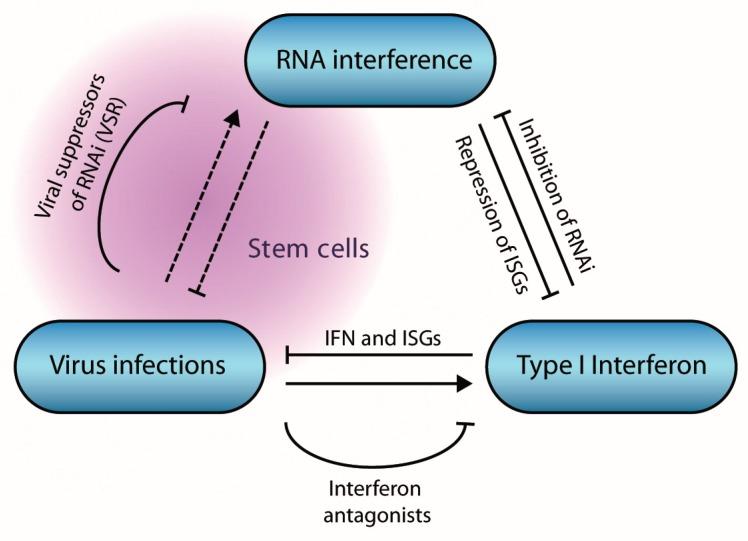
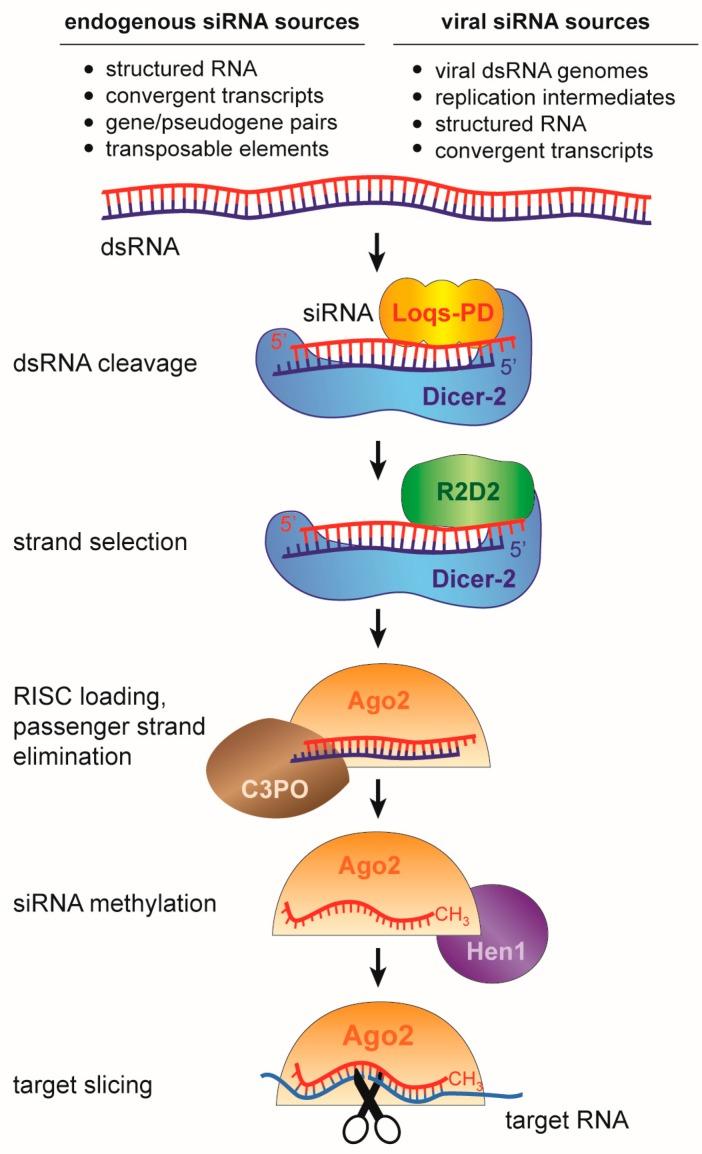
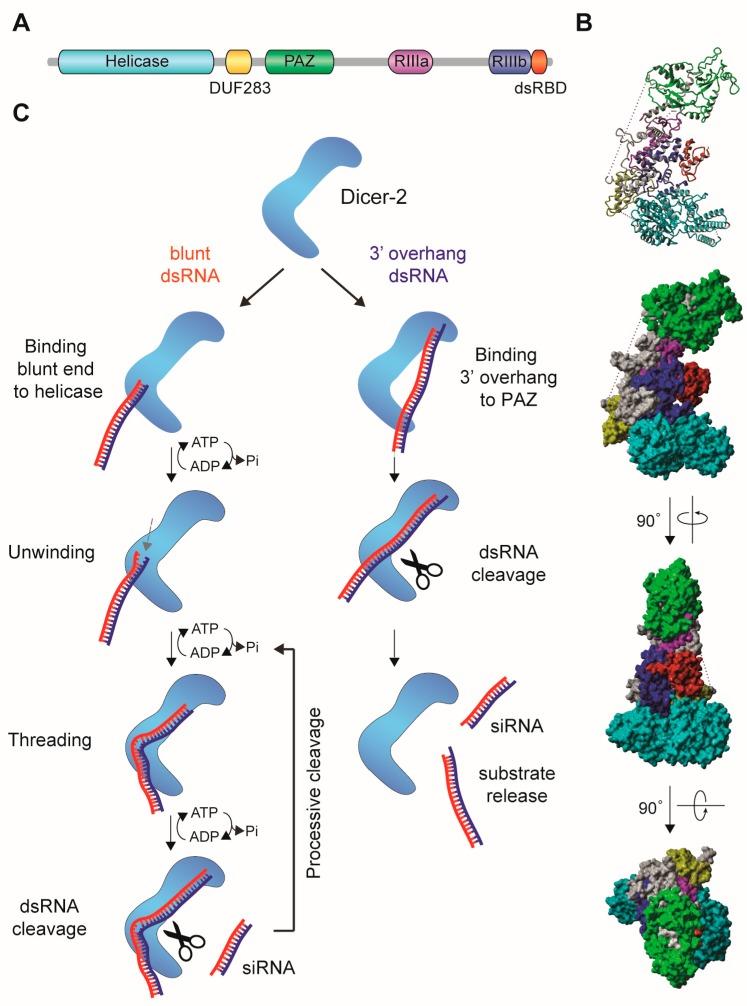
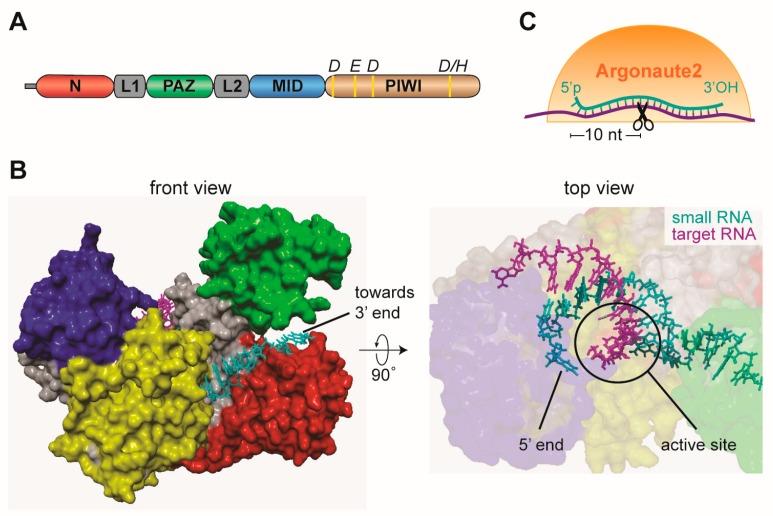
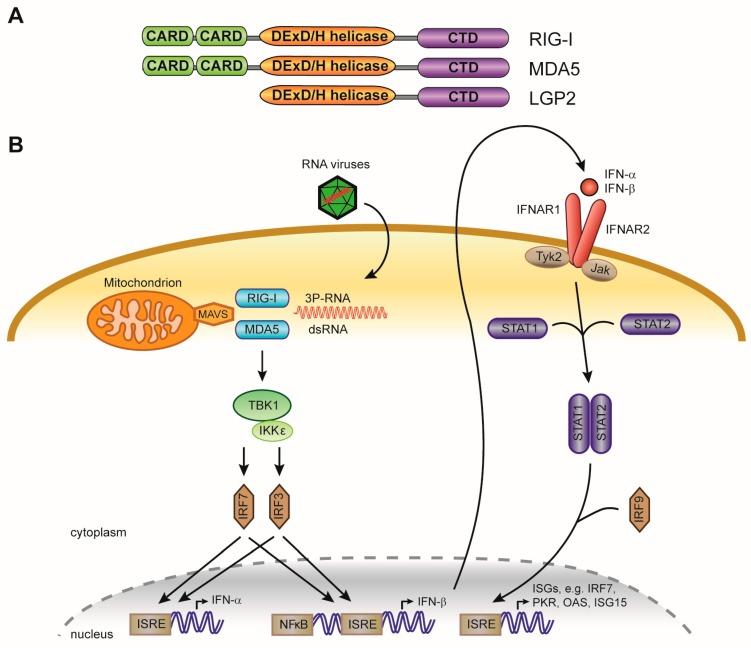
The RNA interference (RNAi) pathway is a potent antiviral defense mechanism in plants and invertebrates, in response to which viruses evolved suppressors of RNAi. In mammals, the first line of defense is mediated by the type I interferon system (IFN); however, the degree to which RNAi contributes to antiviral defense is still not completely understood. Recent work suggests that antiviral RNAi is active in undifferentiated stem cells and that antiviral RNAi can be uncovered in differentiated cells in which the IFN system is inactive or in infections with viruses lacking putative viral suppressors of RNAi. In this review, we describe the mechanism of RNAi and its antiviral functions in insects and mammals. We draw parallels and highlight differences between (antiviral) RNAi in these classes of animals and discuss open questions for future research.
RNA 干扰 (RNAi) 途径是植物和无脊椎动物中一种强大的抗病毒防御机制,病毒对此进化出了 RNAi 抑制剂。在哺乳动物中,第一道防线是由 I 型干扰素系统 (IFN) 介导的;然而,RNAi 对抗病毒防御的贡献程度仍不完全清楚。最近的研究表明,抗病毒 RNAi 在未分化的干细胞中是活跃的,并且在 IFN 系统不活跃或在感染缺乏潜在 RNAi 抑制剂的病毒的分化细胞中可以揭示抗病毒 RNAi。在这篇综述中,我们描述了 RNAi 的机制及其在昆虫和哺乳动物中的抗病毒功能。我们比较了这些动物类群中的 (抗病毒) RNAi,并强调了它们之间的差异,讨论了未来研究的悬而未决的问题。

 Zotero 插件