
ENGAGE 研究的原理和方案:一项采用综合队列设计的双盲随机对照偏好试验,旨在测量认知和休闲为基础的干预对有记忆主诉的老年人的影响。
Rationale and protocol of the ENGAGE study: a double-blind randomized controlled preference trial using a comprehensive cohort design to measure the effect of a cognitive and leisure-based intervention in older adults with a memory complaint.
机构信息
Université de Montréal, Montreal, Canada.
Research Center, Institut Universitaire de Gériatrie de Montréal, Montreal, Canada.
出版信息
Trials. 2019 May 22;20(1):282. doi: 10.1186/s13063-019-3250-6.
BACKGROUND
Leisure activities can be both enjoyable and cognitively stimulating, and participation in such activities has been associated with reduced age-related cognitive decline. Thus, integrating stimulating leisure activities in cognitive training programs may represent a powerful and innovative approach to promote cognition in older adults at risk of dementia. The ENGAGE study is a randomized controlled, double-blind preference trial with a comprehensive cohort design that will test the efficacy and long-term impact of an intervention that combines cognitive training and cognitively stimulating leisure activities.
METHODS
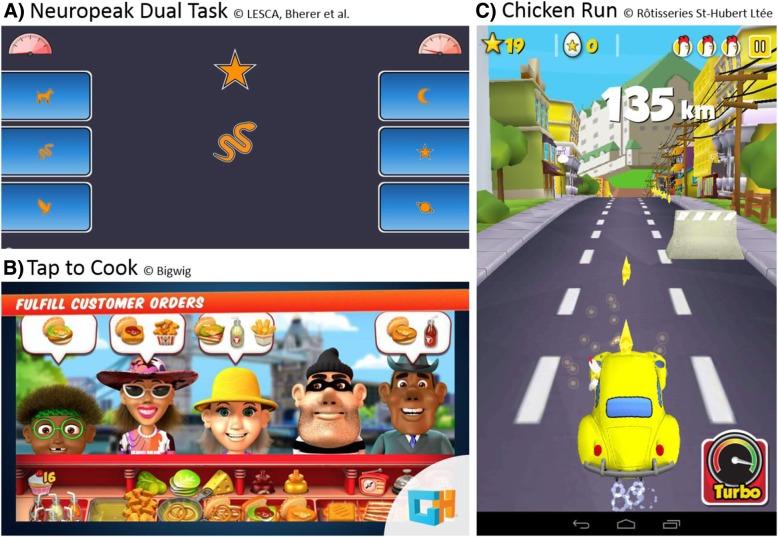
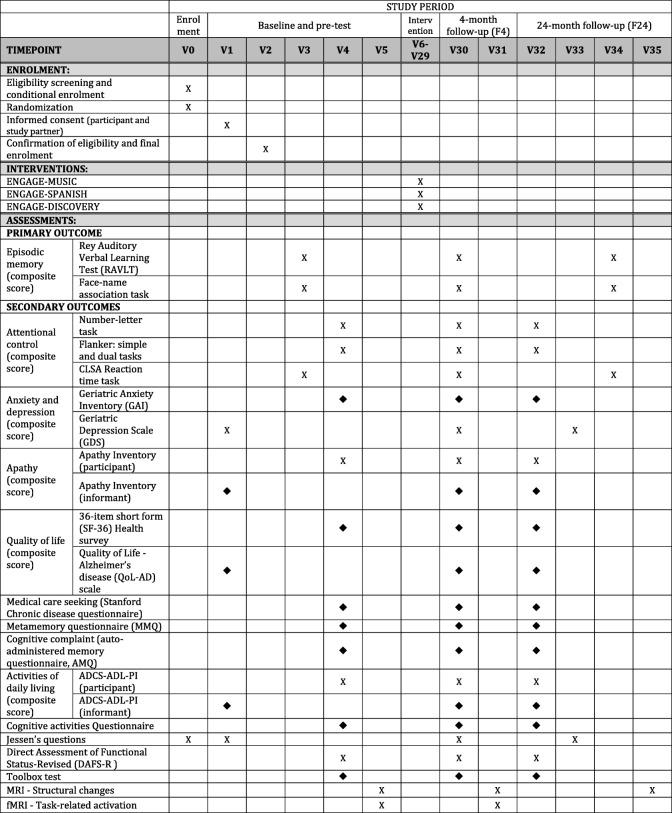
One hundred and forty-four older adults with a memory complaint will be recruited in Montreal and Toronto. A particular effort will be made to reach persons with low cognitive reserve. Participants will be randomly assigned to one of two conditions: cognitive + leisure training (ENGAGE-MUSIC/SPANISH) or active control (ENGAGE-DISCOVERY). The ENGAGE-MUSIC/SPANISH training will include teaching of mnemonic and attentional control strategies, casual videogames selected to train attention, and classes in music or Spanish as a second language. The ENGAGE-DISCOVERY condition will comprise psychoeducation on cognition and the brain, low-stimulating casual videogames and documentary viewing with discussions. To retain the leisure aspect of the activities, participants will be allowed to exclude either music or Spanish at study entry if they strongly dislike one of these activities. Participants randomized to ENGAGE-MUSIC/SPANISH who did not exclude any activity will be assigned to music or Spanish based on a second random assignment. Training will be provided in 24 2-h sessions over 4 months. Outcomes will be measured at baseline, at 4-month follow-up, and at 24-month follow-up. The primary outcome will be cognitive performance on a composite measure of episodic memory (delayed recall scores for words and face-name associations) measured at baseline and at the 4-month follow-up. Secondary outcomes will include a composite measure of attention (speed of processing, inhibition, dual tasking, and shifting), psychological health, activities of daily living, and brain structure and function and long-term maintenance measured at the 24-month follow-up. Information on cognitive reserve proxies (education and lifestyle questionnaires), sex and genotype (apolipoprotein (Apo)E4, brain-derived neurotrophic factor (BDNF), and catechol-O-methyltransferase (COMT)) will be collected and considered as moderators of training efficacy.
DISCUSSION
This study will test whether a program combining cognitive training with stimulating leisure activities can increase cognition and reduce cognitive decline in persons at risk of dementia.
TRIAL REGISTRATION
NCT03271190 . Registered on 5 September 2017.
背景
休闲活动既能带来乐趣,又能刺激认知,参与此类活动与降低与年龄相关的认知能力下降有关。因此,在认知训练计划中融入刺激性的休闲活动,可能是促进认知能力的一种强有力且创新的方法,尤其适用于有痴呆风险的老年人。ENGAGE 研究是一项随机对照、双盲偏好试验,采用全面队列设计,旨在测试认知训练与刺激性休闲活动相结合的干预措施的疗效和长期影响。
方法
在蒙特利尔和多伦多招募 144 名有记忆主诉的老年人。将特别努力接触认知储备能力低的人群。参与者将被随机分配到以下两种条件之一:认知+休闲训练(ENGAGE-MUSIC/SPANISH)或主动对照(ENGAGE-DISCOVERY)。ENGAGE-MUSIC/SPANISH 训练将包括教授记忆和注意力控制策略、选择训练注意力的休闲视频游戏,以及音乐或西班牙语作为第二语言课程。ENGAGE-DISCOVERY 条件将包括认知和大脑的心理教育、低刺激的休闲视频游戏和纪录片观看以及讨论。为了保留活动的休闲性,如果参与者强烈不喜欢其中一项活动,可以在研究开始时选择排除音乐或西班牙语。被随机分配到 ENGAGE-MUSIC/SPANISH 的参与者如果没有排除任何活动,将根据第二次随机分配选择音乐或西班牙语。培训将在 4 个月内提供 24 个 2 小时的课程。结果将在基线、4 个月随访和 24 个月随访时测量。主要结果将是复合记忆表现(单词和人脸关联的延迟回忆得分)的认知表现,在基线和 4 个月随访时测量。次要结果将包括注意力的复合测量(加工速度、抑制、双重任务和转换)、心理健康、日常生活活动以及 24 个月随访时的大脑结构和功能以及长期维持。将收集认知储备指标(教育和生活方式问卷)、性别和基因型(载脂蛋白 (Apo)E4、脑源性神经营养因子 (BDNF) 和儿茶酚-O-甲基转移酶 (COMT))的信息,并将其视为训练效果的调节剂。
讨论
本研究将测试将认知训练与刺激性休闲活动相结合的方案是否可以提高认知能力并减少痴呆风险人群的认知能力下降。
试验注册
NCT03271190。于 2017 年 9 月 5 日注册。
 Zotero 插件