
猪小梁网蛋白组的深入观察。
An In-Depth View of the Porcine Trabecular Meshwork Proteome.
机构信息
Experimental and Translational Ophthalmology, Department of Ophthalmology, University Medical Center, 55101 Mainz, Germany.
出版信息
Int J Mol Sci. 2019 May 22;20(10):2526. doi: 10.3390/ijms20102526.
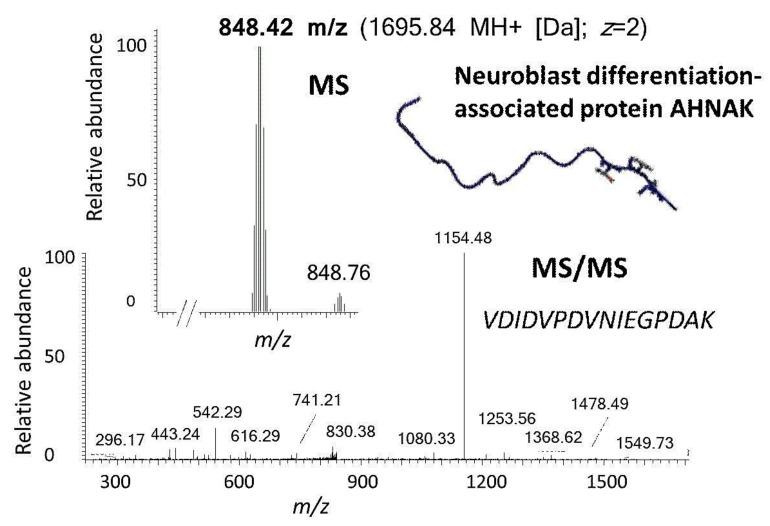
The house swine ( Linnaeus 1758) is an important model organism regarding the study of neurodegenerative diseases, especially ocular neuropathies such as glaucoma. This is due to the high comparability of the porcine and human eye regarding anatomy and molecular features. In the pathogenesis of glaucoma, the trabecular meshwork (TM) forms a key ocular component in terms of intraocular pressure (IOP) elevation. Thereby, functional TM abnormalities are correlated with distinct proteomic alterations. However, a detailed analysis of the TM proteome has not been realized so far. Since the porcine eye has high potential as a model system to study ocular diseases such as glaucoma, the present study focuses on the in-depth analysis of the porcine TM proteome. By use of a bottom-up (BU) mass spectrometric (MS) platform utilizing electrospray ionization liquid chromatography tandem MS (LC-ESI-MS/MS) considering database-dependent and peptide de novo sequencing, more than 3000 TM proteins were documented with high confidence (FDR < 1%). A distinct number of proteins with neuronal association were revealed. To the best to our knowledge, many of these protein species have not been reported for TM tissue before such as reelin, centlein and high abundant neuroblast differentiation-associated protein AHNAK (AHNAK). Thereby, AHNAK might play a superordinate role in the TM regarding proposed tissue involvement in barrier function. Also, a high number of secretory proteins could be identified. The generated TM proteomic landscape underlines a multifunctional character of the TM beyond representing a simple drainage system. Finally, the protein catalogue of the porcine TM provides an in-depth view of the TM molecular landscape and will serve as an important reference map in terms of glaucoma research utilizing porcine animal models, porcine TM tissues and/or cultured TM cells.
家猪(Linnaeus 1758)是研究神经退行性疾病,尤其是青光眼等眼部神经病变的重要模型生物。这是由于猪眼和人眼在解剖学和分子特征方面具有高度的可比性。在青光眼的发病机制中,小梁网(TM)是眼压升高的关键眼部组成部分。因此,TM 的功能异常与明显的蛋白质组改变相关。然而,迄今为止,对 TM 蛋白质组的详细分析尚未实现。由于猪眼具有作为研究青光眼等眼部疾病模型系统的巨大潜力,因此本研究重点对猪 TM 蛋白质组进行深入分析。通过使用基于 Bottom-up(BU)的质谱(MS)平台,利用电喷雾电离液相色谱串联质谱(LC-ESI-MS/MS),结合数据库依赖和肽从头测序,我们以高置信度(FDR<1%)记录了超过 3000 种 TM 蛋白。揭示了大量与神经元相关的蛋白。据我们所知,这些蛋白种类中的许多以前在 TM 组织中没有报道过,例如 reelin、centlein 和高丰度神经母细胞分化相关蛋白 AHNAK(AHNAK)。因此,AHNAK 在 TM 中可能发挥着重要的作用,提出了 TM 组织可能参与了屏障功能。此外,还可以鉴定出大量的分泌蛋白。所产生的 TM 蛋白质组景观强调了 TM 的多功能特性,不仅仅是作为一个简单的排水系统。最后,猪 TM 的蛋白质目录为 TM 的分子景观提供了深入的了解,并将为利用猪动物模型、猪 TM 组织和/或培养的 TM 细胞进行青光眼研究提供重要的参考图谱。


 Zotero 插件