
不同基因在通过 GABA 能突触连接的皮质内神经元的前突触和后突触中的传递。
Delivery of different genes into pre- and post-synaptic neocortical interneurons connected by GABAergic synapses.
机构信息
Department of Ophthalmology, Louisiana State University Health Sciences Center, New Orleans, Louisiana, United States of America.
Department of Physiology and Neurobiology, University of Connecticut, Storrs, Connecticut, United States of America.
出版信息
PLoS One. 2019 May 24;14(5):e0217094. doi: 10.1371/journal.pone.0217094. eCollection 2019.
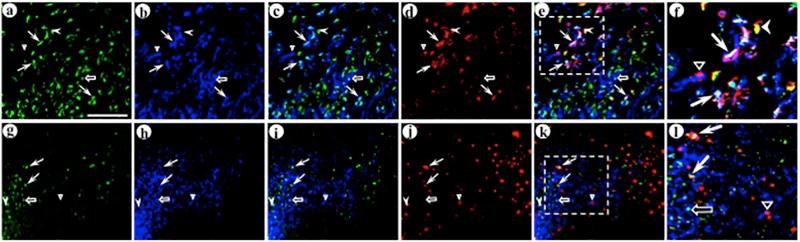
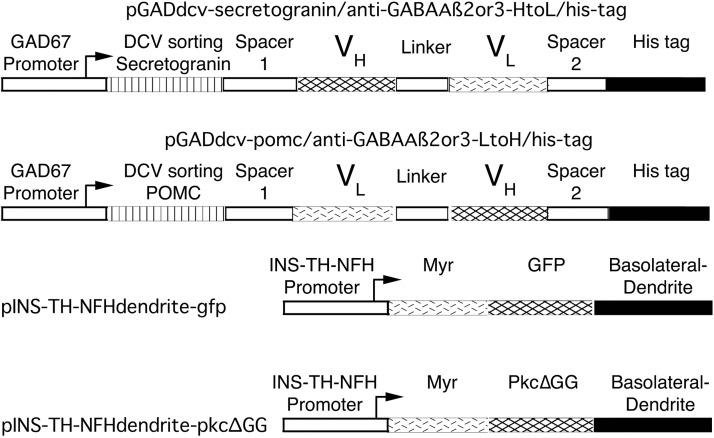
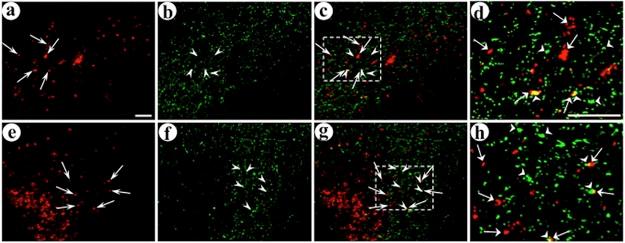
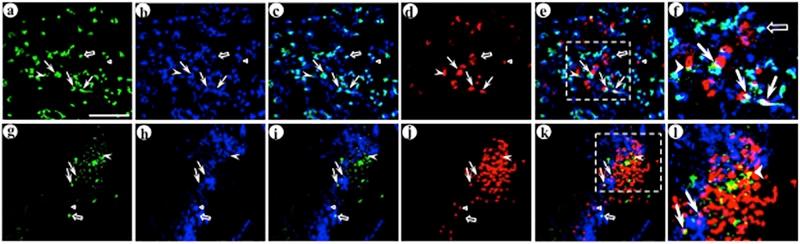
Local neocortical circuits play critical roles in information processing, including synaptic plasticity, circuit physiology, and learning, and GABAergic inhibitory interneurons have key roles in these circuits. Moreover, specific neurological disorders, including schizophrenia and autism, are associated with deficits in GABAergic transmission in these circuits. GABAergic synapses represent a small fraction of neocortical synapses, and are embedded in complex local circuits that contain many neuron and synapse types. Thus, it is challenging to study the physiological roles of GABAergic inhibitory interneurons and their synapses, and to develop treatments for the specific disorders caused by dysfunction at these GABAergic synapses. To these ends, we report a novel technology that can deliver different genes into pre- and post-synaptic neocortical interneurons connected by a GABAergic synapse: First, standard gene transfer into the presynaptic neurons delivers a synthetic peptide neurotransmitter, containing three domains, a dense core vesicle sorting domain, a GABAA receptor-binding domain, a single-chain variable fragment anti-GABAA ß2 or ß3, and the His tag. Second, upon release, this synthetic peptide neurotransmitter binds to GABAA receptors on the postsynaptic neurons. Third, as the synthetic peptide neurotransmitter contains the His tag, antibody-mediated, targeted gene transfer using anti-His tag antibodies is selective for these neurons. We established this technology by expressing the synthetic peptide neurotransmitter in GABAergic neurons in the middle layers of postrhinal cortex, and the delivering the postsynaptic vector into connected GABAergic neurons in the upper neocortical layers. Targeted gene transfer was 61% specific for the connected neurons, but untargeted gene transfer was only 21% specific for these neurons. This technology may support studies on the roles of GABAergic inhibitory interneurons in circuit physiology and learning, and support gene therapy treatments for specific disorders associated with deficits at GABAergic synapses.
局部皮质电路在信息处理中发挥关键作用,包括突触可塑性、电路生理学和学习,而 GABA 能抑制性中间神经元在这些电路中具有关键作用。此外,特定的神经紊乱,包括精神分裂症和自闭症,与这些电路中 GABA 能传递的缺陷有关。GABA 能突触仅占皮质突触的一小部分,并且嵌入包含许多神经元和突触类型的复杂局部电路中。因此,研究 GABA 能抑制性中间神经元及其突触的生理作用以及开发针对这些 GABA 能突触功能障碍引起的特定疾病的治疗方法具有挑战性。为此,我们报告了一种新技术,该技术可以将不同的基因递送到由 GABA 能突触连接的前突触和后突触皮质中间神经元中:首先,标准基因转移到前突触神经元中,传递一种包含三个结构域的合成肽神经递质,一个致密核心囊泡分选结构域,一个 GABA A 受体结合结构域,一个单链可变片段抗 GABA A β2 或 β3,和 His 标签。其次,释放后,这种合成肽神经递质与后突触神经元上的 GABA A 受体结合。第三,由于合成肽神经递质含有 His 标签,使用抗 His 标签抗体进行的抗体介导的靶向基因转移对这些神经元具有选择性。我们通过在后穹窿皮质的中间层中表达合成肽神经递质,将后突触载体递送到连接的上皮质层中的 GABA 能神经元中,从而建立了这种技术。靶向基因转移对连接的神经元有 61%的特异性,但非靶向基因转移对这些神经元的特异性只有 21%。这项技术可能支持对 GABA 能抑制性中间神经元在电路生理学和学习中的作用的研究,并支持针对与 GABA 能突触缺陷相关的特定疾病的基因治疗。




 Zotero 插件