
气流阻塞与心血管代谢合并症。
Airflow Obstruction and Cardio-metabolic Comorbidities.
机构信息
a CIRO+, Centre of expertise for chronic organ failure , Horn , the Netherlands.
b Department of Respiratory Medicine, MUMC+, Maastricht University Medical Centre , Maastricht , the Netherlands.
出版信息
COPD. 2019 Apr;16(2):109-117. doi: 10.1080/15412555.2019.1614550. Epub 2019 May 27.
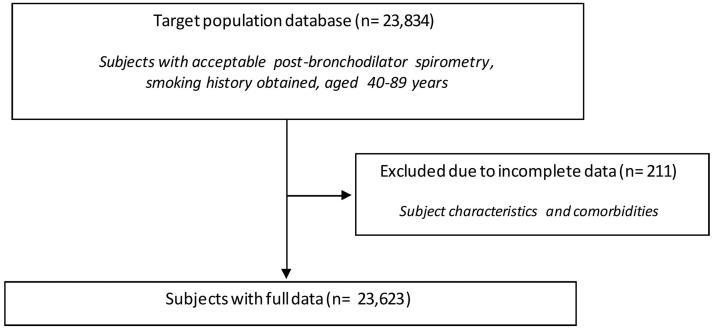
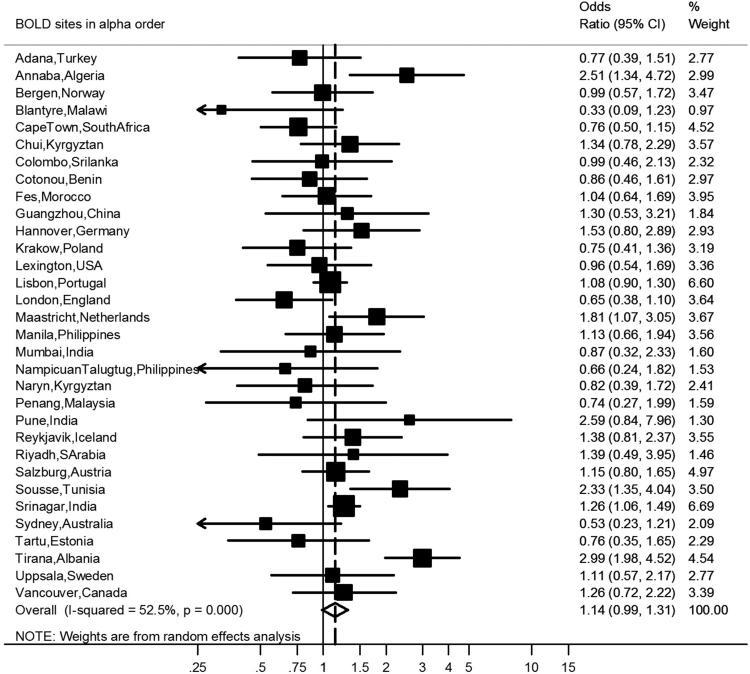
Chronic obstructive pulmonary disease (COPD) is characterized by airflow obstruction and often co-exists with cardiovascular disease (CVD), hypertension and diabetes. This international study assessed the association between airflow obstruction and these comorbidities. 23,623 participants (47.5% males, 19.0% current smokers, age: 55.1 ± 10.8 years) in 33 centers in the Burden of Obstructive Lung Disease (BOLD) initiative were included. 10.4% of subjects had airflow obstruction. Self-reports of physician-diagnosed CVD (heart disease or stroke), hypertension and diabetes were regressed against airflow obstruction (post-bronchodilator FEV/FVC < 5th percentile of reference values), adjusting for age, sex, smoking (including pack-years), body mass index and education. Analyses were undertaken within center and meta-analyzed across centers checking heterogeneity using the I-statistic. Crude odds ratios for the association with airflow obstruction were 1.42 (95% CI: 1.20-1.69) for CVD, 1.24 (1.02-1.51) for hypertension, and 0.93 (0.76-1.15) for diabetes. After adjustment these were 1.00 (0.86-1.16) (I:6%) for CVD, 1.14 (0.99-1.31) (I:53%) for hypertension, and 0.76 (0.64-0.89) (I:1%) for diabetes with similar results for men and women, smokers and nonsmokers, in richer and poorer centers. Alternatively defining airflow obstruction by FEV/FVC < 2.5th percentile or 0.70, did not yield significant other results. In conclusion, the associations of CVD and hypertension with airflow obstruction in the general population are largely explained by age and smoking habits. The adjusted risk for diabetes is lower in subjects with airflow obstruction. These findings emphasize the role of common risk factors in explaining the coexistence of cardio-metabolic comorbidities and COPD.
慢性阻塞性肺疾病(COPD)的特征是气流阻塞,常伴有心血管疾病(CVD)、高血压和糖尿病。这项国际研究评估了气流阻塞与这些合并症之间的关系。在负担性阻塞性肺病(BOLD)研究计划的 33 个中心中,共纳入了 23623 名参与者(47.5%为男性,19.0%为当前吸烟者,年龄:55.1±10.8 岁)。10.4%的受试者存在气流阻塞。采用多变量逻辑回归分析,将经过支气管扩张剂治疗后的第 5 百分位数以下的第一秒用力呼气量(FEV1)/用力肺活量(FVC)比值作为气流阻塞的指标,调整年龄、性别、吸烟状况(包括吸烟包年数)、体质指数和教育程度后,对自我报告的由医生诊断的 CVD(心脏病或中风)、高血压和糖尿病与气流阻塞之间的关系进行回归分析。在中心内进行分析,并通过 I 统计量检查异质性后进行荟萃分析。在未经调整的分析中,CVD、高血压和糖尿病与气流阻塞的关联的粗比值比(OR)分别为 1.42(95%可信区间:1.20-1.69)、1.24(1.02-1.51)和 0.93(0.76-1.15)。在调整了年龄、性别、吸烟状况、体质指数和教育程度后,CVD 的 OR 为 1.00(0.86-1.16)(I²:6%),高血压的 OR 为 1.14(0.99-1.31)(I²:53%),糖尿病的 OR 为 0.76(0.64-0.89)(I²:1%),男性和女性、吸烟者和非吸烟者、较富裕和较贫困中心的结果相似。另外,将气流阻塞定义为 FEV1/FVC<2.5 百分位数或 0.70 时,并没有得到显著的其他结果。总之,在一般人群中,CVD 和高血压与气流阻塞的关联在很大程度上可以用年龄和吸烟习惯来解释。在气流阻塞的患者中,糖尿病的调整风险较低。这些发现强调了共同的危险因素在解释心肺代谢合并症和 COPD 共存中的作用。



 Zotero 插件