
人类中 Neu5Gc 的缺失和抗 Neu5Gc 抗体的存在——从进化角度看。
Absence of Neu5Gc and Presence of Anti-Neu5Gc Antibodies in Humans-An Evolutionary Perspective.
机构信息
Department of Pathology, Biomedical Research and Training Facility 2, Glycobiology Research and Training Center, University of California, San Diego, La Jolla, CA, United States.
Department of Anthropology, University of California, San Diego, La Jolla, CA, United States.
出版信息
Front Immunol. 2019 Apr 30;10:789. doi: 10.3389/fimmu.2019.00789. eCollection 2019.
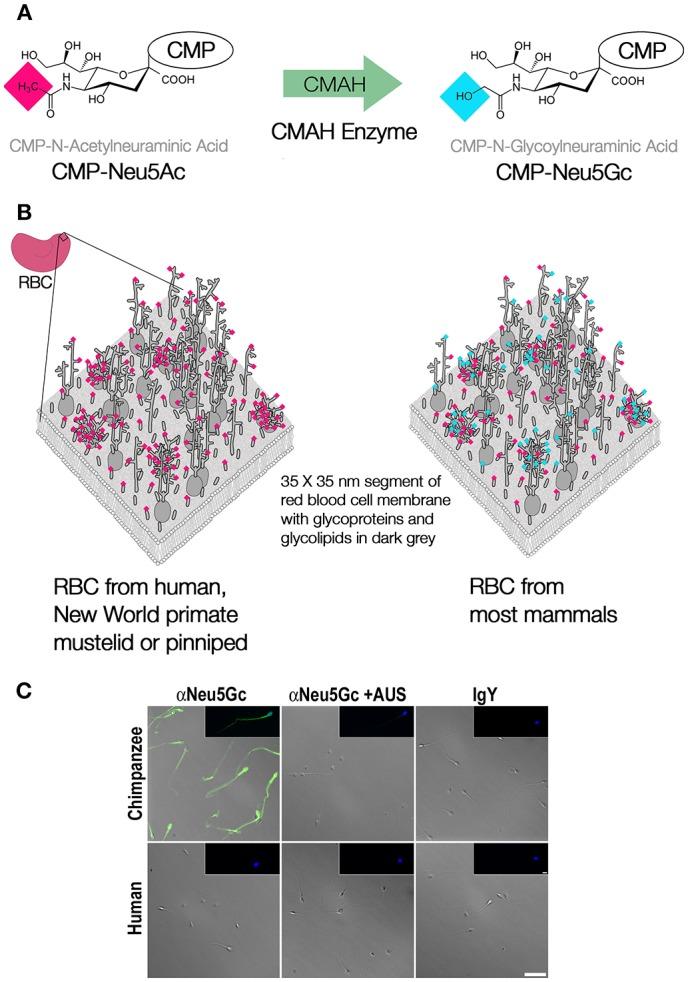
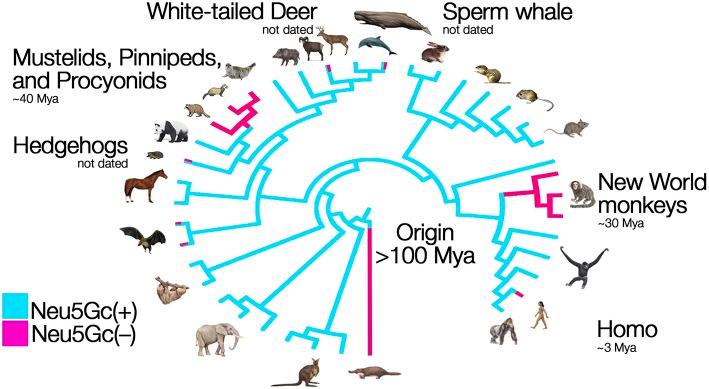
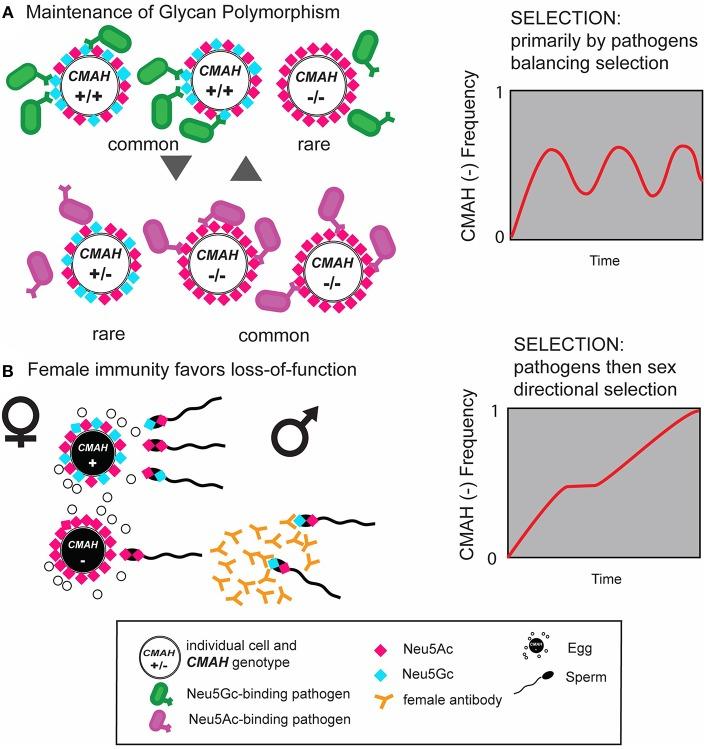
The glycocalyx of human cells differs from that of many other mammals by the lack of the sialic acid N-glycolylneuraminic acid (Neu5Gc) and increased abundance of its precursor N-acetylneuraminic acid (Neu5Ac). Most humans also have circulating antibodies specifically targeting the non-human sialic acid Neu5Gc. Recently, several additional mammalian species have been found to also lack Neu5Gc. In all cases, loss-of-function mutations in the gene encoding the sialic acid-modifying enzyme CMAH are responsible for the drastic change in these species. Unlike other glycan antigens, Neu5Gc apparently cannot be produced by microbes, raising the question about the origin of these antibodies in humans. Dietary exposure and presentation on bacteria coating themselves with Neu5Gc from the diet are distinct possibilities. However, the majority of the non-human species that lack Neu5Gc do not consume diets rich in Neu5Gc, making it unlikely that they will have been immunized against this sialic acid. A notable exception are mustelids (ferrets, martens and their relatives) known for preying on various small mammal species rich in Neu5Gc. No studies exist on levels of anti-Neu5Gc antibodies in non-human species. Evolutionary scenarios for the repeated, independent fixation of loss-of-function mutations at various time points in the past include strong selection by parasites, especially enveloped viruses, stochastic effects of genetic drift, and directional selection via female immunity to paternal Neu5Gc. Convergent evolution of losses of the vertebrate-specific self-glycan Neu5Gc are puzzling and may represent a prominent way in which glycans become agents of evolutionary change in their own right. Such change may include the reconfiguration of innate immune lectins that use self-sialic acids as recognition patterns.
人类细胞的糖萼与许多其他哺乳动物不同,缺乏唾液酸 N-羟乙酰神经氨酸(Neu5Gc),并且其前体 N-乙酰神经氨酸(Neu5Ac)的丰度增加。大多数人也有针对非人类唾液酸 Neu5Gc 的循环抗体。最近,又发现了几种其他哺乳动物也缺乏 Neu5Gc。在所有情况下,编码唾液酸修饰酶 CMAH 的基因突变导致了这些物种的剧烈变化。与其他聚糖抗原不同,Neu5Gc 显然不能由微生物产生,这就提出了人类中这些抗体的起源问题。饮食暴露和细菌自身通过饮食摄取 Neu5Gc 并将其呈递出来是两种截然不同的可能性。然而,大多数缺乏 Neu5Gc 的非人类物种并不食用富含 Neu5Gc 的饮食,因此它们不太可能针对这种唾液酸产生免疫反应。一个值得注意的例外是貂科动物(雪貂、貂和它们的近亲),它们以捕食富含 Neu5Gc 的各种小型哺乳动物而闻名。目前还没有关于非人类物种中抗 Neu5Gc 抗体水平的研究。过去不同时间点多次独立固定功能丧失突变的进化情景包括寄生虫(特别是包膜病毒)的强烈选择、遗传漂变的随机效应以及通过女性对父系 Neu5Gc 的免疫产生的定向选择。脊椎动物特异性自身聚糖 Neu5Gc 的丧失是趋同进化的,这令人费解,可能代表了聚糖本身成为进化变化的主要方式。这种变化可能包括利用自身唾液酸作为识别模式的先天免疫凝集素的重新配置。

 Zotero 插件