
多发性硬化症中脑浸润性 T-bet 表达 B 细胞的诱导。
Induction of brain-infiltrating T-bet-expressing B cells in multiple sclerosis.
机构信息
Department of Immunology, MS Center ErasMS, Erasmus Medical Center, University Medical Center, Rotterdam, the Netherlands.
Department of Neurology, MS Center ErasMS, Erasmus Medical Center, University Medical Center, Rotterdam, the Netherlands.
出版信息
Ann Neurol. 2019 Aug;86(2):264-278. doi: 10.1002/ana.25508. Epub 2019 Jun 19.
OBJECTIVE
Results from anti-CD20 therapies demonstrate that B- and T-cell interaction is a major driver of multiple sclerosis (MS). The local presence of B-cell follicle-like structures and oligoclonal bands in MS patients indicates that certain B cells infiltrate the central nervous system (CNS) to mediate pathology. Which peripheral triggers underlie the development of CNS-infiltrating B cells is not fully understood.
METHODS
Ex vivo flow cytometry was used to assess chemokine receptor profiles of B cells in blood, cerebrospinal fluid, meningeal, and brain tissues of MS patients (n = 10). Similar analyses were performed for distinct memory subsets in the blood of untreated and natalizumab-treated MS patients (n = 38). To assess T-bet(CXCR3) B-cell differentiation, we cultured B cells from MS patients (n = 21) and healthy individuals (n = 34) under T helper 1- and TLR9-inducing conditions. Their CNS transmigration capacity was confirmed using brain endothelial monolayers.
RESULTS
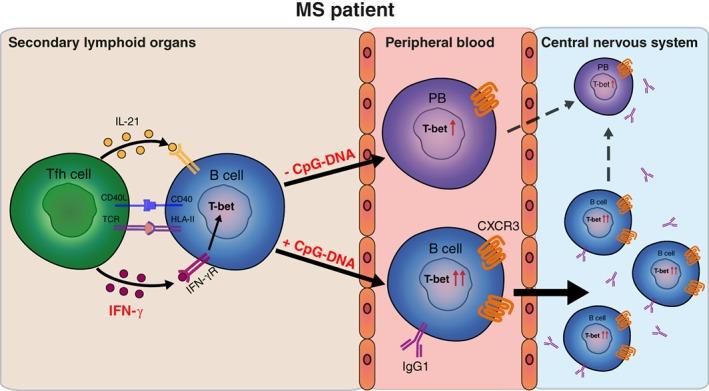
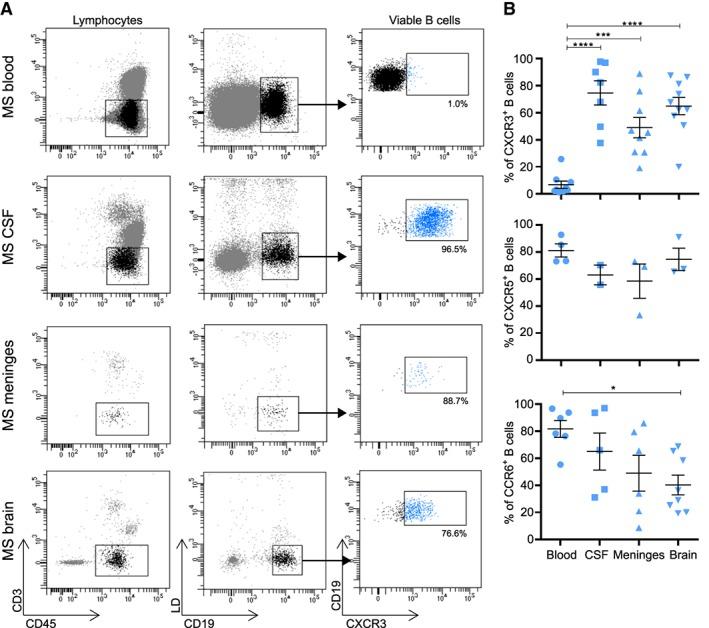
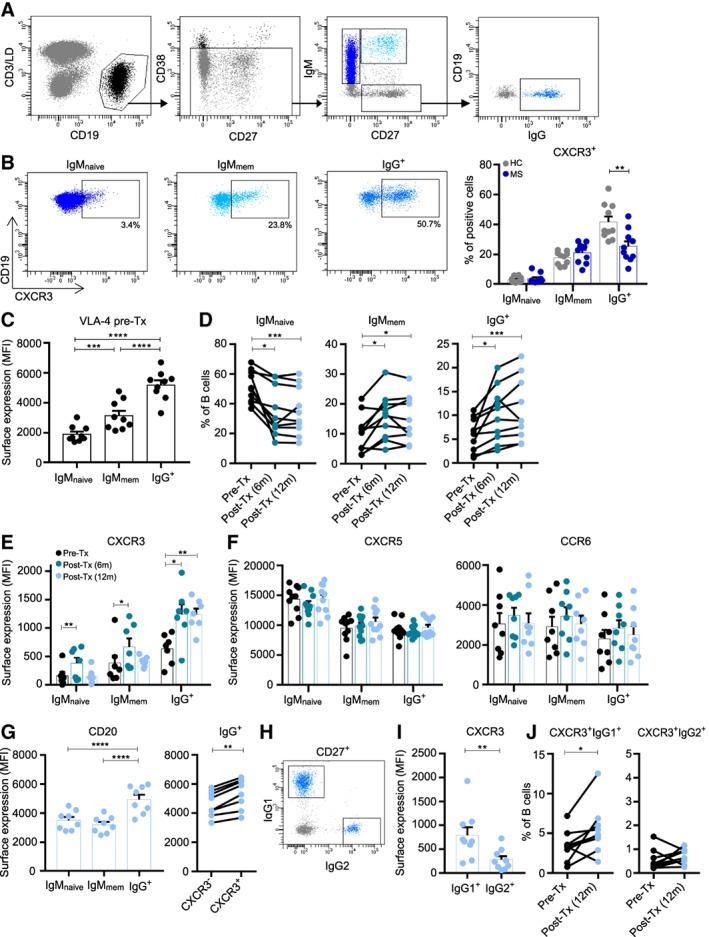
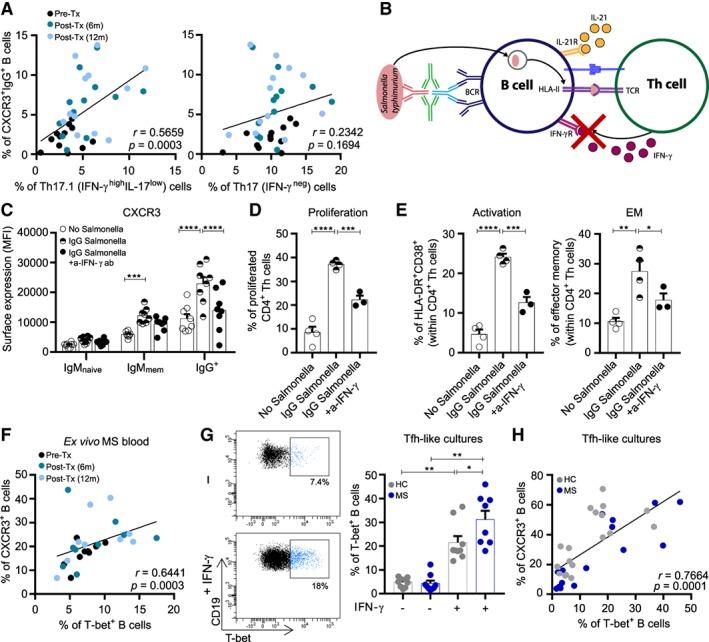
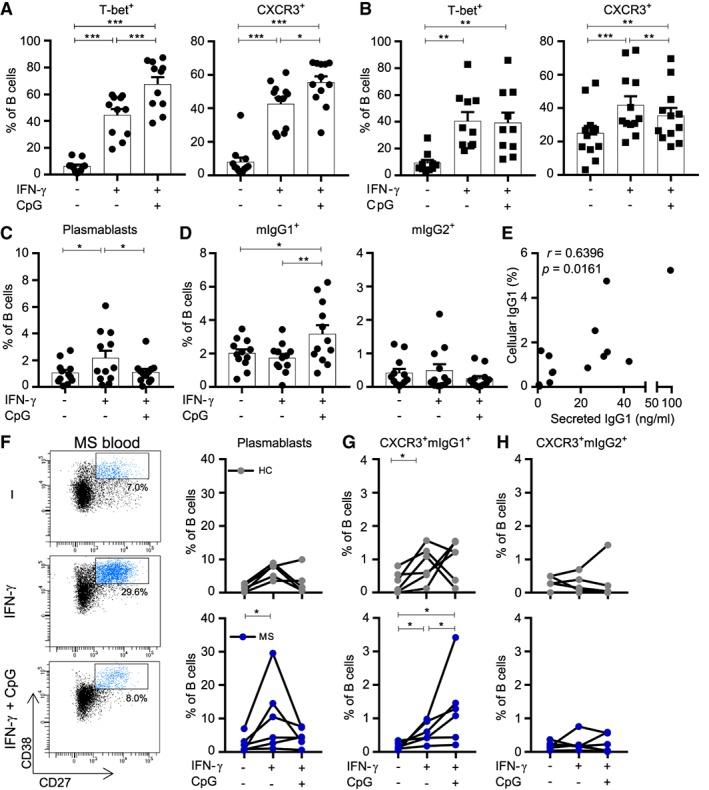
CXC chemokine receptor 3 (CXCR3)-expressing B cells were enriched in different CNS compartments of MS patients. Treatment with the clinically effective drug natalizumab prevented the recruitment of CXCR3 IgG1 subsets, corresponding to their increased ability to cross CNS barriers in vitro. Blocking of interferon-γ (IFNγ) reduced the transmigration potential and antigen-presenting function of these cells. IFNγ-induced B cells from MS patients showed increased T-bet expression and plasmablast development. Additional TLR9 triggering further upregulated T-bet and CXCR3, and was essential for IgG1 switching.
INTERPRETATION
This study demonstrates that T-bet IgG1 B cells are triggered by IFNγ and TLR9 signals, likely contributing to enhanced CXCR3-mediated recruitment and local reactivity in the CNS of MS patients. ANN NEUROL 2019;86:264-278.
目的
抗 CD20 疗法的结果表明 B 细胞和 T 细胞的相互作用是多发性硬化症(MS)的主要驱动因素。MS 患者中 B 细胞滤泡样结构和寡克隆带的局部存在表明某些 B 细胞浸润中枢神经系统(CNS)以介导病理学。尚不完全清楚哪些外周触发因素导致 CNS 浸润 B 细胞的发展。
方法
使用体外流式细胞术评估了 MS 患者血液、脑脊液、脑膜和脑组织中 B 细胞趋化因子受体谱(n = 10)。对未经治疗和那他珠单抗治疗的 MS 患者血液中的不同记忆亚群进行了类似的分析(n = 38)。为了评估 T 细胞因子(CXCR3)B 细胞分化,我们培养了来自 MS 患者(n = 21)和健康个体(n = 34)的 B 细胞,在 T 辅助 1 和 TLR9 诱导条件下培养。使用脑内皮单层细胞确认了它们穿过 CNS 的能力。
结果
CXCR3 表达的 B 细胞在 MS 患者的不同 CNS 隔室中富集。临床上有效的药物那他珠单抗的治疗可防止 CXCR3 IgG1 亚群的募集,这与它们在体外穿过 CNS 屏障的能力增强相对应。阻断干扰素-γ(IFNγ)降低了这些细胞的迁移潜力和抗原呈递功能。来自 MS 患者的 IFNγ 诱导的 B 细胞显示出 T-bet 表达和浆母细胞发育增加。另外,TLR9 触发进一步上调了 T-bet 和 CXCR3,这对于 IgG1 转换是必不可少的。
结论
这项研究表明,T-bet IgG1 B 细胞由 IFNγ 和 TLR9 信号触发,可能有助于增强 CXCR3 介导的 MS 患者 CNS 中的募集和局部反应性。神经病学年鉴 2019;86:264-278.

 Zotero 插件