
中国大陆 2019 年人感染高致病性禽流感 H7N9 病毒的再现。
The re-emergence of highly pathogenic avian influenza H7N9 viruses in humans in mainland China, 2019.
机构信息
These authors contributed equally in this study as first authors.
Gansu Provincial Center for Disease Control and Prevention, Lanzhou China.
出版信息
Euro Surveill. 2019 May;24(21). doi: 10.2807/1560-7917.ES.2019.24.21.1900273.
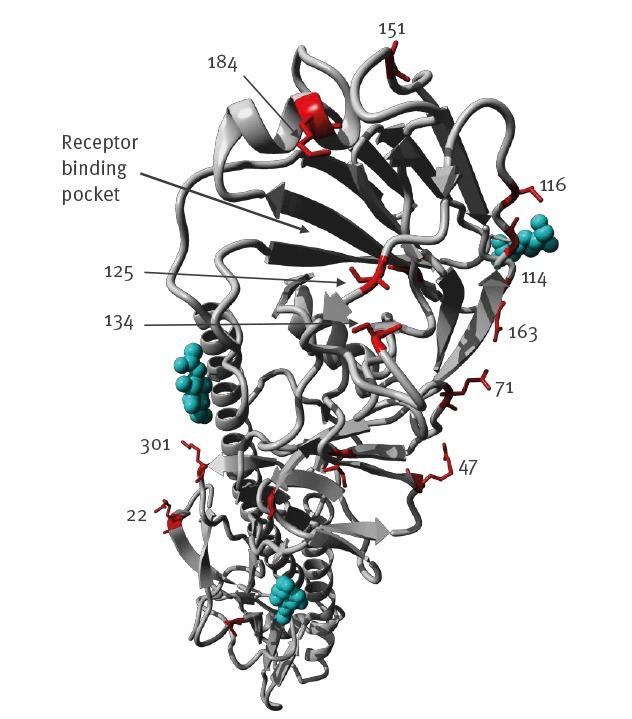
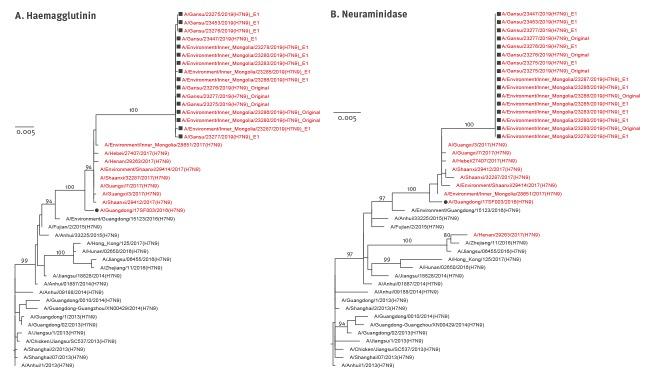
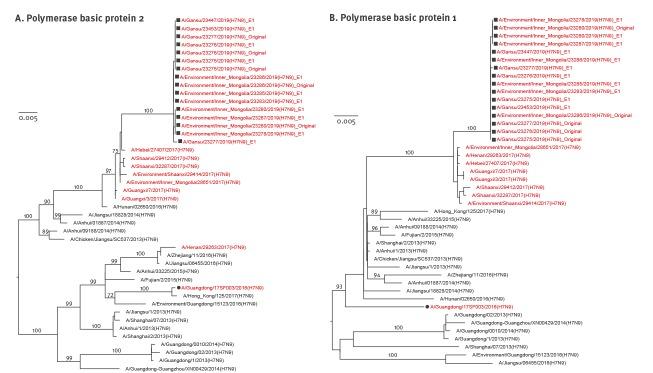
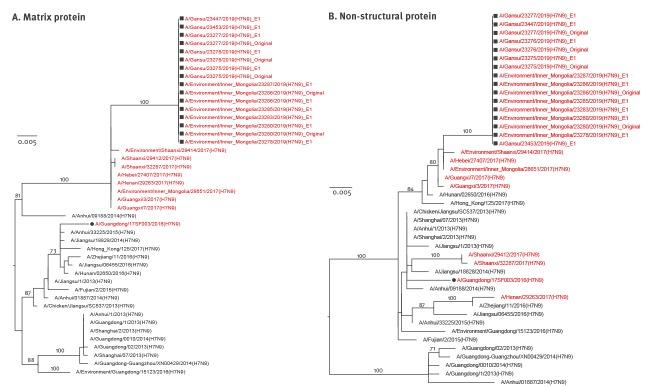
After no reported human cases of highly pathogenic avian influenza (HPAI) H7N9 for over a year, a case with severe disease occurred in late March 2019. Among HPAI H7N9 viral sequences, those recovered from the case and from environmental samples of a poultry slaughtering stall near their home formed a distinct clade from 2017 viral sequences. Several mutations possibly associated to antigenic drift occurred in the haemagglutinin gene, potentially warranting update of H7N9 vaccine strains.
在超过一年没有报告人感染高致病性禽流感(HPAI)H7N9 病例后,2019 年 3 月下旬出现了一例重症病例。在 HPAI H7N9 病毒序列中,从该病例和其家附近家禽屠宰摊环境样本中恢复的病毒序列与 2017 年的病毒序列形成了一个明显的分支。在血凝素基因中发生了几个可能与抗原漂移相关的突变,这可能需要更新 H7N9 疫苗株。

 Zotero 插件