
补钙时间对母猪生产性能有影响。
The time of Calcium Feeding Affects the Productive Performance of Sows.
作者信息
Gao Lumin, Lin Xue, Xie Chunyan, Zhang Tianyong, Wu Xin, Yin Yulong
机构信息
Key Laboratory of Agro-ecological Processes in Subtropical Region, Institute of Subtropical Agriculture, Chinese Academy of Sciences; National Engineering Laboratory for Pollution Control and Waste Utilization in Livestock and Poultry Production; Hunan Provincial Engineering Research Center for Healthy Livestock and Poultry Production, Changsha 410125, China.
Hunan Co-Innovation Center of Safety Animal Production, College of Animal Science and Technology; College of Bioscience and Biotechnology, Hunan Agricultural University, Changsha 410128, China.
出版信息
Animals (Basel). 2019 Jun 10;9(6):337. doi: 10.3390/ani9060337.
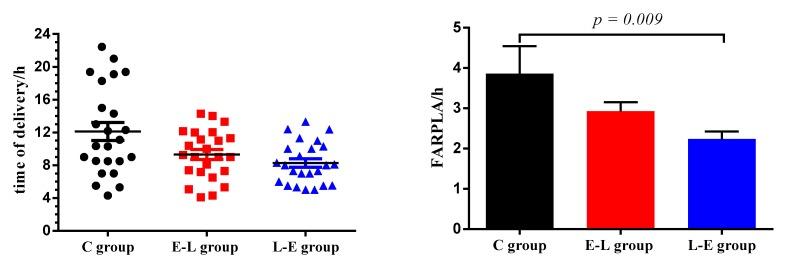
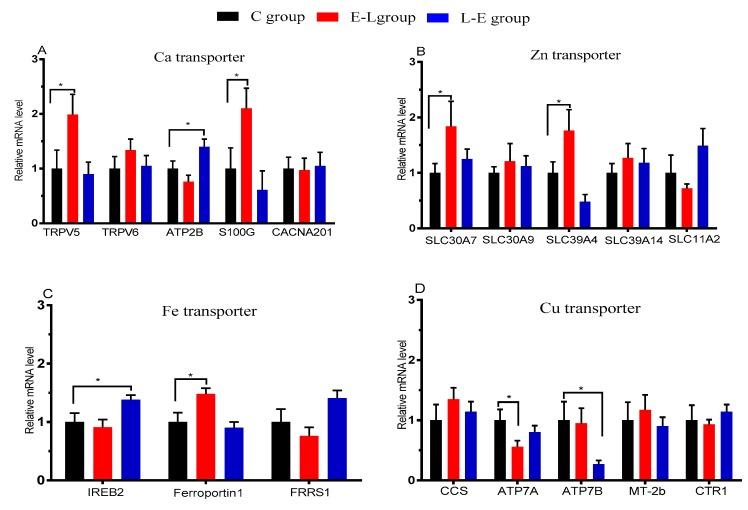
This study aims to investigate the effect of Calcium (Ca) feeding time on a sow's productive performance and the profiles of serum mineral elements during late pregnancy and lactation. A total of 75 pregnant sows were assigned to three groups: The control (C), earlier-later (E-L), and later-earlier (L-E) groups. During late pregnancy, the C group was fed an extra 4.5 g Ca (in the form of CaCO) at both 06:00 and 15:00, the E-L group was fed an extra 9 g Ca at 06:00, and the L-E group was fed an extra 9 g Ca at 15:00. Similar treatments with double the amount of Ca were applied during lactation. The results show that, compared with the C group, L-E feeding decreased the number of stillbirths and the duration of farrowing and placenta expulsion (FARPLA) and increased the average daily weight gain (ADG) of piglets. Similarly, E-L feeding increased the ADG of piglets ( < 0.05). Furthermore, both E-L and L-E feeding increased the Ca levels in sow serum and umbilical serum, and the Fe levels in umbilical serum, but decreased the Ca levels in the placenta and colostrum ( < 0.05). Experiments on the genes involved in mineral element transport showed that E-L feeding activated the mRNA expression of TRPV5, S100G, SLC30A7, SLC39A4, and Ferroportin1, while it inhibited the mRNA expression of ATP7A in the placenta ( < 0.05). Moreover, L-E feeding up-regulated the mRNA expression of ATP2B and IREB2, while it down-regulated the mRNA expression of ATP7B in the placenta ( < 0.05). In conclusion, the present study demonstrated that maternal Ca feeding at 15:00 h during late pregnancy and lactation decreased FARPLA and stillbirths and improved the growth performance of suckling piglets by altering the mineral element of the metabolism in the umbilical serum and milk, compared to conventional feeding regimes.
本研究旨在探讨妊娠后期和哺乳期钙(Ca)的饲喂时间对母猪生产性能以及血清矿物质元素水平的影响。总共75头妊娠母猪被分为三组:对照组(C)、早-晚(E-L)组和晚-早(L-E)组。在妊娠后期,C组在06:00和15:00各额外饲喂4.5克钙(以碳酸钙形式),E-L组在06:00额外饲喂9克钙,L-E组在15:00额外饲喂9克钙。哺乳期采用双倍钙量的类似处理。结果表明,与C组相比,L-E饲喂方式减少了死胎数量、产仔和胎盘排出时间(FARPLA),并增加了仔猪的平均日增重(ADG)。同样,E-L饲喂方式增加了仔猪的ADG(P<0.05)。此外,E-L和L-E饲喂方式均提高了母猪血清和脐血清中的钙水平以及脐血清中的铁水平,但降低了胎盘和初乳中的钙水平(P<0.05)。对参与矿物质元素转运的基因进行的实验表明,E-L饲喂激活了胎盘组织中TRPV5、S100G、SLC30A7、SLC39A4和铁转运蛋白1的mRNA表达,同时抑制了ATP7A的mRNA表达(P<0.05)。此外,L-E饲喂上调了胎盘组织中ATP2B和IREB2的mRNA表达,同时下调了ATP7B的mRNA表达(P<0.05)。总之,本研究表明,与传统饲喂方式相比,妊娠后期和哺乳期15:00给母猪补钙可通过改变脐血清和乳汁中的矿物质元素代谢来减少FARPLA和死胎数量,并提高哺乳仔猪的生长性能。

 Zotero 插件