
基于间充质干细胞的炎症性肺部疾病治疗:当前认识与未来展望
Mesenchymal Stem Cell-Based Therapy of Inflammatory Lung Diseases: Current Understanding and Future Perspectives.
作者信息
Harrell C Randall, Sadikot Ruxana, Pascual Jose, Fellabaum Crissy, Jankovic Marina Gazdic, Jovicic Nemanja, Djonov Valentin, Arsenijevic Nebojsa, Volarevic Vladislav
机构信息
Regenerative Processing Plant, LLC, 34176 UD Highway 19 N Palm Harbor, Palm Harbor, Florida, USA.
Emory University School of Medicine, 648 Pierce Dr NE, Atlanta, GA, USA.
出版信息
Stem Cells Int. 2019 May 2;2019:4236973. doi: 10.1155/2019/4236973. eCollection 2019.
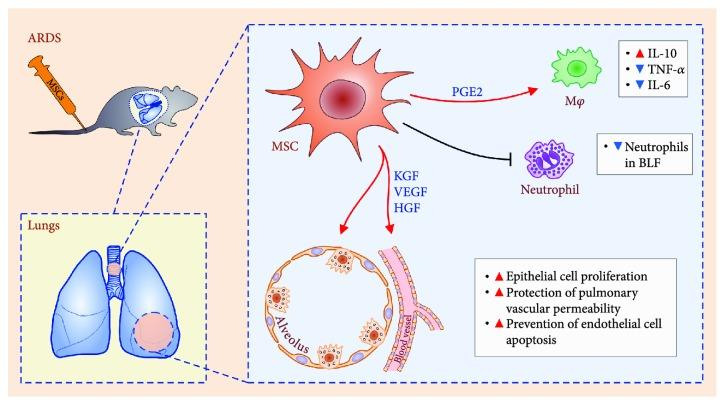
During acute or chronic lung injury, inappropriate immune response and/or aberrant repair process causes irreversible damage in lung tissue and most usually results in the development of fibrosis followed by decline in lung function. Inhaled corticosteroids and other anti-inflammatory drugs are very effective in patients with inflammatory lung disorders, but their long-term use is associated with severe side effects. Accordingly, new therapeutic agents that will attenuate ongoing inflammation and, at the same time, promote regeneration of injured alveolar epithelial cells are urgently needed. Mesenchymal stem cells (MSCs) are able to modulate proliferation, activation, and effector function of all immune cells that play an important role in the pathogenesis of acute and chronic inflammatory lung diseases. In addition to the suppression of lung-infiltrated immune cells, MSCs have potential to differentiate into alveolar epithelial cells and, accordingly, represent new players in cell-based therapy of inflammatory lung disorders. In this review article, we described molecular mechanisms involved in MSC-based therapy of acute and chronic pulmonary diseases and emphasized current knowledge and future perspectives related to the therapeutic application of MSCs in patients suffering from acute respiratory distress syndrome, pneumonia, asthma, chronic obstructive pulmonary diseases, and idiopathic pulmonary fibrosis.
在急性或慢性肺损伤期间,不适当的免疫反应和/或异常的修复过程会导致肺组织发生不可逆损伤,最常见的结果是发展为肺纤维化,随后肺功能下降。吸入性糖皮质激素和其他抗炎药物对炎症性肺部疾病患者非常有效,但长期使用会带来严重的副作用。因此,迫切需要新的治疗药物,既能减轻持续的炎症反应,又能促进受损肺泡上皮细胞的再生。间充质干细胞(MSC)能够调节在急性和慢性炎症性肺部疾病发病机制中起重要作用的所有免疫细胞的增殖、活化和效应功能。除了抑制肺内浸润的免疫细胞外,MSC还有分化为肺泡上皮细胞的潜力,因此在炎症性肺部疾病的细胞治疗中代表了新的参与者。在这篇综述文章中,我们描述了基于MSC治疗急性和慢性肺部疾病的分子机制,并强调了与MSC在急性呼吸窘迫综合征、肺炎、哮喘、慢性阻塞性肺疾病和特发性肺纤维化患者中的治疗应用相关的现有知识和未来展望。


 Zotero 插件