
饲料碳水化合物和脂质浓度对两种银鲫生长性能、饲料利用、葡萄糖及脂质代谢的影响
Effects of Dietary Carbohydrate and Lipid Concentrations on Growth Performance, Feed Utilization, Glucose, and Lipid Metabolism in Two Strains of Gibel Carp.
作者信息
Li Hongyan, Xu Wenjie, Jin Junyan, Zhu Xiaoming, Yang Yunxia, Han Dong, Liu Haokun, Xie Shouqi
机构信息
State Key Laboratory of Freshwater Ecology and Biotechnology, Institute of Hydrobiology, Chinese Academy of Sciences, Wuhan, China.
College of Advanced Agricultural Sciences, University of Chinese Academy of Sciences, Beijing, China.
出版信息
Front Vet Sci. 2019 May 29;6:165. doi: 10.3389/fvets.2019.00165. eCollection 2019.
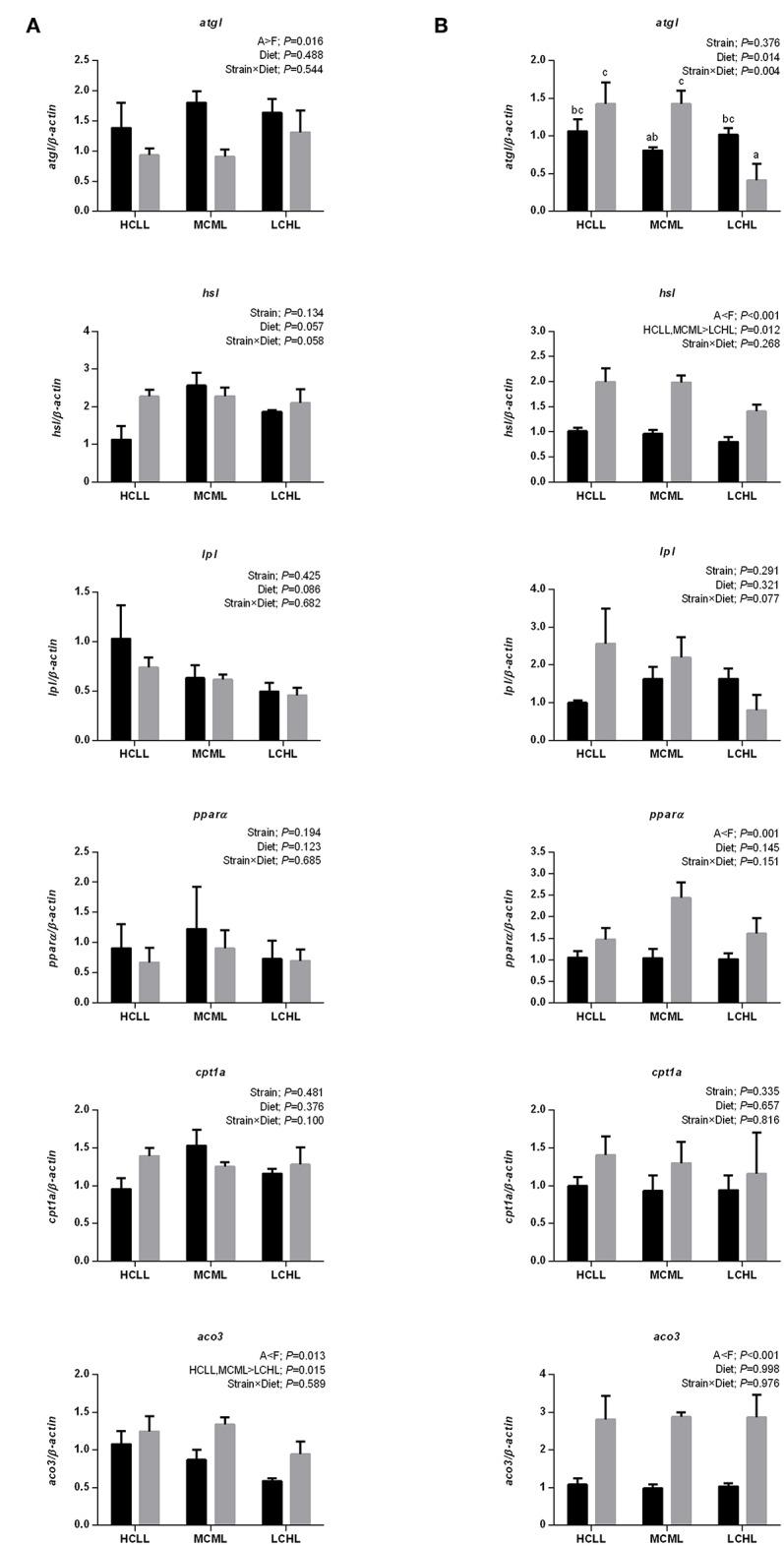
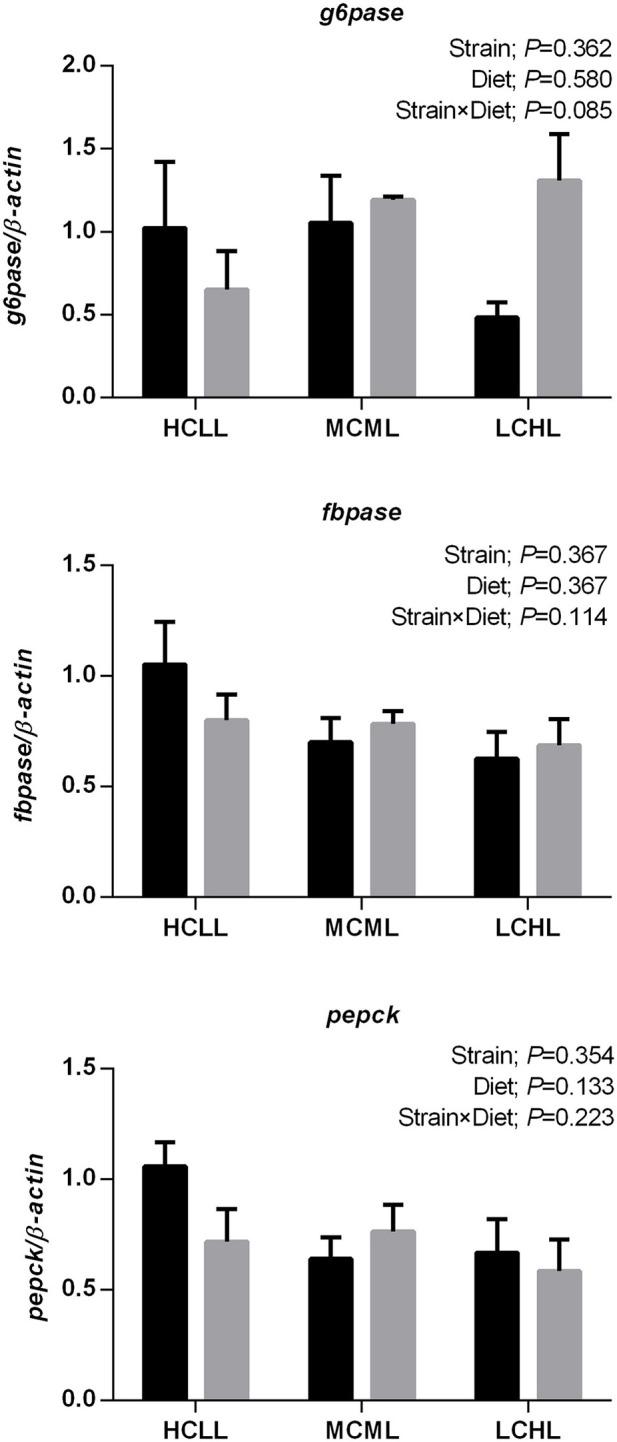
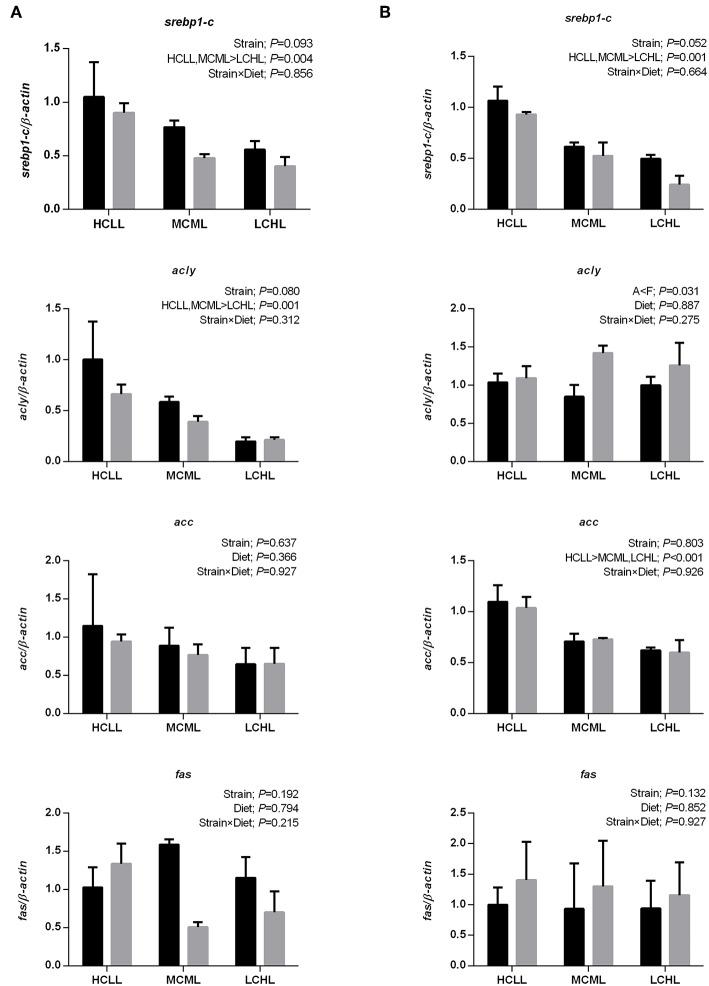
To test the hypothesis that effects of dietary carbohydrate and lipid concentrations on growth performance, feeding utilization, glucose and lipid metabolism in gibel carp A strain may be differ from F strain, these two strain of gibel carp were fed with one of three different isonitrogenous diets: HCLL (45% carbohydrate, 2% lipid), MCML (30% carbohydrate, 8% lipid), or LCHL (15% carbohydrate, 14% lipid). After 8 weeks, the HCLL-fed fish had the highest hepatosomatic index, hepatic crude lipid levels, and triglyceride levels and lipid retention efficiency. Enhanced lipogenesis and lipid uptake potential were observed in fish fed HCLL and MCML diets. Moreover, increases in glucose transport ( = 0.003) and glycolysis ( = 0.012; = 0.005) in livers of both strains were induced by the high-carbohydrate diet. Genotype-specific effect was identified on plasma lipid content. Plasma triglyceride levels were also greater in the F strain than in the A strain. Furthermore, the F strain had higher levels of fatty acid β-oxidation and glycolysis compared with the A strain. Nutrient retention was affected ( < 0.05) by the interaction between genotype and diet, implied dietary carbohydrate played a vital role in lipid accumulation in gibel carp. As dietary lipids increased, the F strain exhibited better feed utilization and a higher PRE than the A strain. However, the A strain had better growth performance. Overall, the F strain had better glucose uptake, glycolysis potential, and lipid utilization ability than the A strain.
为了验证饲料中碳水化合物和脂肪浓度对异育银鲫A系和F系生长性能、饲料利用、葡萄糖及脂肪代谢的影响可能存在差异这一假设,用三种不同的等氮饲料之一投喂这两个品系的异育银鲫:高碳水低脂肪(HCLL,45%碳水化合物,2%脂肪)、中等碳水中等脂肪(MCML,30%碳水化合物,8%脂肪)或低碳水高脂肪(LCHL,15%碳水化合物,14%脂肪)。8周后,投喂HCLL饲料的鱼具有最高的肝体指数、肝脏粗脂肪水平、甘油三酯水平和脂肪保留效率。在投喂HCLL和MCML饲料的鱼中观察到脂肪生成和脂肪摄取潜力增强。此外,高碳水化合物饲料诱导两品系鱼肝脏中葡萄糖转运(P = 0.003)和糖酵解(P = 0.012;P = 0.005)增加。在血浆脂质含量上鉴定出基因型特异性效应。F系的血浆甘油三酯水平也高于A系。此外,与A系相比,F系具有更高水平的脂肪酸β-氧化和糖酵解。营养物质保留受基因型和饲料之间相互作用的影响(P < 0.05),这意味着饲料碳水化合物在异育银鲫脂质积累中起重要作用。随着饲料脂肪增加,F系比A系表现出更好的饲料利用和更高的蛋白质保留效率。然而,A系具有更好的生长性能。总体而言,F系比A系具有更好的葡萄糖摄取、糖酵解潜力和脂质利用能力。

 Zotero 插件