
通过开发和优化原位形成纳米囊泡系统使瑞舒伐他汀钙的生物利用度提高两倍。
Tripling the Bioavailability of Rosuvastatin Calcium Through Development and Optimization of an In-Situ Forming Nanovesicular System.
作者信息
Elsayed Ibrahim, El-Dahmy Rania Moataz, Elshafeey Ahmed Hassen, Abd El Gawad Nabaweya Abdelaziz, El Gazayerly Omaima Naim
机构信息
Department of Pharmaceutics and Industrial Pharmacy, Faculty of Pharmacy, Cairo University, Cairo 11562, Egypt.
Department of Pharmaceutical Sciences, College of Pharmacy, Gulf Medical University, Ajman 4184, UAE.
出版信息
Pharmaceutics. 2019 Jun 11;11(6):275. doi: 10.3390/pharmaceutics11060275.
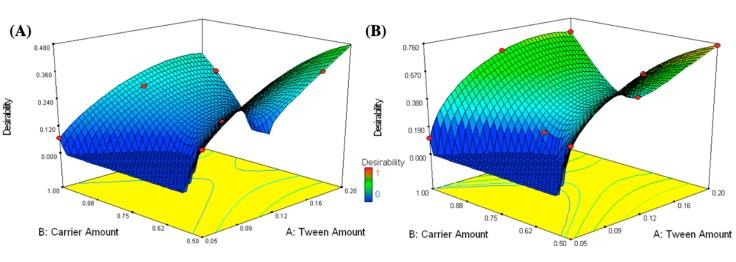
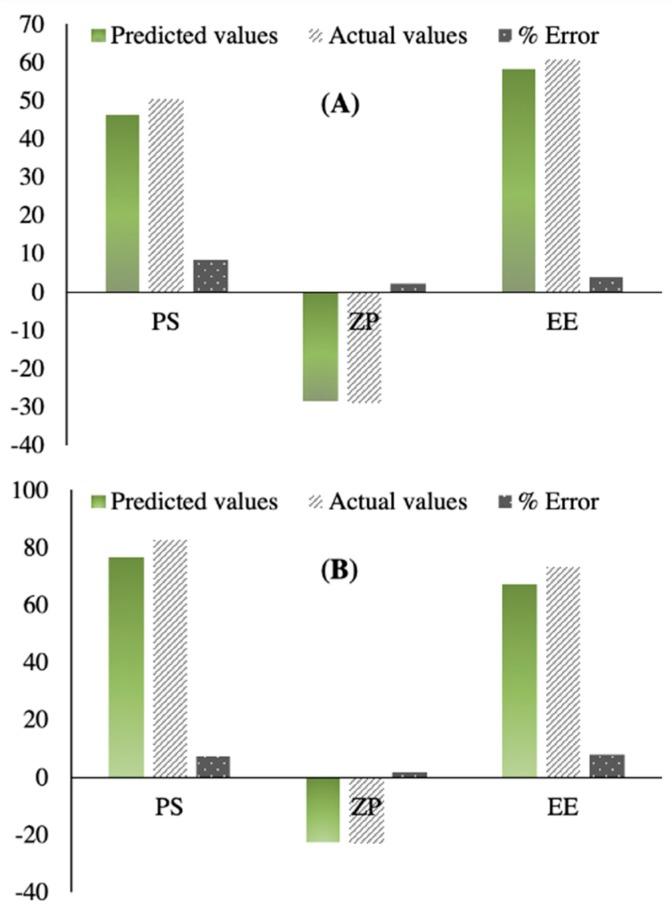
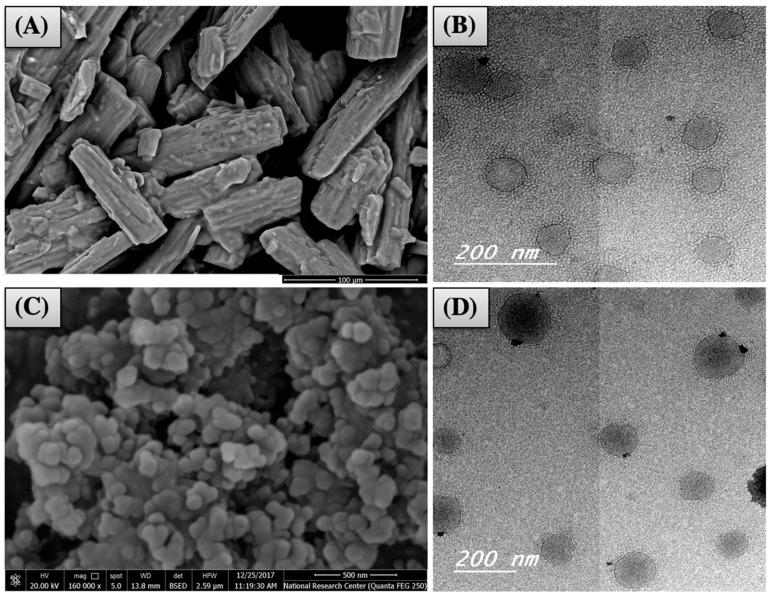
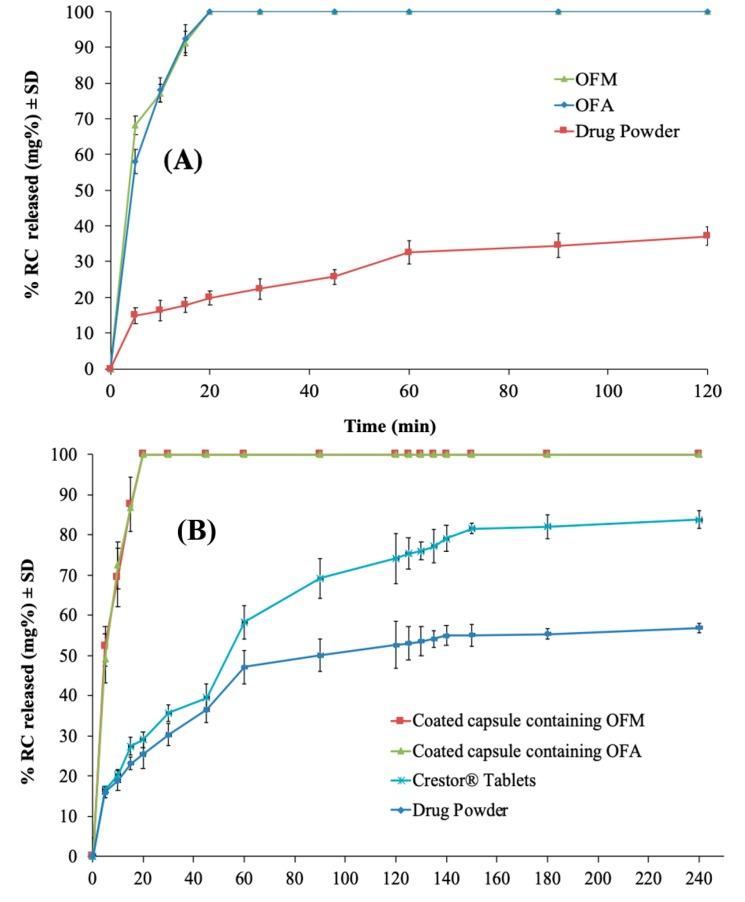
In situ forming nanovesicular systems (IFNs) were prepared and optimized to improve Rosuvastatin calcium (RC) oral bioavailability through increasing its solubility and dissolution rate. The IFN was composed of Tween 80 (T80), cetyl alcohol (CA), in addition to mannitol or Aerosil 200. A single simple step was adopted for preparation, then the prepared formulations were investigated by analyzing their particle size (PS), polydispersity index (PDI), Zeta potential (ZP), entrapment efficiency (EE), and flowability properties. D-optimal design was applied to choose the optimized formulations. The maximum desirability values were 0.754 and 0.478 for the optimized formulations containing 0.05 g CA, 0.18 g T80, and 0.5 g mannitol (OFM) or Aerosil (OFA), respectively. In vitro drug release from the optimized formulations showed a significantly faster dissolution rate when compared to the market product. In vivo performance of the optimized formulations in rabbits was investigated after filling them into enteric-coated capsules. Ultimately, OFA formulation achieved a 3 times increase in RC oral bioavailability in comparison with the market product, supporting the hypothesis of considering IFNs as promising nanocarriers able to boost the bioavailability of BCS class II drugs.
制备并优化了原位形成纳米囊泡系统(IFNs),以通过提高瑞舒伐他汀钙(RC)的溶解度和溶解速率来改善其口服生物利用度。IFN由吐温80(T80)、十六醇(CA)以及甘露醇或气相二氧化硅200组成。采用单一简单步骤进行制备,然后通过分析所制备制剂的粒径(PS)、多分散指数(PDI)、Zeta电位(ZP)、包封率(EE)和流动性性质来对其进行研究。应用D-最优设计来选择优化的制剂。对于含有0.05 g CA、0.18 g T80和0.5 g甘露醇的优化制剂(OFM)或气相二氧化硅(OFA),最大可取性值分别为0.754和0.478。与市售产品相比,优化制剂的体外药物释放显示出显著更快的溶解速率。将优化制剂装入肠溶胶囊后,研究了其在兔体内的性能。最终,与市售产品相比,OFA制剂使RC的口服生物利用度提高了3倍,支持了将IFNs视为能够提高BCS II类药物生物利用度的有前景的纳米载体这一假设。


 Zotero 插件