
PennPET Explorer:一种全身成像仪的设计和初步性能。
PennPET Explorer: Design and Preliminary Performance of a Whole-Body Imager.
机构信息
Department of Radiology, University of Pennsylvania, Philadelphia, Pennsylvania
Department of Biomedical Engineering, University of Pennsylvania, Philadelphia, Pennsylvania.
出版信息
J Nucl Med. 2020 Jan;61(1):136-143. doi: 10.2967/jnumed.119.229997. Epub 2019 Jun 21.
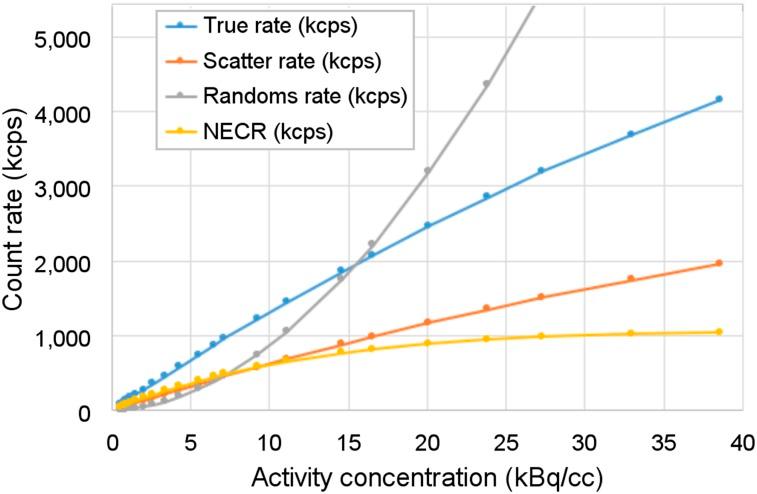
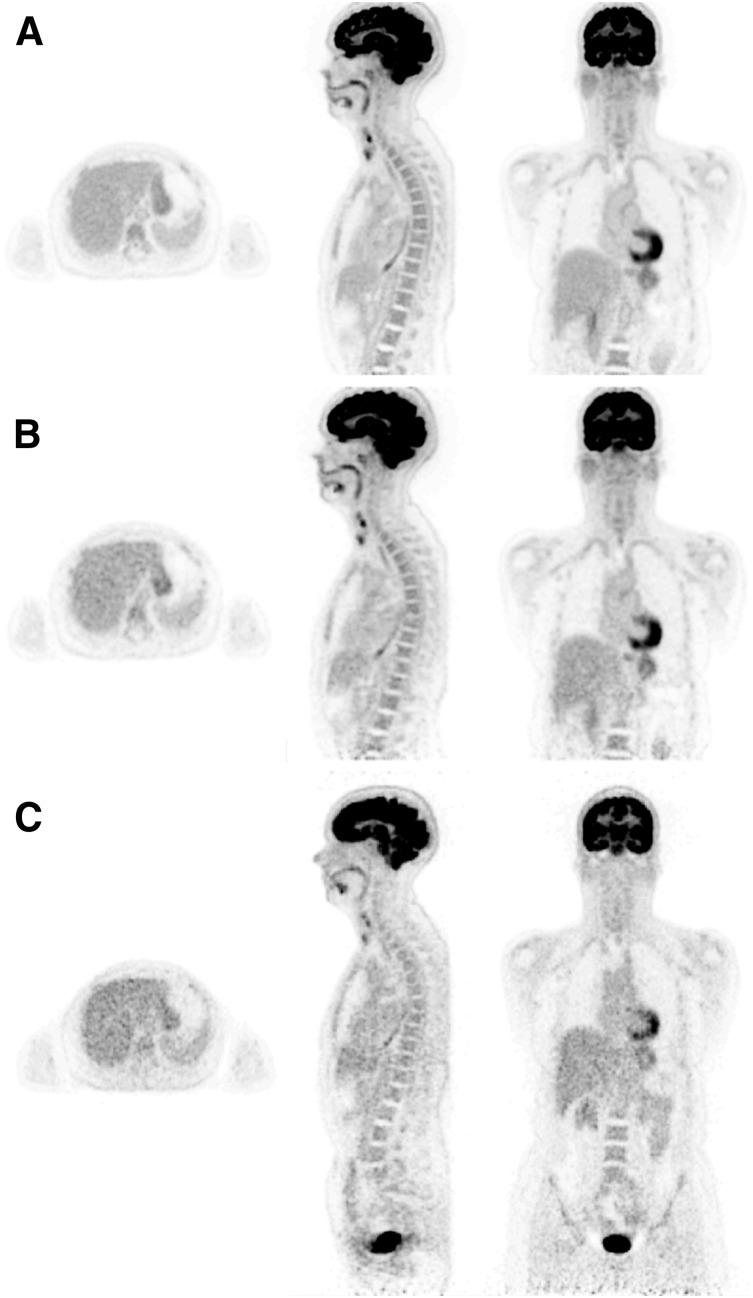
We report on the development of the PennPET Explorer whole-body imager. The PennPET Explorer is a multiring system designed with a long axial field of view. The imager is scalable and comprises multiple 22.9-cm-long ring segments, each with 18 detector modules based on a commercial digital silicon photomultiplier. A prototype 3-segment imager has been completed and tested with an active 64-cm axial field of view. The instrument design is described, and its physical performance measurements are presented. These include sensitivity of 55 kcps/MBq, spatial resolution of 4.0 mm, energy resolution of 12%, timing resolution of 256 ps, and a noise-equivalent count rate above 1,000 kcps beyond 30 kBq/mL. After an evaluation of lesion torso phantoms to characterize quantitative accuracy, human studies were performed on healthy volunteers. The physical performance measurements validated the system design and led to high-quality human studies.
我们报告了 PennPET Explorer 全身成像仪的开发情况。PennPET Explorer 是一款多环系统,设计具有长轴向视野。该成像仪具有可扩展性,由多个 22.9 厘米长的环段组成,每个环段都有 18 个基于商用数字硅光电倍增管的探测器模块。已经完成了一个具有主动 64 厘米轴向视野的 3 段式原型机,并进行了测试。本文描述了仪器的设计,并介绍了其物理性能测量结果。这些结果包括 55 kcps/MBq 的灵敏度、4.0 毫米的空间分辨率、12%的能量分辨率、256 ps 的时间分辨率以及在 30 kBq/mL 以上超过 1000 kcps 的噪声等效计数率。在对用于定量准确性评估的病灶体模进行评估后,我们在健康志愿者中进行了人体研究。物理性能测量验证了系统设计,并实现了高质量的人体研究。


 Zotero 插件