
幼犬的被动免疫转移。
Passive immune transfer in puppies.
机构信息
NeoCare, UMR INRA/ENVT 1225 Interactions Host-Pathogens, Toulouse National Veterinary School, 23 Chemin des CAPELLES, BP 87614, 31076, Toulouse Cedex, France.
出版信息
Anim Reprod Sci. 2019 Aug;207:162-170. doi: 10.1016/j.anireprosci.2019.06.012. Epub 2019 Jun 13.
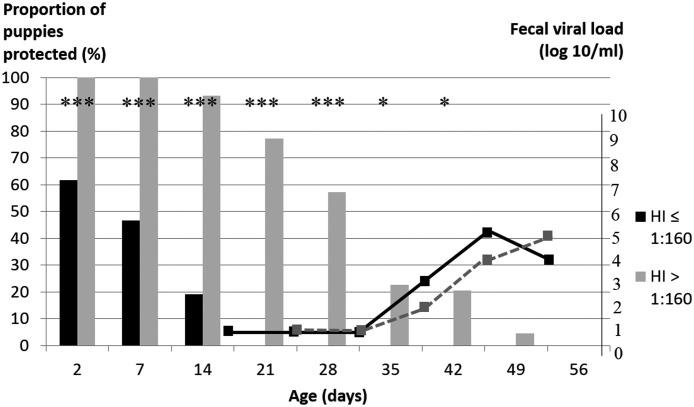
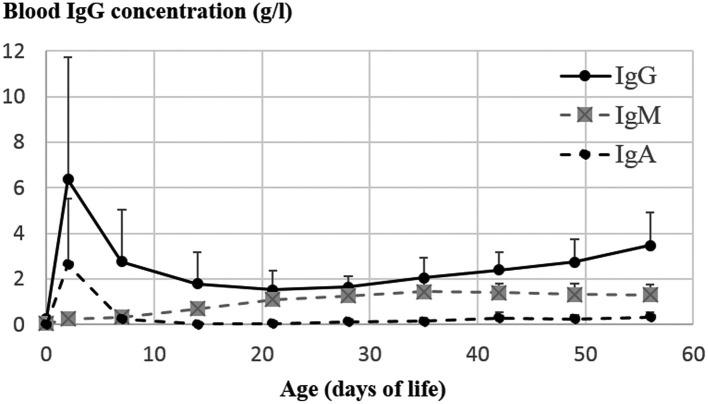
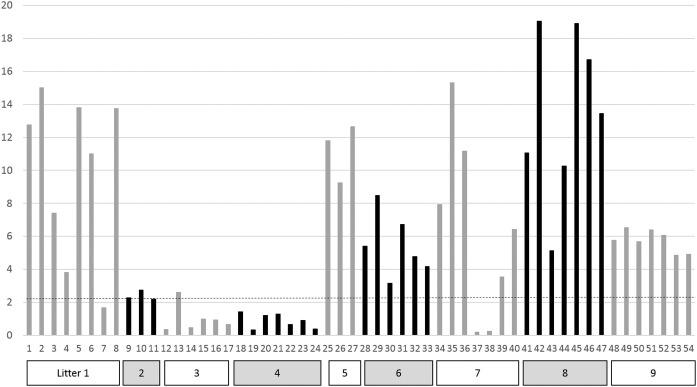
The puppy, born without immunoglobulins G (IgG), acquires a passive systemic immunity thanks to colostrum intake during the two first days of life. The quality of passive immune transfer (i.e. blood IgG concentration at two days of age), highly variable between litters and between puppies within litters, depends mainly on the time elapsed between birth and ingestion of colostrum, with limited influence of colostrum IgG concentration. Deficit in passive immune transfer, impacting puppy's health and neonatal mortality rate, can be indirectly diagnosed through blood gammaglutamyltransferases assay and evaluation of growth rate over the two first days of life. In the absence of maternal colostrum, few homo- and heterospecific immune sources are available and canine colostrum banking remains the optimal solution. Whereas passive immune transfer is crucial for survival during the neonatal period, it later interferes with response to vaccination. In addition to systemic passive immune transfer, maternal antibodies (mainly IgA) would provide local (digestive) immunity, ensuring mid-term protection of the puppies' gut together with probably long term training of the digestive immune system.
该小狗由于出生时缺乏免疫球蛋白 G(IgG),因此在生命的头两天通过摄入初乳获得被动全身免疫力。被动免疫转移的质量(即出生后两天的血液 IgG 浓度)在不同窝之间和同一窝内的小狗之间差异很大,主要取决于出生和摄入初乳之间的时间间隔,而初乳 IgG 浓度的影响有限。由于缺乏被动免疫转移,会影响小狗的健康和新生儿死亡率,可以通过血液γ-谷氨酰转移酶检测和出生后头两天的生长速度评估来间接诊断。在没有母体初乳的情况下,几乎没有同源和异源免疫源,犬类初乳储存仍然是最佳解决方案。尽管被动免疫转移对新生儿期的生存至关重要,但它会干扰对疫苗的反应。除了全身被动免疫转移外,母体抗体(主要是 IgA)还可以提供局部(消化)免疫力,确保幼犬肠道在中期得到保护,同时可能长期训练消化免疫系统。

 Zotero 插件